Détour
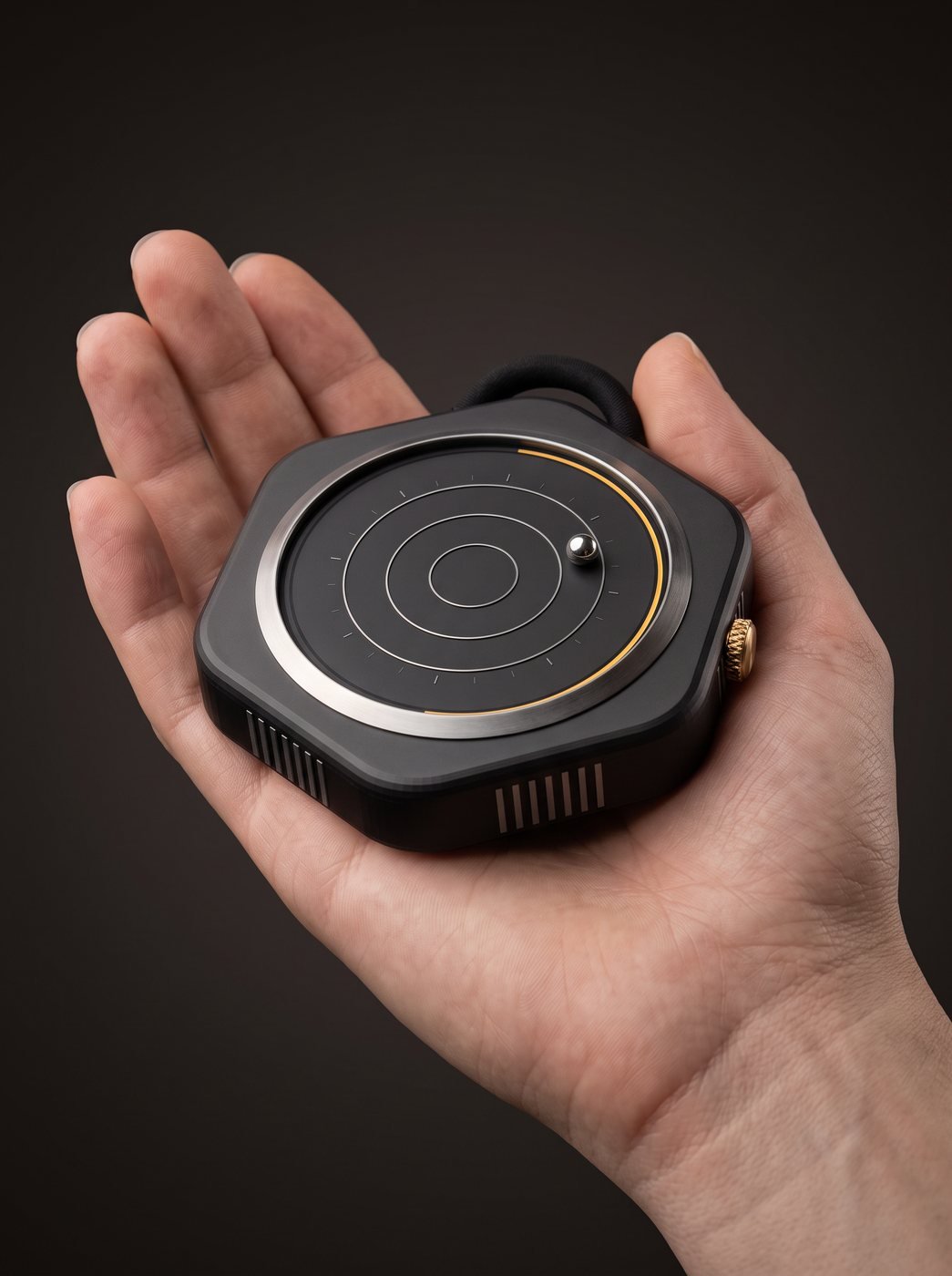
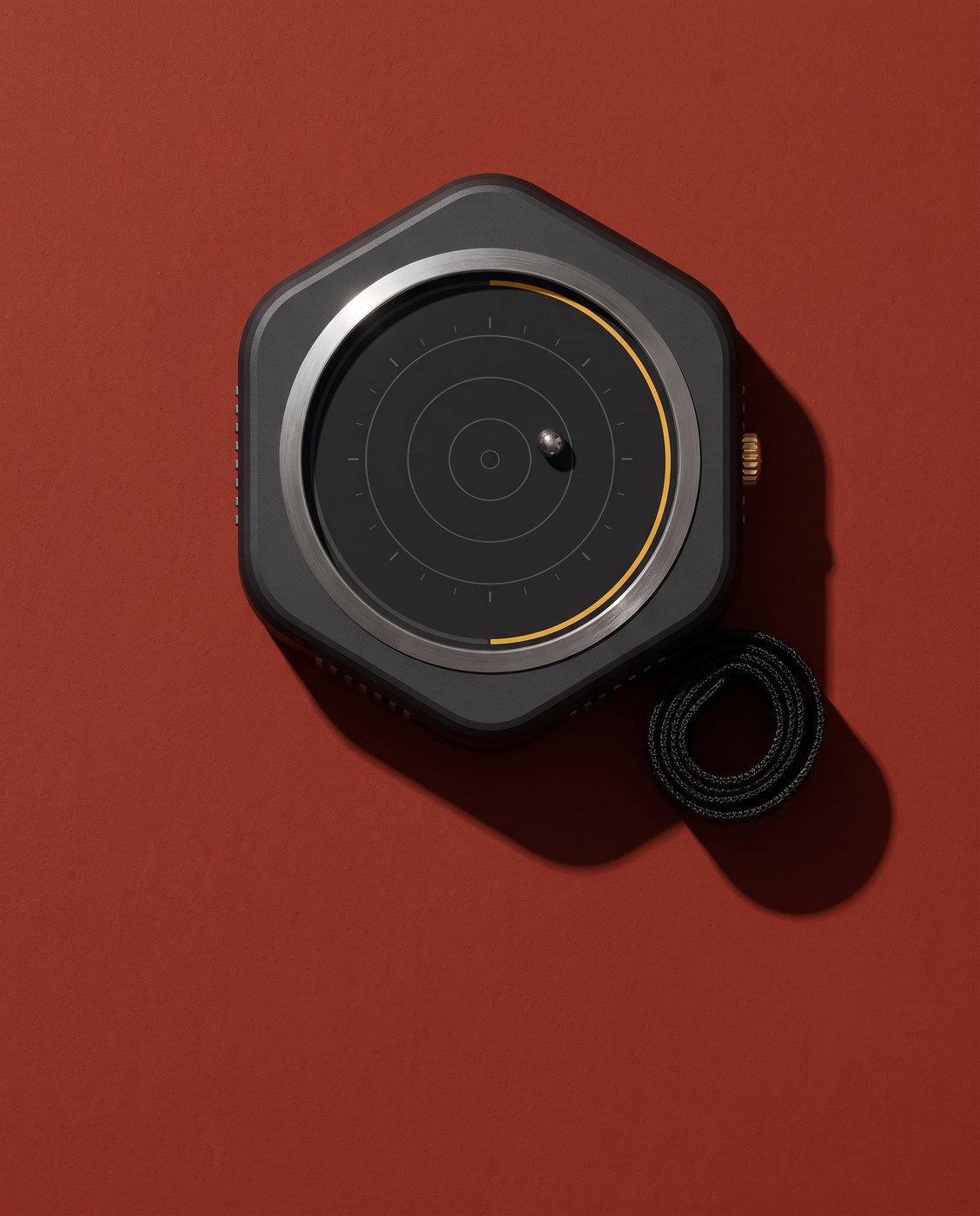
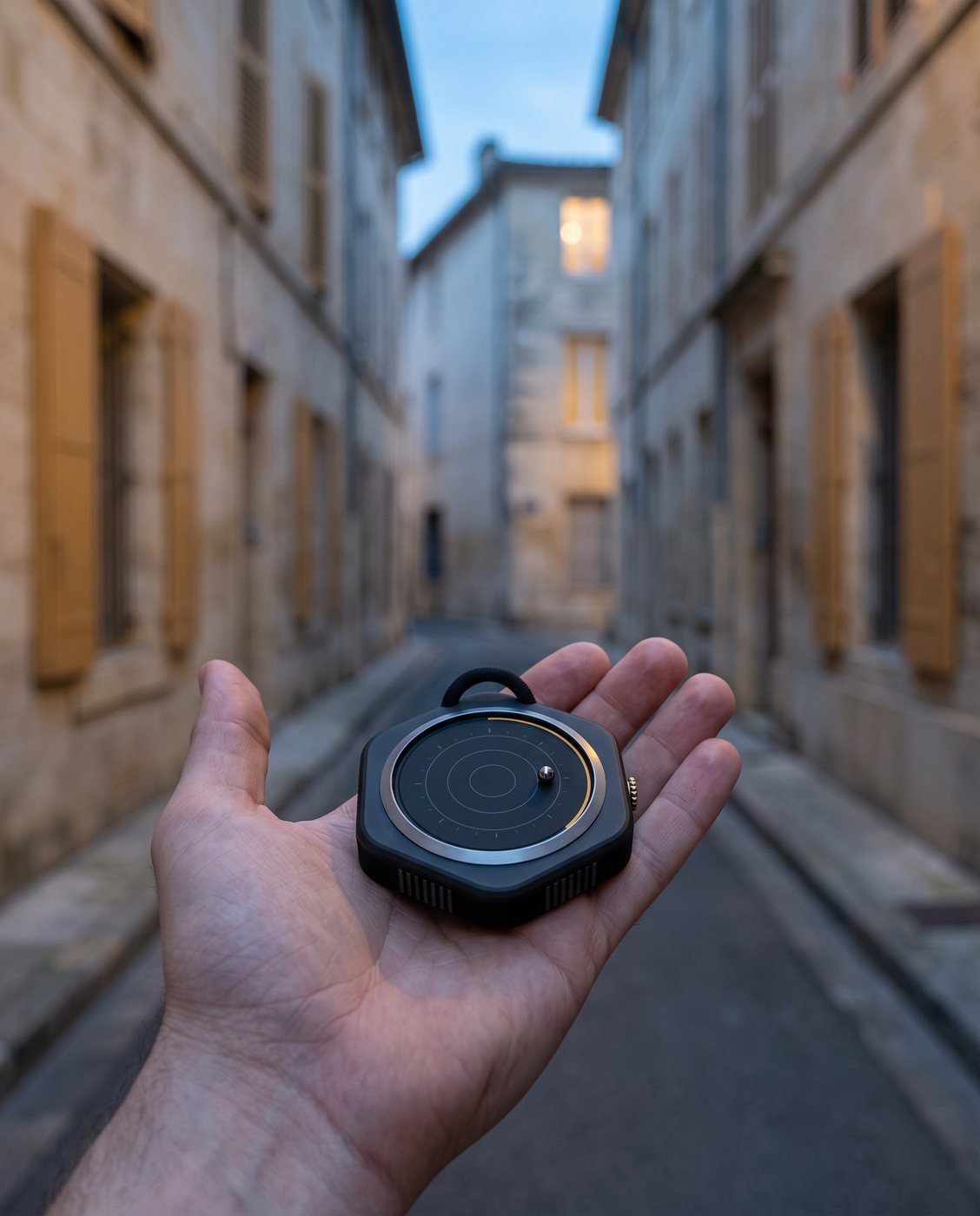
Turn-by-turn navigation won, and in winning it deleted the journey: you no longer cross a city, you execute a route. Détour never gives you a route. A steel ball rolls on a dial: its angle shows the goal, its distance from the center tells you how far is left.
Know
where it is.
Not
which way.
A pebble,
four rings,
and a ball
that rolls.
The shortest
path ate
everything
A blue arrow tells us when to turn, and we turn. It’s comfortable, it’s safe, and it turns a city into a corridor: we arrive without having crossed anything. The distance got optimized, the journey got deleted*.
a study, it’s
where it started
What’s playing
over there
The dial stays put and turns. Whatever passes under the marker starts to play.
·
Say it,
it lays it out
One need, one sentence. Kuubo breaks it into steps, lays them on the canvas and links them up. You adjust, then you say “go”.
You talk,
it’s typed
Hold both keys, talk, let go. The text lands where your cursor was.
Your apartment
is the playlist
Each cube holds a track. Put them wherever you like, move them around, they’re yours. Then you point: whatever is in line plays, the rest stays quiet.
Twelve
seconds
The cursor is you. Step onto the road and you leave your footprints on it. The light is red, a few seconds to go. You can cross right now. You can also wait, and see what it costs.
Two phones down,
or silence
One phone on the base isn’t enough. Without a second one, Halo doesn’t wake up, and silence is a valid answer.
The client cancels.
The afternoon falls through
He’s on the road, a hundred kilometers from headquarters. Thought of as a list, the route breaks. Thought of as a territory, it pulls itself back together.
Powered by the detour*
You get it wrong.
You get there anyway.
isn’t a mistake anymore,
it’s the journey
that says less than what you already have

The pebble
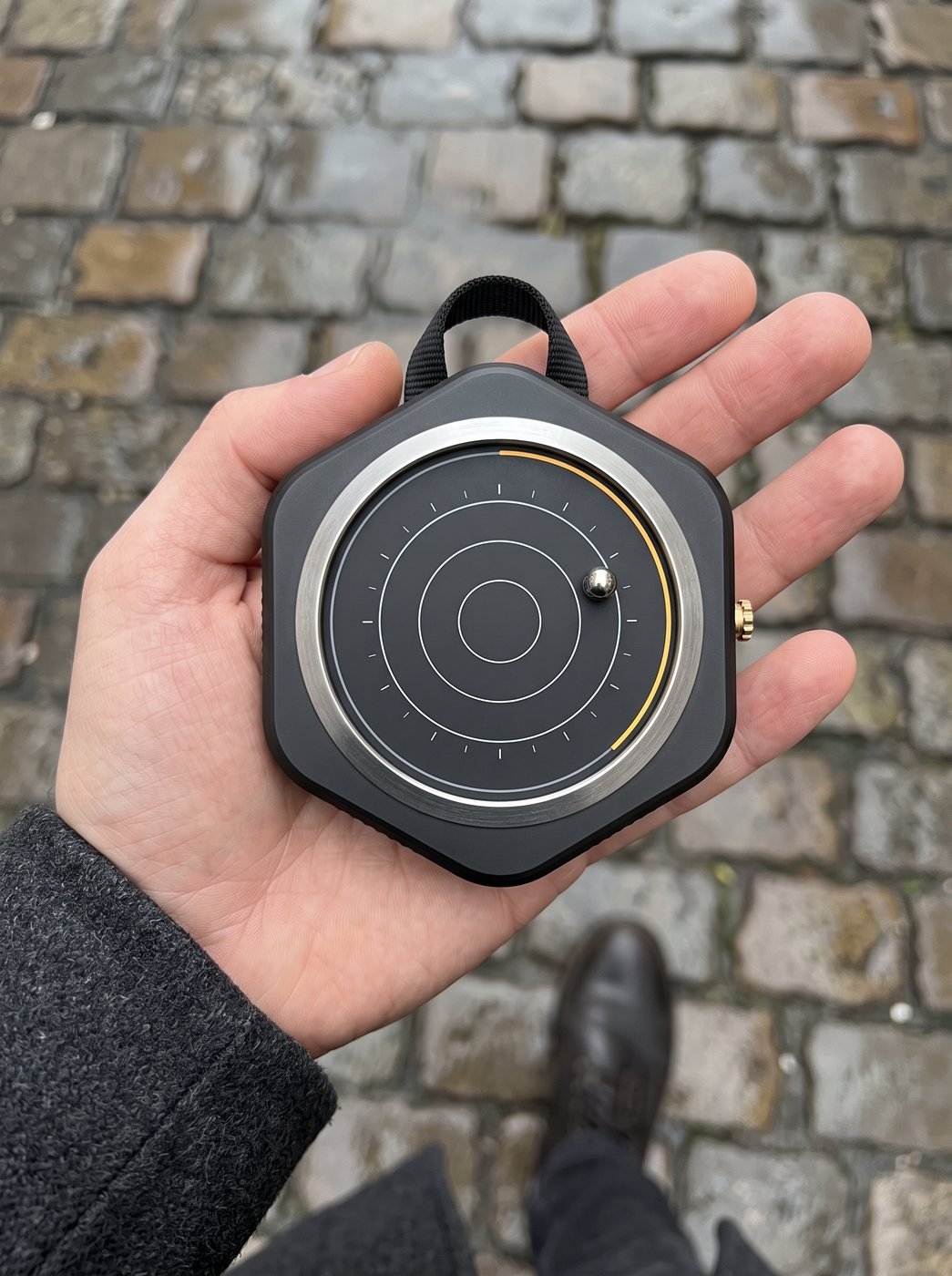
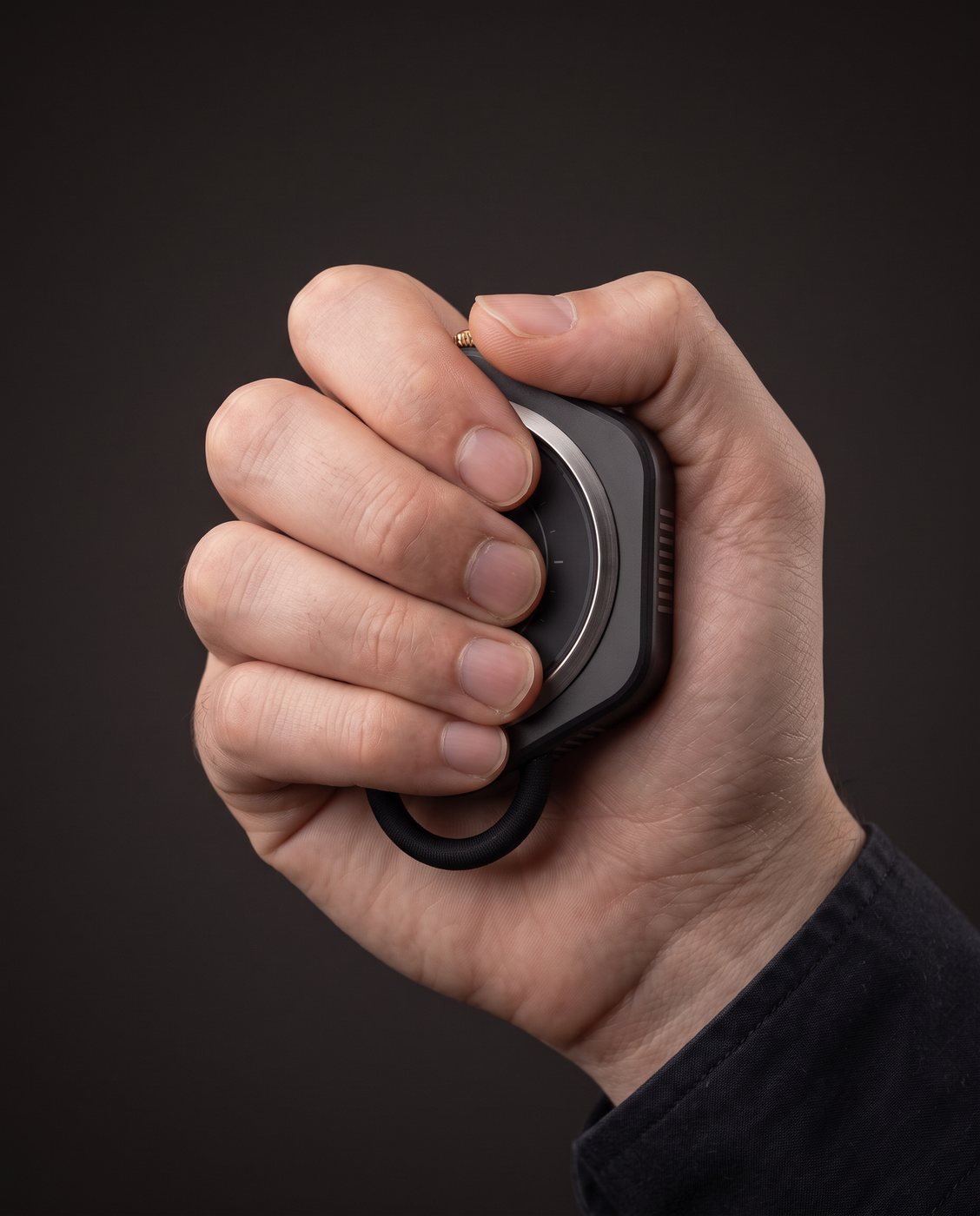
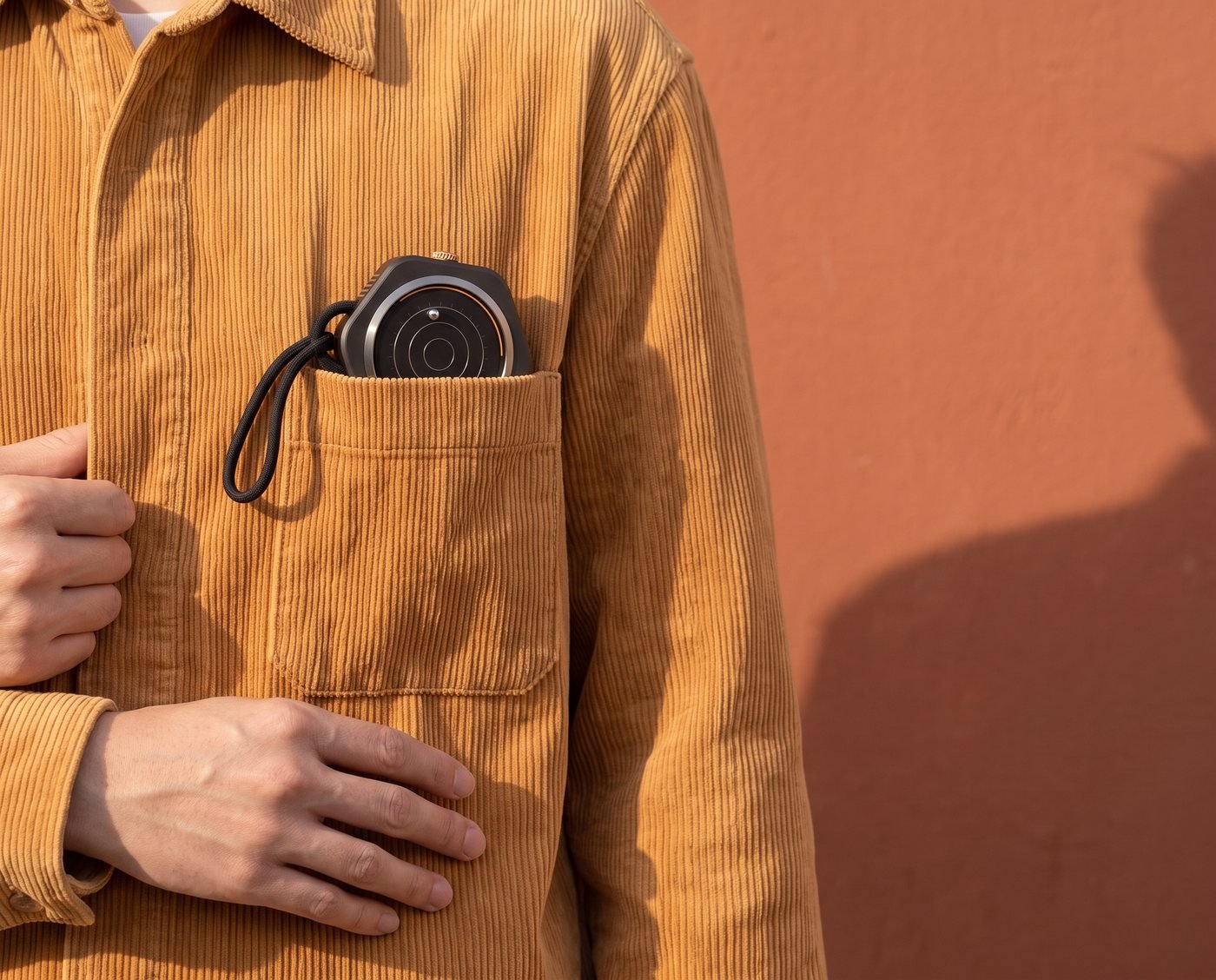
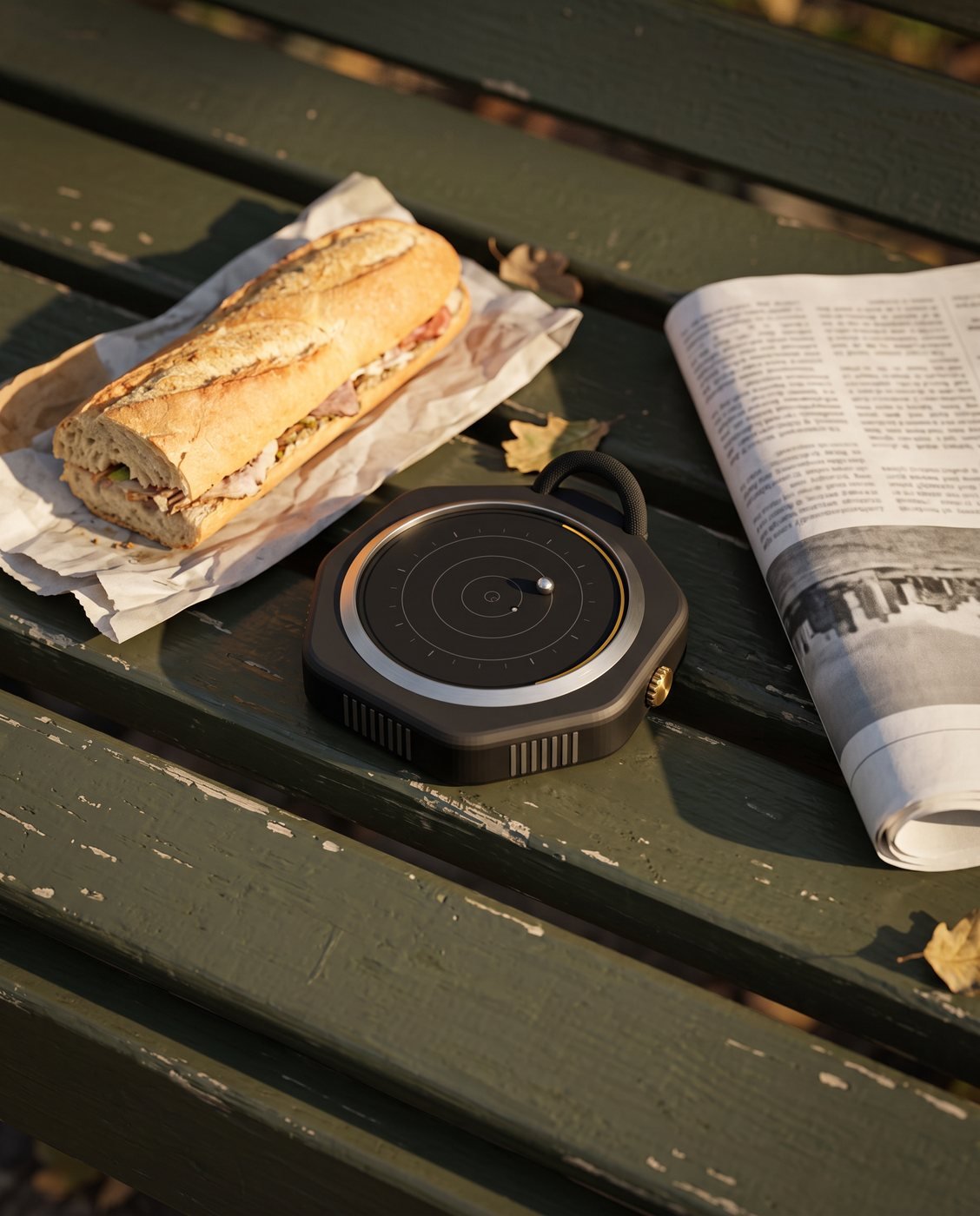
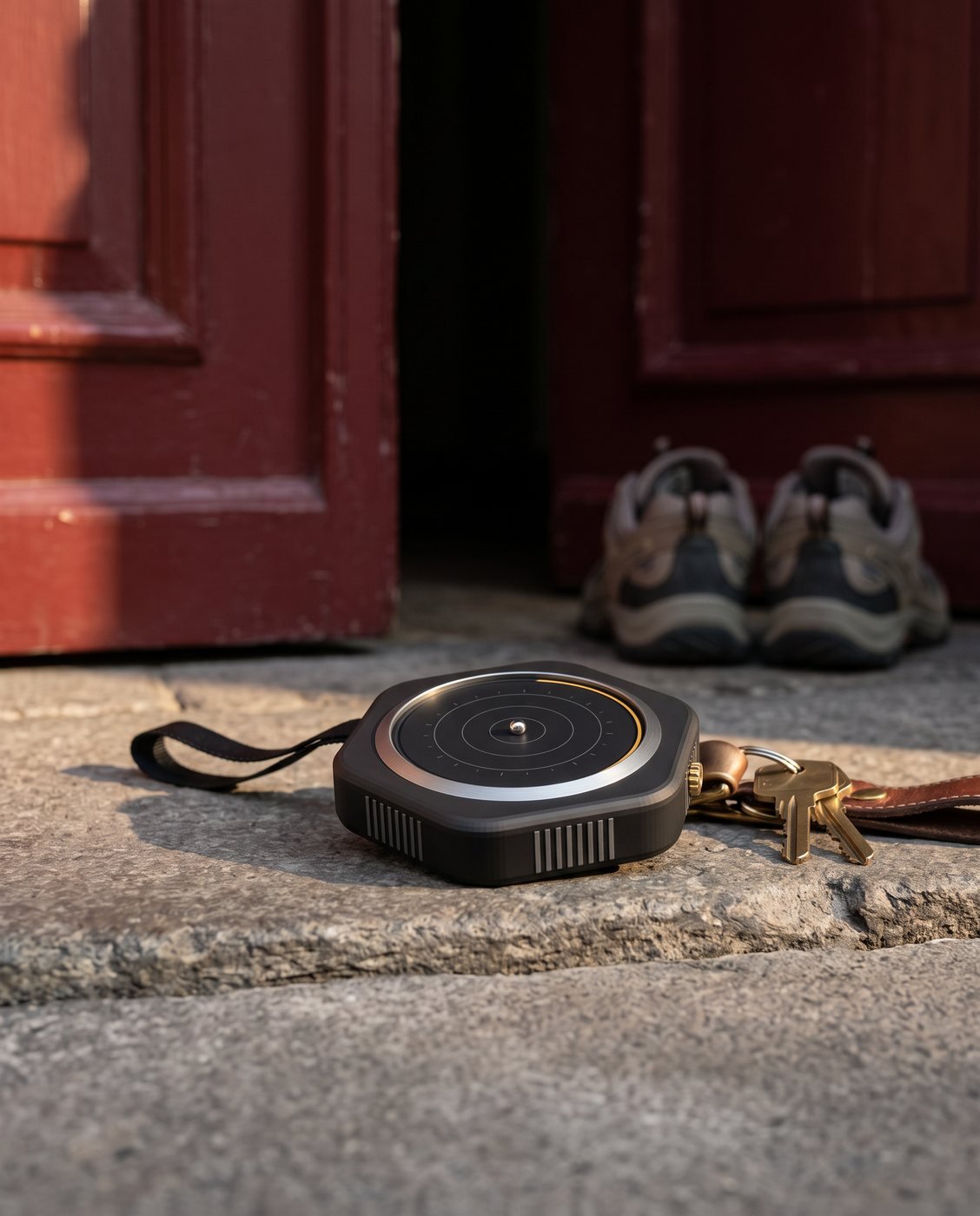
Six centimeters, two hundred grams, a single button.
It fits in a palm and is held flat, like a compass.
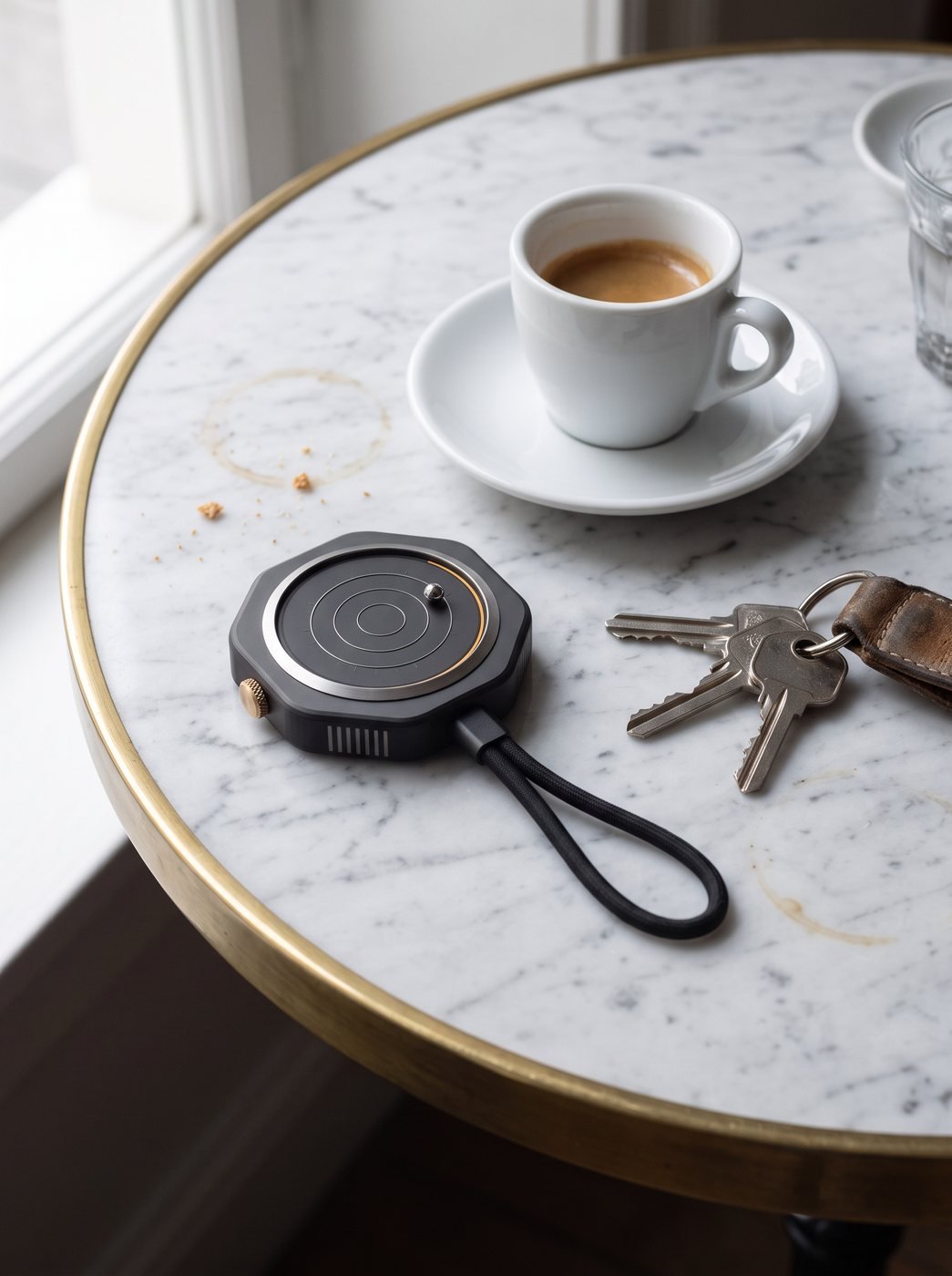
No voice, no arrow.
A ball, and the street you choose.

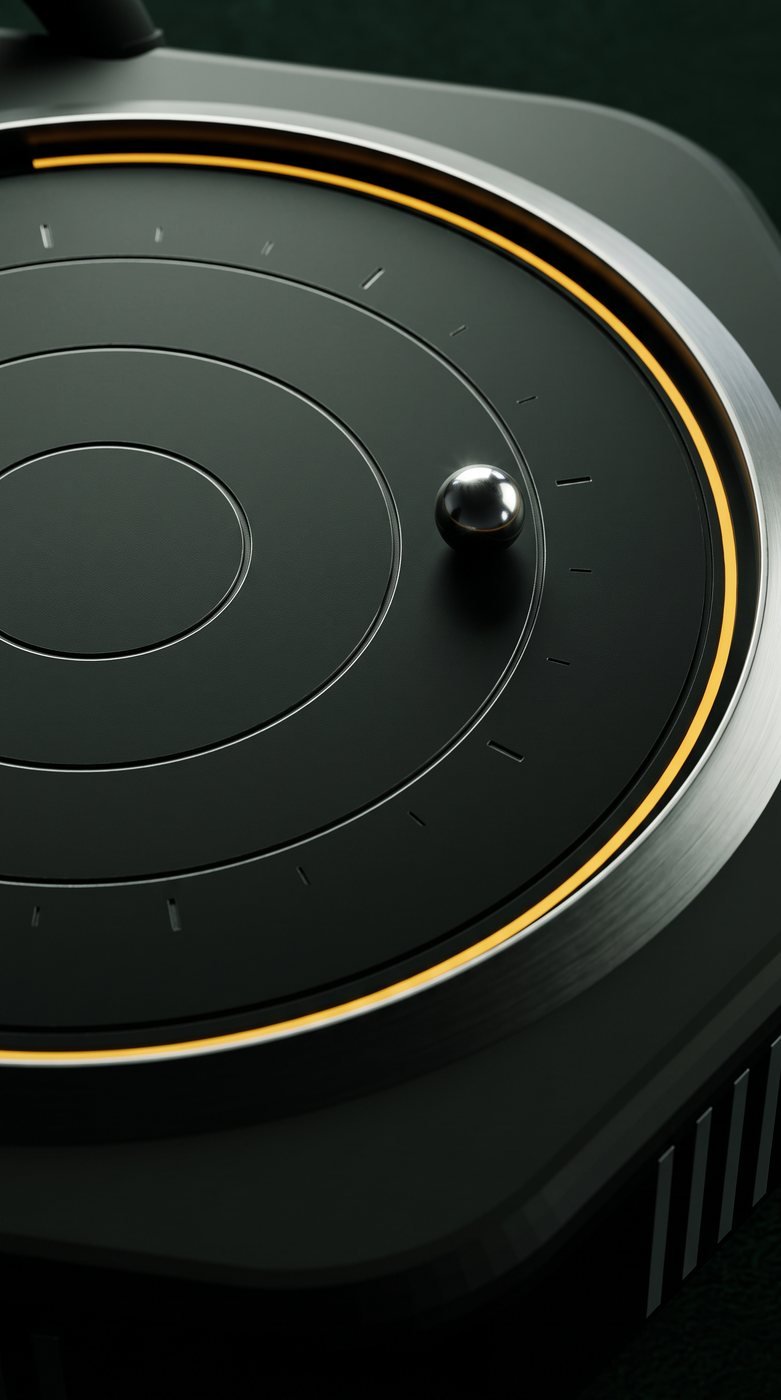
The ball settles in the direction of the goal, and nothing else. It ignores streets, one-way signs, shortcuts. It’s the only information a compass has ever given, and it’s the one that lets the walker decide: you know where to, you choose which way. Taking the wrong street stops being a mistake.
The farther the ball is from the center, the farther the goal. ⚠️ The scale is logarithmic: each ring divides the distance by ten, from 5 km at the edge to 5 m at the center. With a linear scale, the ball would stay stuck to the edge for the whole walk and only move at the very end. Here, every notch shows, and walking becomes readable.
A thin band runs around the dial: that’s your time to spare. You set the time of your appointment, the object works out what it takes to go straight there, and the rest is yours to spend. That reserve is what allows the detour. When it runs out, a single vibration: now, straight there.
The ball
follows you
The cursor is you. The orange dot is your appointment. The object never tells you which way to go: the ball points at the goal, and its distance from the center tells you how far is left. You have time to spare. Spend it.
Weave
a fabric of thought
The AI never gives the answer. It asks the next question. Each answer becomes a mass on the canvas, and the fabric takes shape.
Turn,
and aim
Slid upright into the wall mount, the phone becomes a steering wheel. You turn it, the waves sweep the room, and you only hear what you have in common with whatever is over there.
The pocket
lab
The viewfinder is you. Frame whatever intrigues you: the camera asks you a question, you answer, and your answer prints as a sticker.
Four ways
to say
“that way”
They all gave the direction. Only one lets you look without making you obey. Click to go through them.
The map
Drop
a beacon
Pick a place, a duration, an area. Your track plays there, quietly, for whoever walks by.
The longest path isn’t a waste of time when the time was planned for. The whole project lives in that gap: the object knows the time of your appointment, it knows what it takes to go straight there, and it gives you back the difference. It’s not a comfort feature, it’s what lets you dare to turn right.
Rings
on the dial
Four, and not one more. Each divides the distance by ten. Enough to place a whole walk, and few enough to read without counting.
Times less
per ring
5 km at the edge, 500 m, 50 m, 5 m at the center. A logarithmic scale, because a linear one would pin the ball to the edge for an hour of walking and say nothing.
What the object
never says
It’s a list of refusals, and it’s what defines the product. Everything you’d add would drag the object back toward the app it’s trying to replace.
The pushback
I get
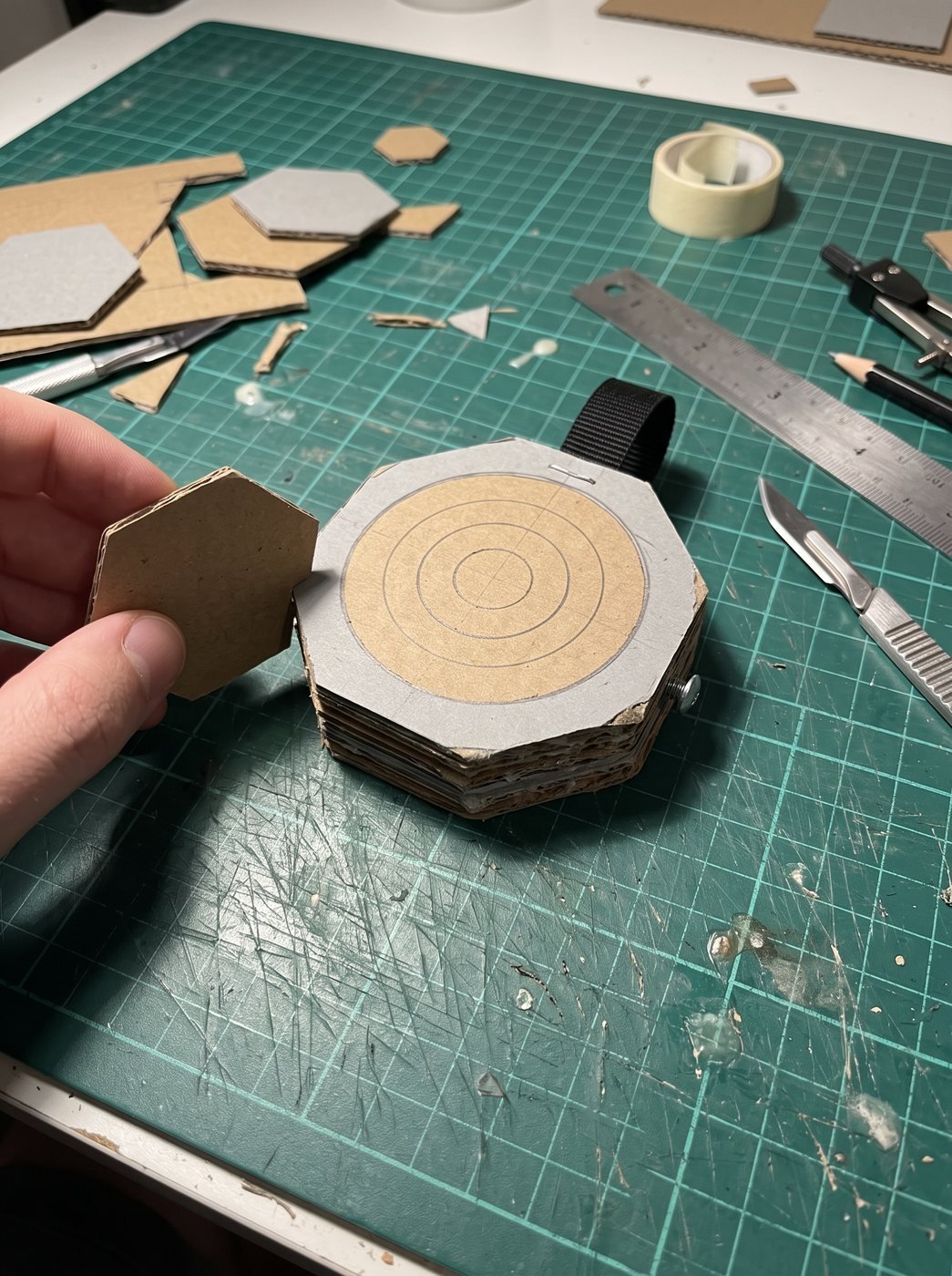
The concept has been shown, not tested: cardboard volume mockups, but no working prototype and no field test. So these aren’t user reviews, they’re the objections that keep coming up, and what I do with them.


That way.
That’s all
5 km
at the edge,
5 m
at the center
You have twenty
minutes
to spare

Three
ways
to dawdle
By a path
nobody
calculated
Three ways
to dawdle
The tourist
They have time, and they’re exactly who gets sold the shortest path. Between the hotel and the museum, the straight line is the worst possible route: it makes them miss everything they came for.
- ✓Time is the resource they have
- ✓They know nothing, so everything interests them
- ✓Their appointment is a time, not a route
4 rings
5 km, 500 m, 50 m, 5 m. Each ring divides the distance by ten.
1 button
It sets the destination and the time. There’s nothing else to adjust.
0 pixels
A steel ball on an engraved dial. Readable in full sun, no backlight.
Abstract
Under the glass, a steel ball rests on a sapphire plate; under the plate, a small two-axis carriage carries a magnet and pulls it along, exactly like kinetic sand tables, only much smaller. A GPS and a magnetometer are enough to compute the angle and the distance, and the carriage only moves when the direction really changes, so rarely. The two unknowns are battery life and shock resistance: a pocket object gets dropped, and a mechanical carriage doesn’t like that. That’s what a first mockup should measure.
Acknowledgments
This page was put together locally by Thibauld, without bothering a single remote server.
Peer review
“It’s a GPS, only worse.”
The objection that keeps coming back, and the brief
BibTeX
@misc{detour2026,
  title        = {Detour: an approximate compass for walking the long way},
  author       = {Burin, Thibauld},
  year         = {2026},
  howpublished = {Concept, tangible interface}
}What people
ask me
The five questions that come up as soon as I put the object on a table. Two of the answers are limits.
Because a ball has mass. It lags a little when you turn around, and that lag tells you you’re moving: a dot on a screen would teleport to the right spot without telling you anything. It also reads in full sun with no backlight, costs no pixels, and you feel it roll in your hand. The movement of a real object is information, not decoration.
Because with a linear scale, over a 3 km walk, the ball would sit at the edge for fifty minutes and only move in the last hundred meters. With a logarithmic one, each division by ten is worth a third of the dial: you see progress for the whole walk. It’s the only real math in the project, and it’s what makes it usable.
That’s exactly what the margin handles. You set the time, the object works out the direct route, and it gives you back the difference as a band around the dial. As long as some is left, you can turn wherever you like. When it’s empty, one vibration, and the instruction gets simple: straight there. Without that reserve, an approximate compass would make you anxious instead of free.
The ball points through walls, railway tracks and rivers: it doesn’t know the terrain, and that’s deliberate. In a city and on foot, you walk around an obstacle and the angle corrects itself. Outside the city, the concept no longer holds: it’s not a mountain instrument, and that has to be said instead of hidden behind a setting.
No. There’s the concept, the math of the dial, the choice of mechanism and this page. There’s no prototype, no test with anyone, no battery measurement. The next step is a tabletop mockup, not portable, whose only job would be to roll the ball to the right spot.

You’ve just seen an instrument that tells you less than your phone. What it takes away is the product.
Know where it is. Not which way.
Write to Thibauldwith love ♥
if you like it
Détour is a tangible interface concept by Thibauld Burin, born in a single morning and revisited in 2026: an approximate compass for arriving on time by the longest path. The object has never been built; there’s no prototype, no user test, no battery measurement. The distances and durations shown on this page are demo values.
drop your film into
media/video-01.mp4