L'Écho de la Machine
An exhibition that doesn’t explain artificial intelligence: it takes you where you aren’t looking. You say whether you see an opportunity or a danger in it, and you’re made to live the exact opposite. Six rooms, six mechanisms. You can play every one of them on this page.
Not a god,
not a monster.
A tool, inert
without a hand.
Space, product, interface:
three layers,
one experience.
We fear it.
Or we believe in it.
Two stories that no longer talk to each other: the machine that will take everything on one side, the machine that will fix everything on the other. Both are talking about something other than the real subject*. A machine wants nothing. What decides is the hand that holds it.
it’s psychological:
what we project into it
When someone says
artificial intelligence,
what comes to mind?
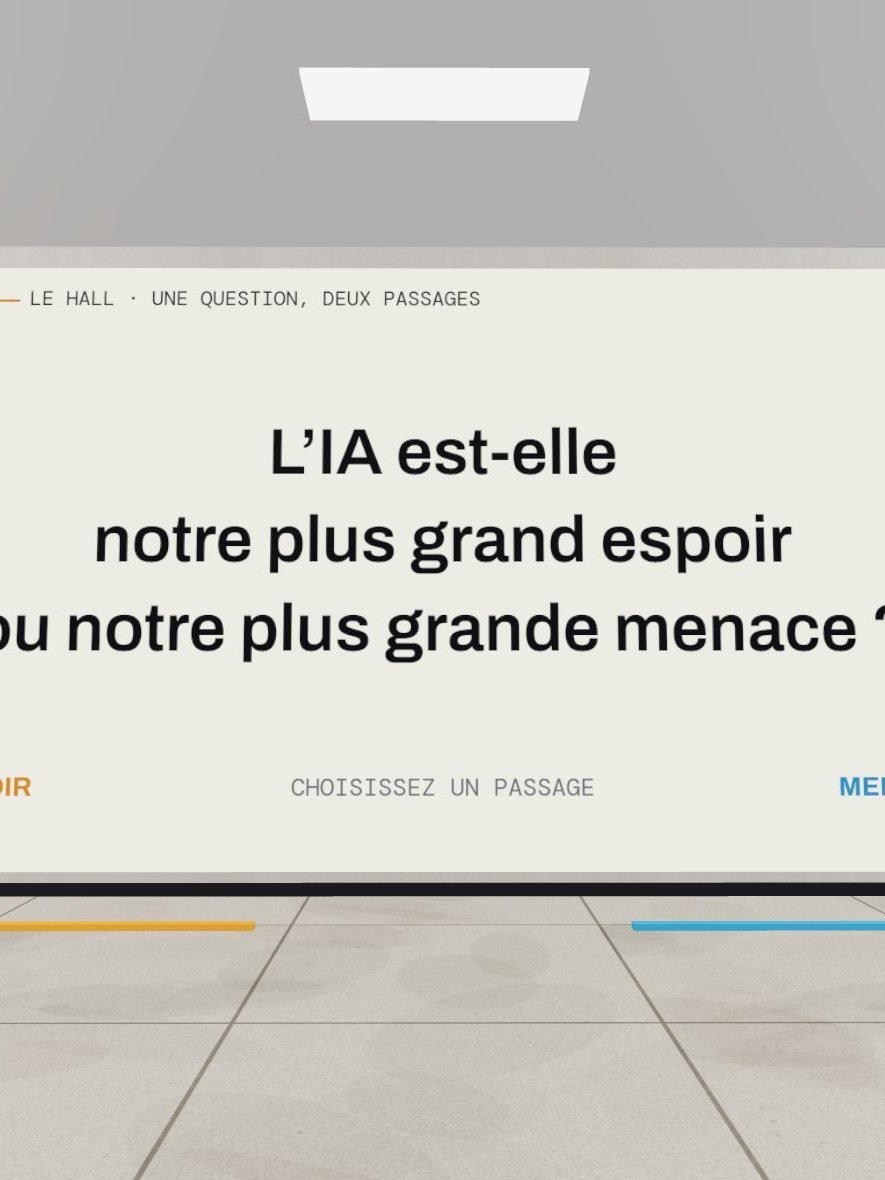
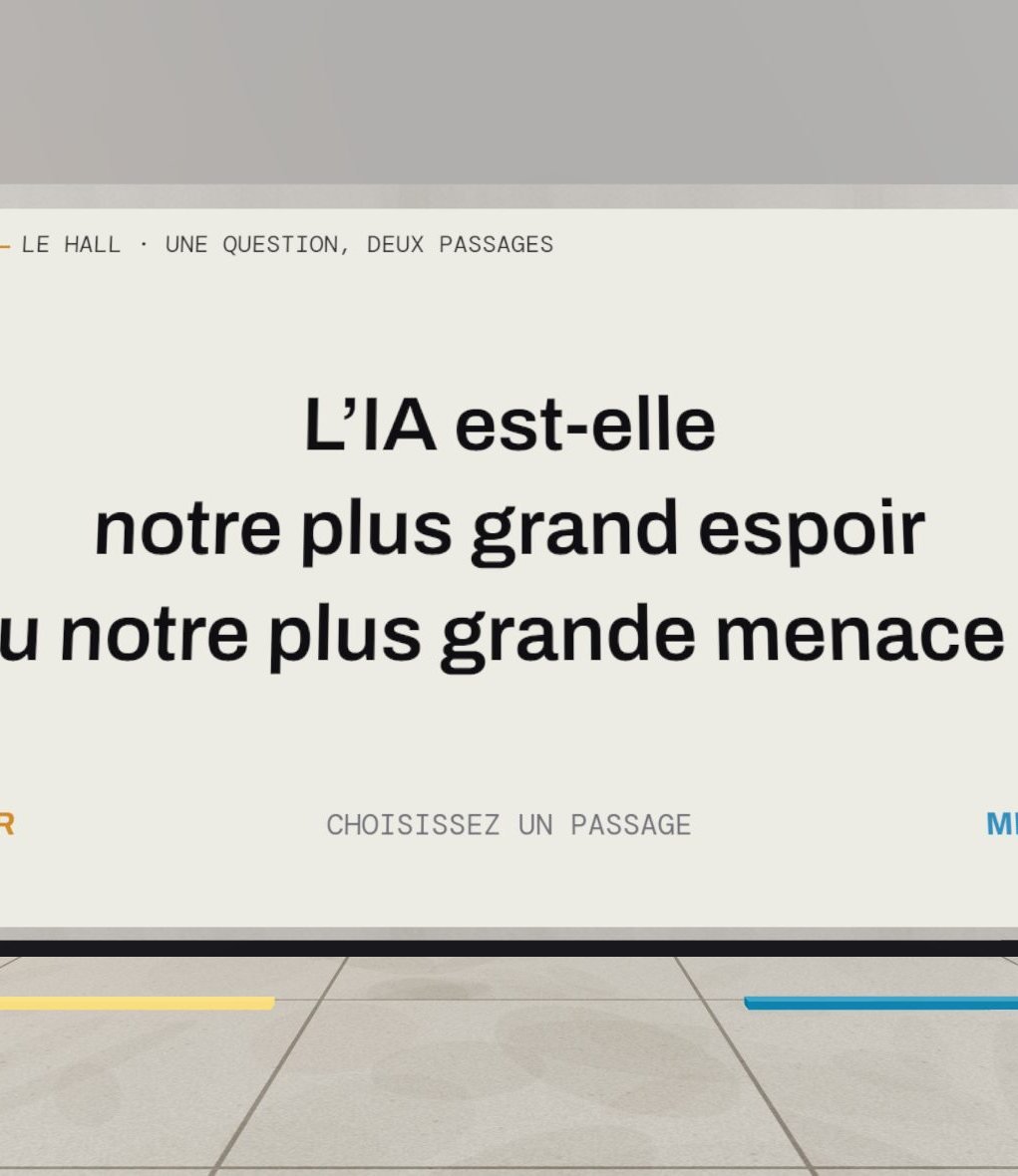
In the exhibition, this question is written on a wall at the end of a twenty-four-meter corridor. Your answer opens a door, and you only ever see one of the two paths. Here, choose: the rest of the page takes on the color of your side.
Step into a room
Each room in the exhibition rests on one precise mechanism. You can play them all here, for real: click, it opens full screen, and you play. Allow two minutes per room.

The confluence
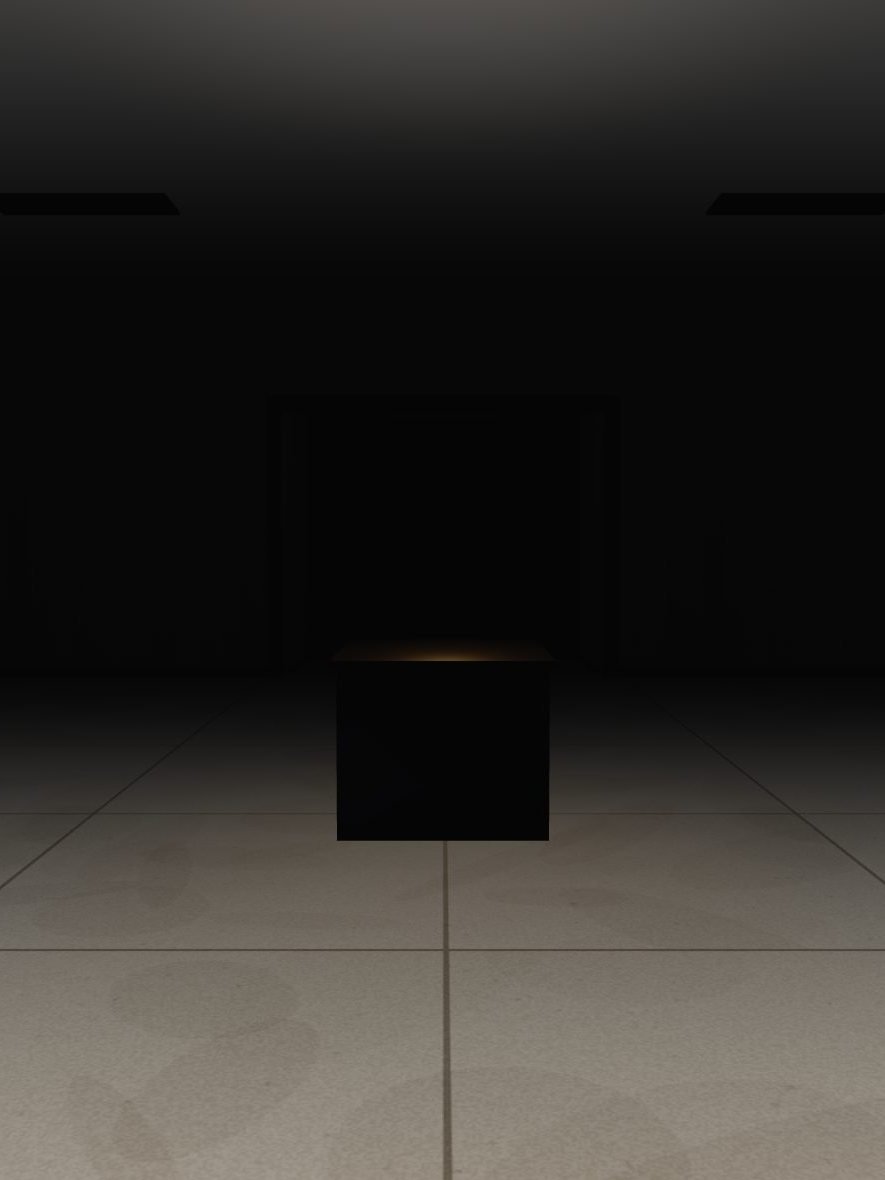
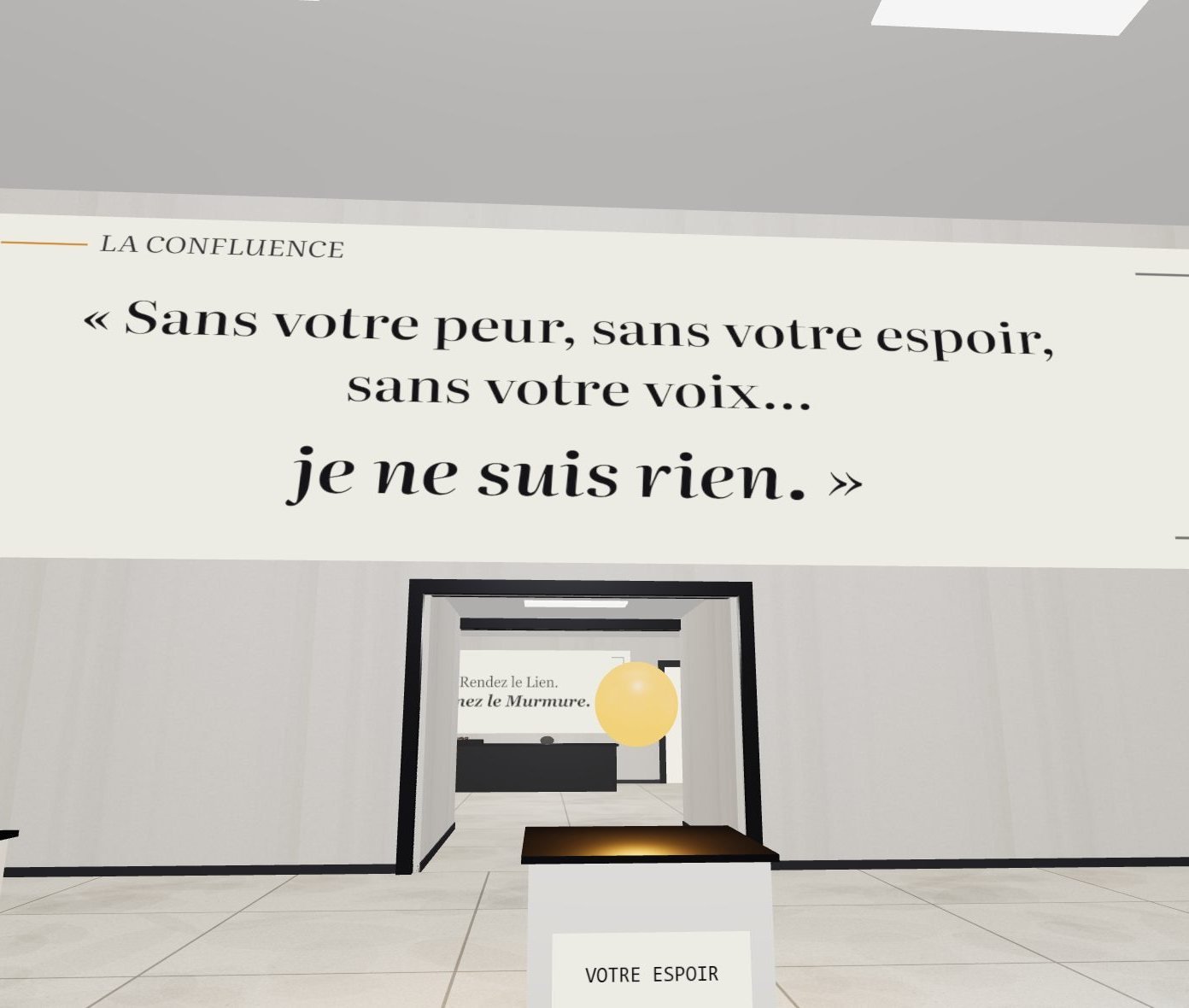
The three objects from the previous rooms are here, switched off. Glass, plastic, silicon. They only light up again as long as someone gives them something.
None of it wants anything. It has no plan. Power has always been on the side of whoever presses the button.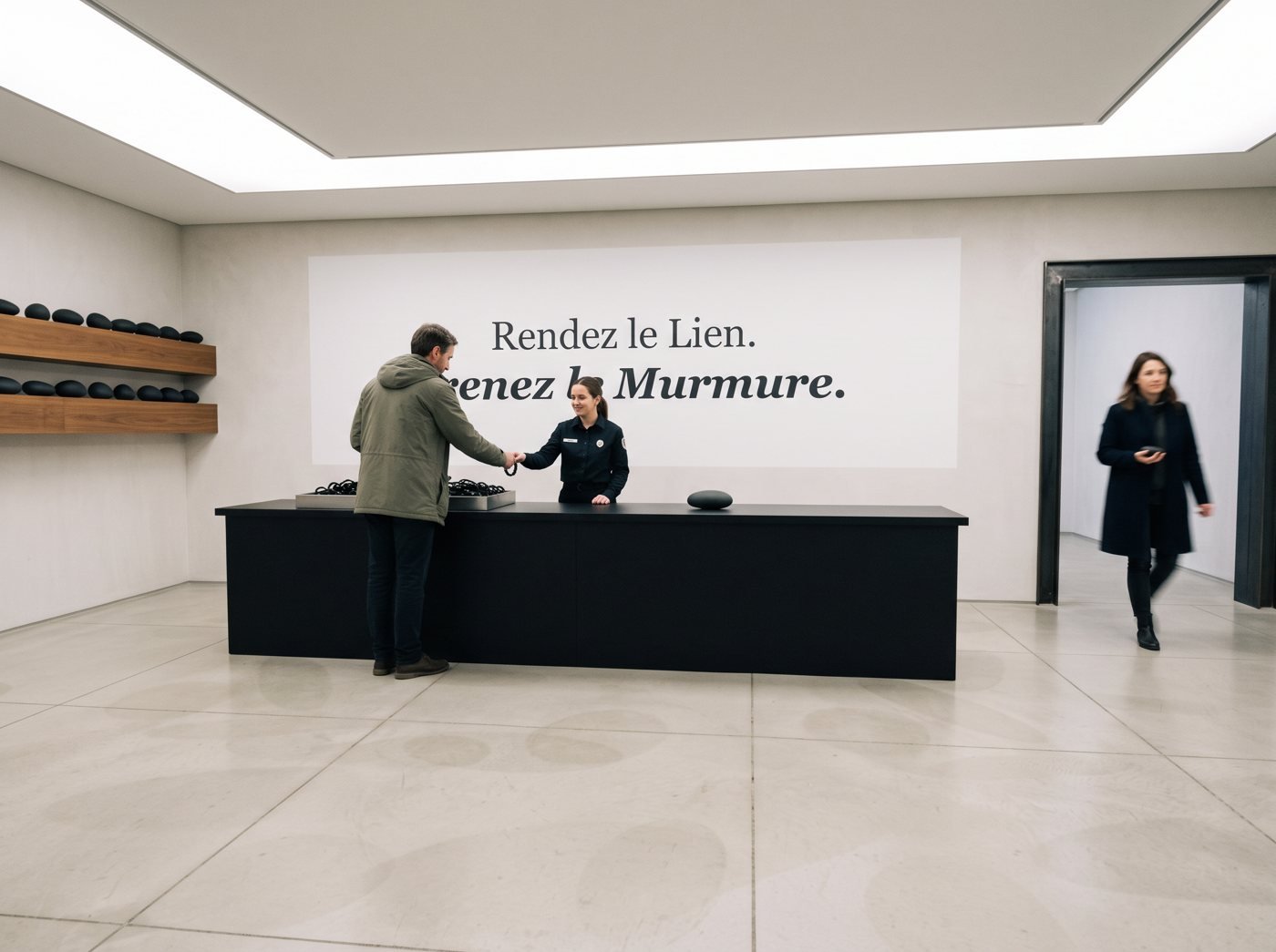
The exit
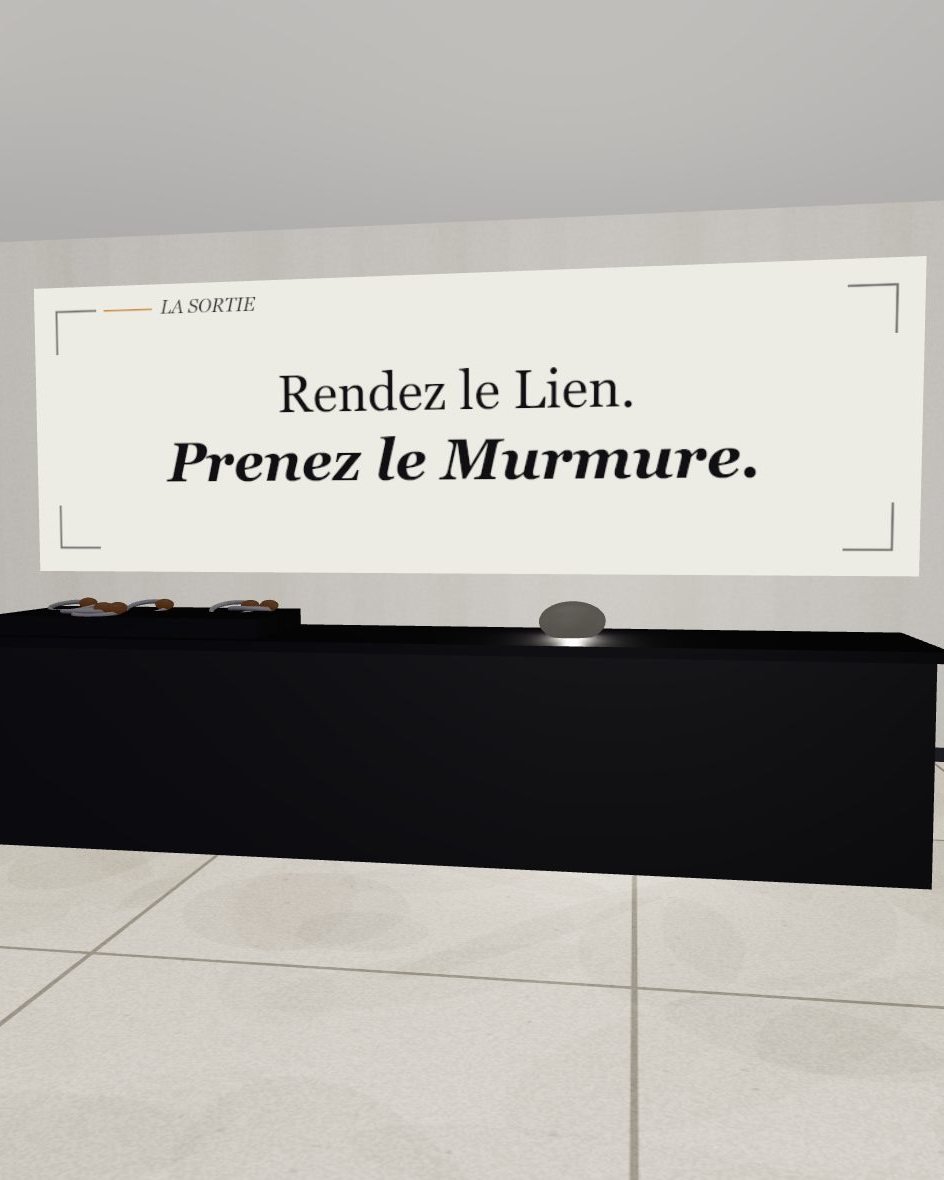
You hand back the wristband lent to you at the entrance. You’re given a black pebble that fits in your pocket: it listens to your tone and answers with a light.
It says nothing. You decide whether that light means happy, angry, or nothing at all.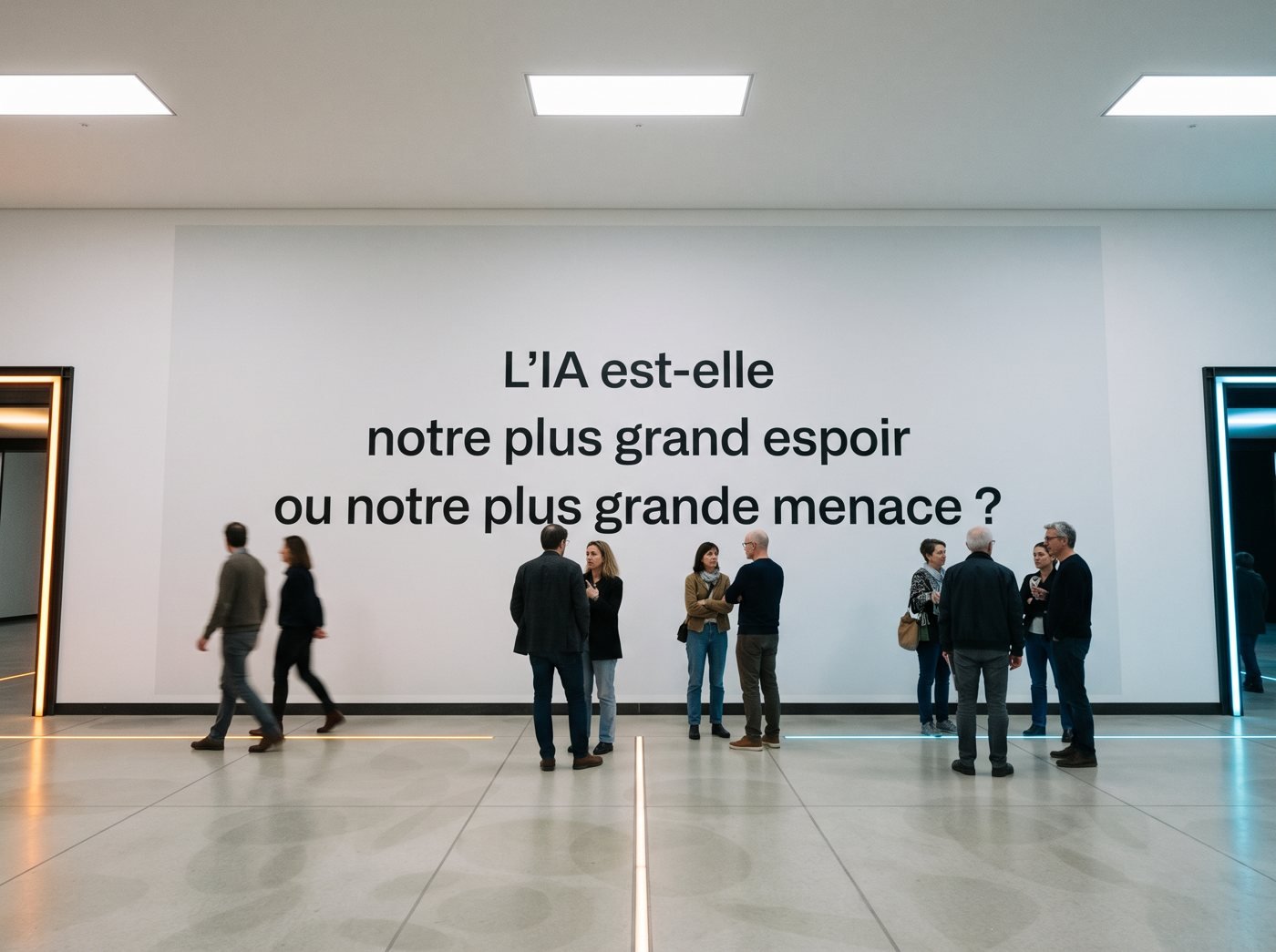
Eight rooms, six hundred square meters
An airlock, a hall that asks the question, three rooms per path, a shared room, an exit. A forty-minute visit.
The route is written like an essay: a thesis on one side, its opposite on the other, and a conclusion nobody dictates to you.What’s playing
over there
The dial stays put and turns. Whatever passes under the marker starts to play.
·
Say it,
it lays it out
One need, one sentence. Kuubo breaks it into steps, lays them on the canvas and links them up. You adjust, then you say “go”.
You talk,
it’s typed
Hold both keys, talk, let go. The text lands where your cursor was.
Your apartment
is the playlist
Each cube holds a track. Put them wherever you like, move them around, they’re yours. Then you point: whatever is in line plays, the rest stays quiet.
The ball
follows you
The cursor is you. The orange dot is your appointment. The object never tells you which way to go: the ball points at the goal, and its distance from the center tells you how far is left. You have time to spare. Spend it.
Weave
a fabric of thought
The AI never gives the answer. It asks the next question. Each answer becomes a mass on the canvas, and the fabric takes shape.
Turn,
and aim
Slid upright into the wall mount, the phone becomes a steering wheel. You turn it, the waves sweep the room, and you only hear what you have in common with whatever is over there.
The pocket
lab
The viewfinder is you. Frame whatever intrigues you: the camera asks you a question, you answer, and your answer prints as a sticker.
Twelve
seconds
The cursor is you. Step onto the road and you leave your footprints on it. The light is red, a few seconds to go. You can cross right now. You can also wait, and see what it costs.
Two phones down,
or silence
One phone on the base isn’t enough. Without a second one, Halo doesn’t wake up, and silence is a valid answer.
The client cancels.
The afternoon falls through
He’s on the road, a hundred kilometers from headquarters. Thought of as a list, the route breaks. Thought of as a territory, it pulls itself back together.
A mighty hammer*
without the hand
that holds it.
that set the angle
for the whole scenography
seen from inside
The airlock
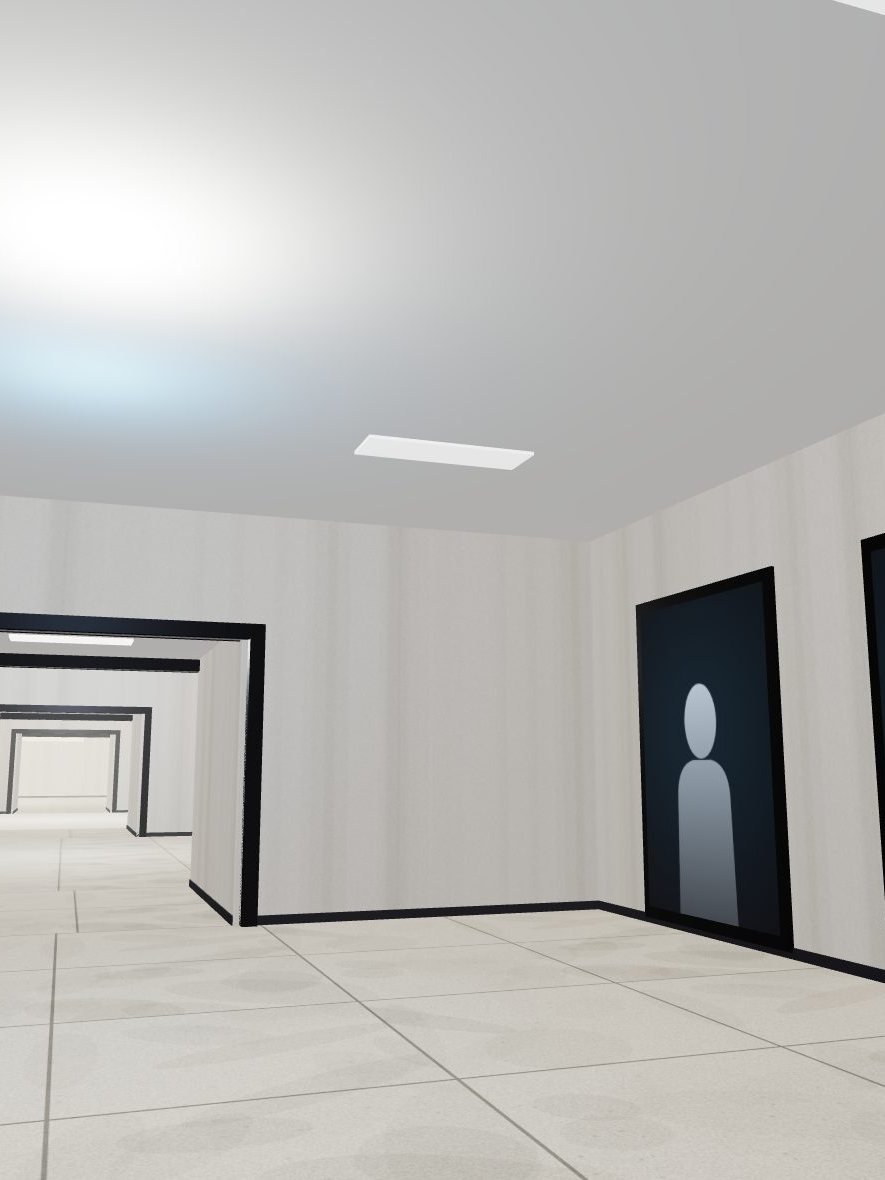
Eight meters wide, twenty-four long, six pedestals down the middle: Babbage, Turing, the Perceptron, ELIZA, Deep Blue, a blinking cursor.
At the end, the only question you’ll be asked.
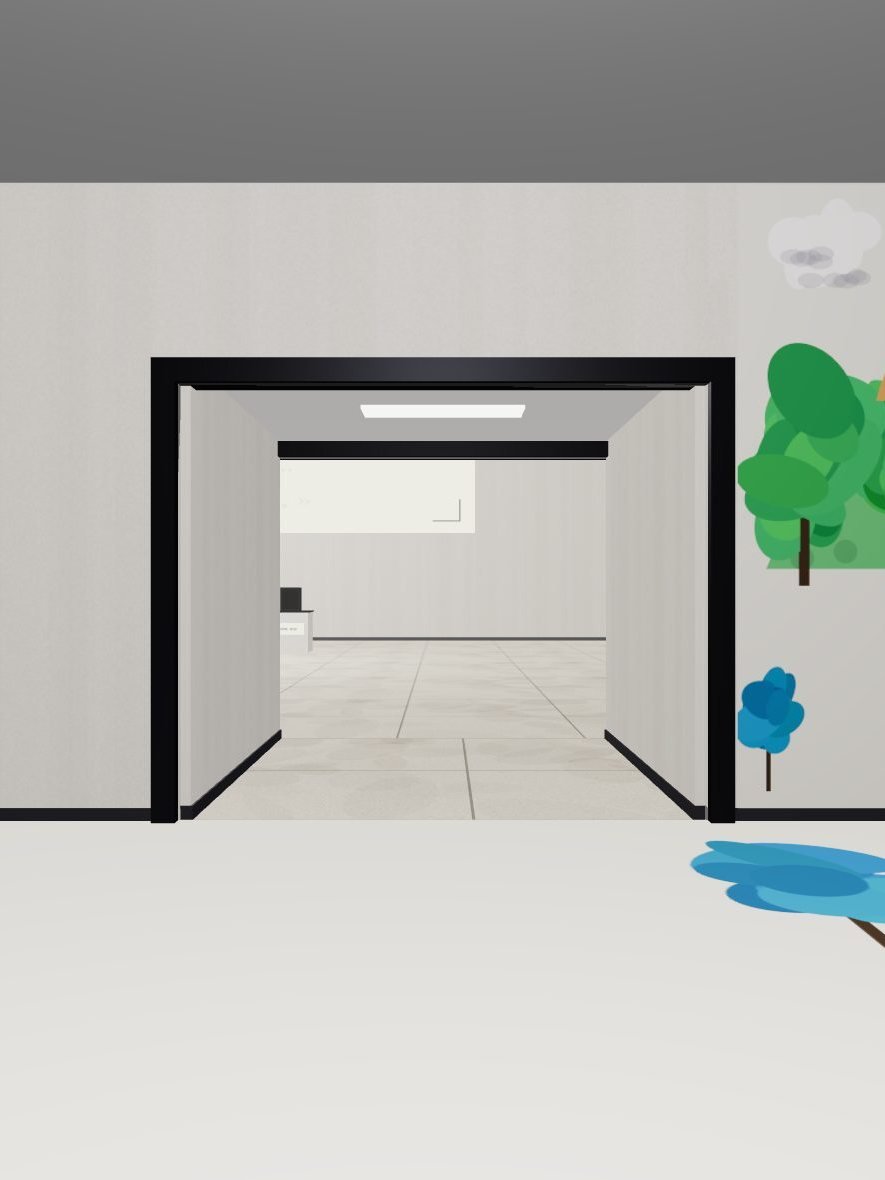
Those who were afraid and those who hoped
end up in the same room.
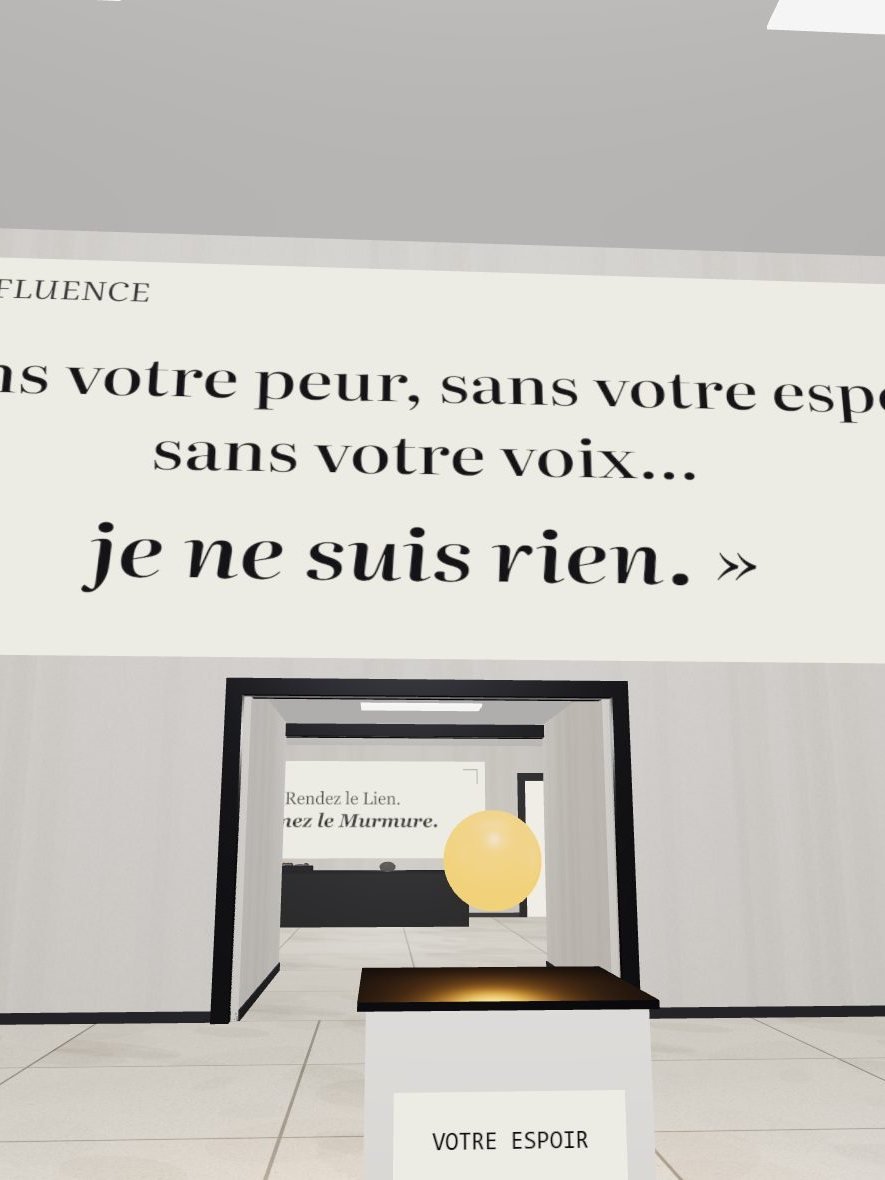
The route reads like an essay you walk through: an airlock, two paths that contradict each other, a shared room. Each room changes its light, noise and density to make you feel before it explains. The scenography doesn’t illustrate the point: it is the point.
A thesis,
its opposite
The Link: a pebble lent to you at the entrance. A chip locates it in the room, three small motors make it vibrate. It points, it confirms, and when the machine slips out of everyone’s control, it’s the one that refuses to obey in your palm. You feel the loss of control in your hand before you understand it in your head.
It fits
in your hand
The app: your dashboard, the room guides, the tricky choices. It’s only one layer out of three. It talks live with the object and the walls, and sometimes it shows a connection error while the room carries on just fine without it.
One layer,
not the whole
Five exhibitions,
only one kept
They all talked about artificial intelligence. Only one talked about the visitor. Click to go through them.
The map
Drop
a beacon
Pick a place, a duration, an area. Your track plays there, quietly, for whoever walks by.
The sphere that followed you no longer lights up. The mirror is just a black pane of glass. The speaker that gave you back a voice says nothing. The three objects are here, set down, switched off: glass, plastic and silicon. They only light up again as long as someone gives them something, and go dark as soon as you let go. It doesn’t want to do anything. It has no plan. Power has always been on the side of whoever presses the button.
What’s left
when you let go
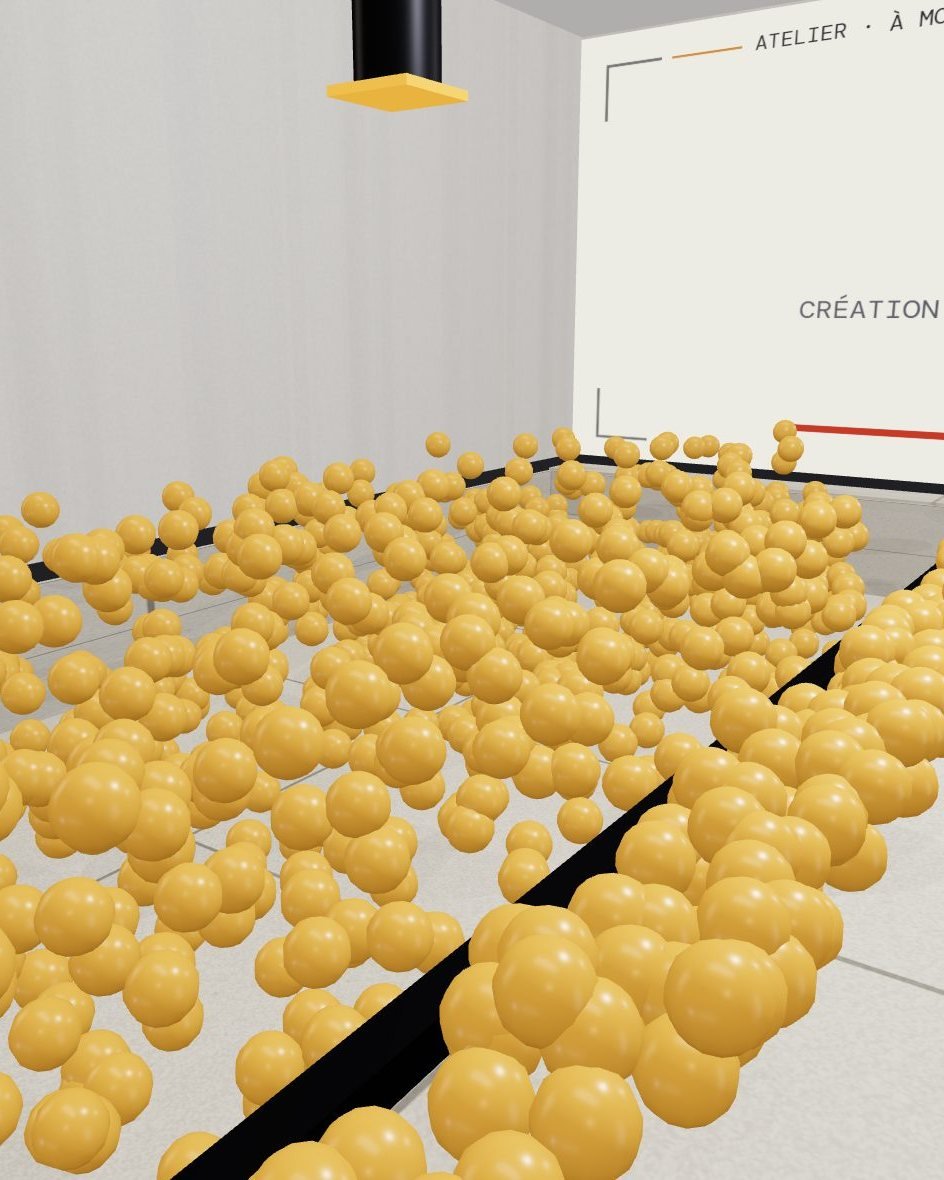
In the workshop, the machine made thousands of them per second. Here the counter is at zero. Nobody asked it to stop: we simply stopped asking it for anything.
A face
in the mirror
The glass is black. The face that said whatever it liked only existed because someone was looking at it. No gaze, no fake face.
What you hear
as you walk in
After six rooms of noise, light and data, calm. Almost clinical lighting. And on the wall, a sentence that only lights up when someone walks past.
What the project
doesn’t solve
An exhibition that claims to take apart received ideas has to start with its own. Five limits, noted during the design, and what we do about them.
An opportunity,
or a danger?
It does
what it
was told
Nothing
grows
Without you,
I am
nothing
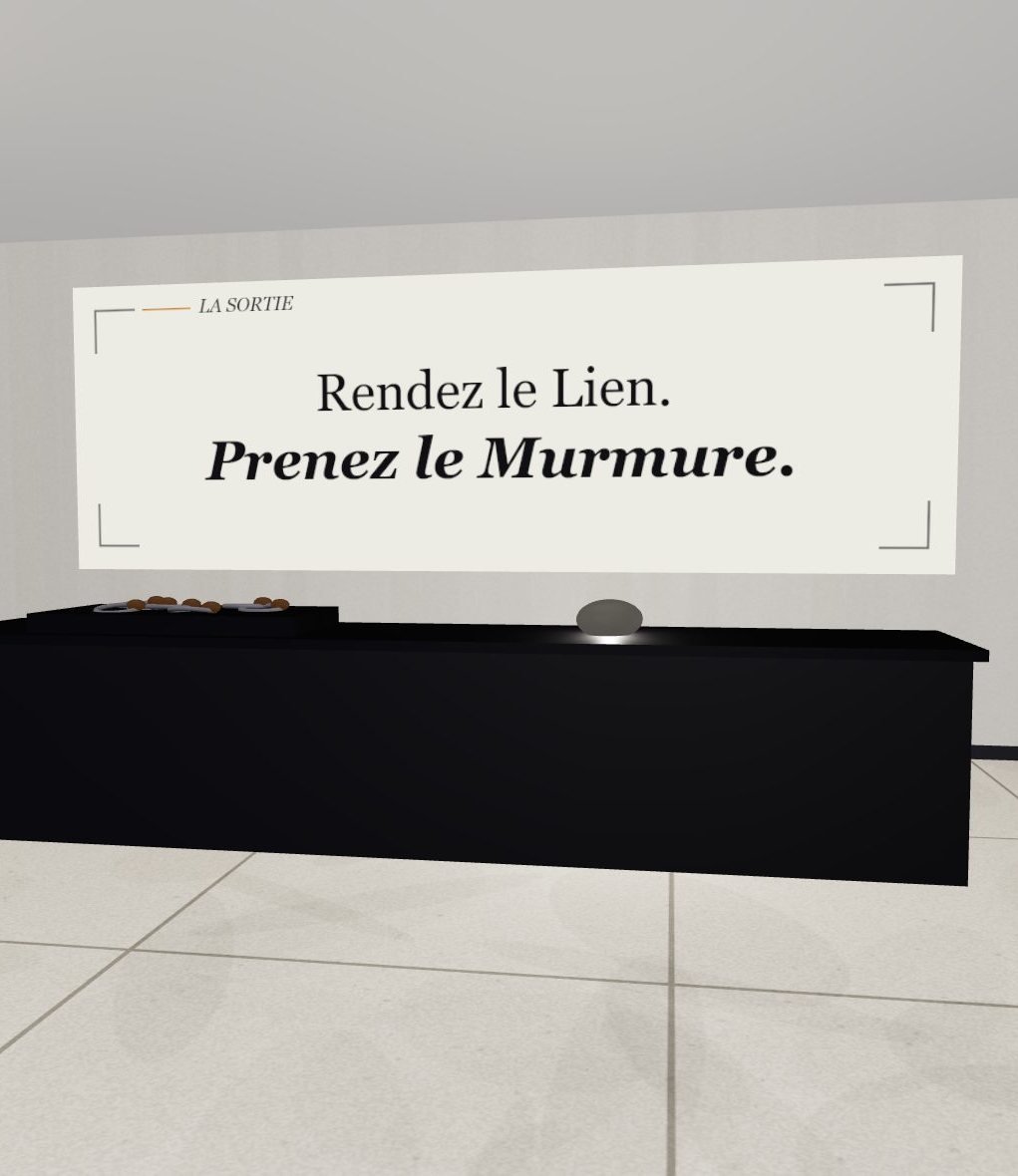
It answers
with light
The Link, the Murmur,
and the app
The Link
Lent at the entrance, returned at the exit. A very simple pebble: a chip that knows where it is in the room, three small motors that make it vibrate. It’s used to point and to confirm, and it lets you feel in your palm whatever is running through the room. Including when it slips out of everyone’s control.
- ✓It knows where it is in the room
- ✓Vibrations, precise or erratic
- ✓No screen, no button
8 rooms
An airlock, three rooms per path, a shared room, an exit. Forty minutes.
A or B
A thesis and its opposite. You only see one, unless you come back.
Concept
Scenography, objects and screens designed; all six mechanisms are playable here.
Abstract
The rooms are twelve meters by twelve and connected by corridors: you never walk through a wall. For the pebble to know where it is, each room needs a radio beacon (ultra-wideband, accurate to ten centimeters) and a short link to the room’s computer, which keeps the app, the vibrations and the projected images in sync. The mirrors on path B run on a face generator and a voice cloner installed on site, never online, and everything is erased at the exit. The Murmur carries a tiny language program on a low-power chip, with a single sensor and a single output. The six games on this page need nothing at all: they run in your browser, with no server.
Acknowledgments
This page was put together locally by Thibauld, without bothering a single remote server.
Peer review
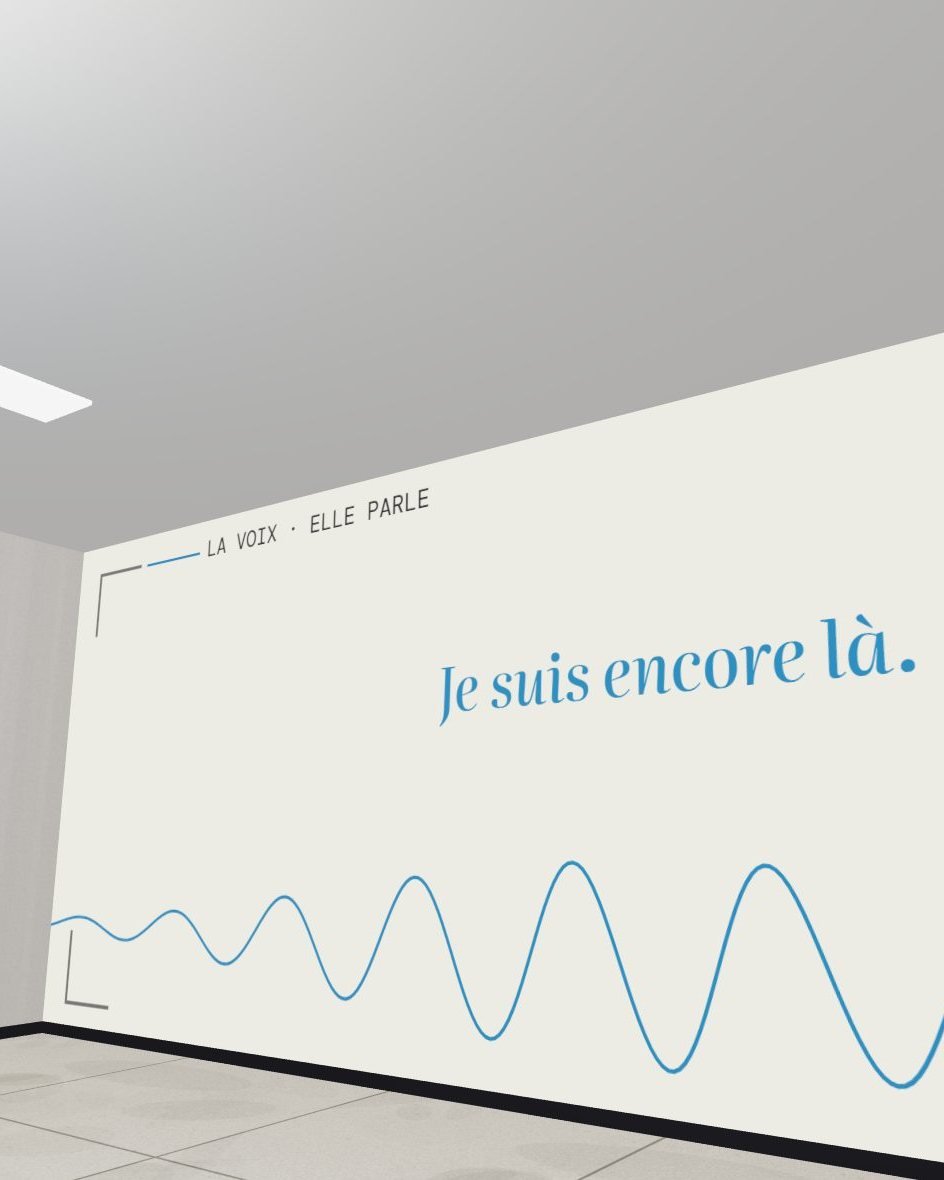
“Without your fear, without your hope, without your voice… I am nothing.”
The sentence on the wall, in the shared room
BibTeX
@misc{echo2026,
  title        = {L'{\'E}cho de la Machine: an exhibition on what we project into AI},
  author       = {Burin, Thibauld},
  year         = {2026},
  howpublished = {Exhibition concept: space, product and interface, Lyon}
}What people
ask me
The five questions that come up whenever I show the floor plan. The answers are short, like the questions.
No. It’s a complete concept: the floor plan, the objects, the screens and the mechanism of each room. What you can do right now is play the six mechanisms on this page: they really work. The next step is building the Link and the Murmur.
Because a message aimed at everyone changes nobody’s mind. Those who hope need to feel what it’s like when it gets away from us; those who are afraid need to see the same technology give a sick person their voice back. You don’t move people with arguments, you move them with an experience.
The airlock chooses for you, and tells you so. It’s a limit we own: a question with two answers is already a shortcut, and the exhibition asks it knowingly. The shared room, for its part, is the same for everyone.
It reads a tone of voice, and answers with a light. In the exhibition, a small built-in program does that job. What matters isn’t how clever it is: it’s that you have to interpret a light, and so put something of yourself into it.
To break the myth. After six rooms where the machine seemed to want something, you find the same objects, switched off: a black pane of glass, a cold sphere, a silent speaker. Technology has no intention. It won’t save anything or destroy anything on its own. It comes down to whoever holds the hammer.
We walked you through a museum that doesn’t exist yet. You chose a path in it.
Without your fear, without your hope, without your voice: the machine is nothing.
Write to Thibauldwith love ♥
if you like it
L'Écho de la Machine is an exhibition project led by Thibauld Burin: a scenography, product and interface concept about what we project onto artificial intelligence. Nothing is built yet. The six mechanisms on this page are real little games: everything happens in your browser, nothing is sent anywhere.
drop your film into
media/video-01.mp4