Halo
Outside, the phone lies flat on the table, facing whatever you want to hear. At home, it slides UPRIGHT into a wooden wall mount: it becomes a steering wheel you turn to aim in one direction, and play only what you have in common there.
Two phones
slid in,
or silence.
Twelve interviews,
four kitchens,
one month in the field.
On what condition
does music return?
Smart speakers are already here: the three I saw in the field served as kitchen timers. Headphones, for their part, ask nothing of anyone. Nobody holds the spot where music starts without anyone asking for it*.
Lyon, February 2026
What’s playing
over there
The dial stays put and turns. Whatever passes under the marker starts to play.
·
Say it,
it lays it out
One need, one sentence. Kuubo breaks it into steps, lays them on the canvas and links them up. You adjust, then you say “go”.
You talk,
it’s typed
Hold both keys, talk, let go. The text lands where your cursor was.
Your apartment
is the playlist
Each cube holds a track. Put them wherever you like, move them around, they’re yours. Then you point: whatever is in line plays, the rest stays quiet.
The ball
follows you
The cursor is you. The orange dot is your appointment. The object never tells you which way to go: the ball points at the goal, and its distance from the center tells you how far is left. You have time to spare. Spend it.
Weave
a fabric of thought
The AI never gives the answer. It asks the next question. Each answer becomes a mass on the canvas, and the fabric takes shape.
The pocket
lab
The viewfinder is you. Frame whatever intrigues you: the camera asks you a question, you answer, and your answer prints as a sticker.
Twelve
seconds
The cursor is you. Step onto the road and you leave your footprints on it. The light is red, a few seconds to go. You can cross right now. You can also wait, and see what it costs.
The client cancels.
The afternoon falls through
He’s on the road, a hundred kilometers from headquarters. Thought of as a list, the route breaks. Thought of as a territory, it pulls itself back together.
Powered by gesture*
You turn it.
It plays, or goes quiet.
no account
not a gadget


Range
Two hundred meters, low-power radio.
A building, not a neighborhood.

A phone in hand isolates.
Put down, it brings us together.
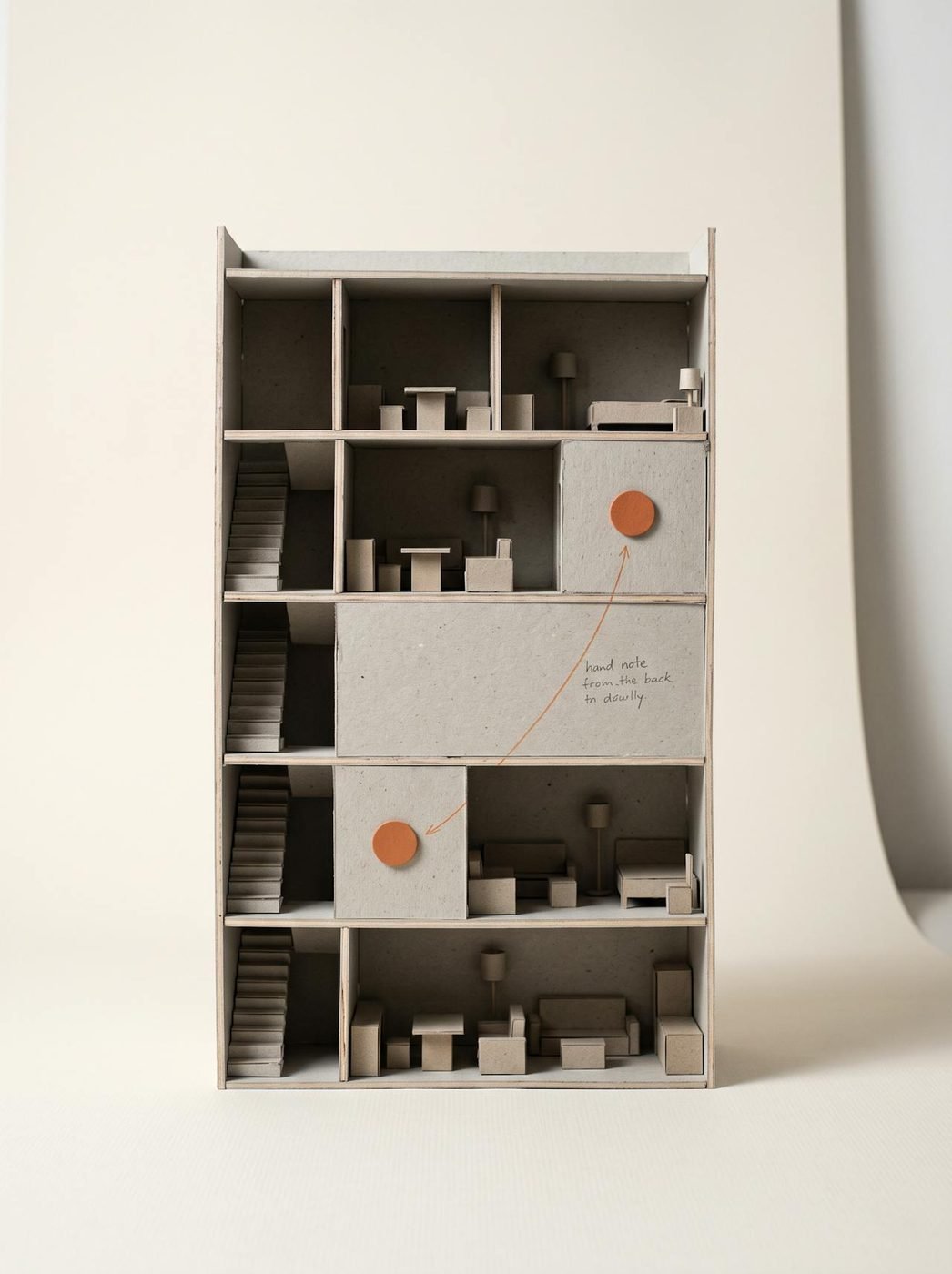
Outside, there is no object: the phone lies flat on the table, facing whatever you want to hear. Halo reads what’s playing, locally, with no account and no app to open. One phone isn’t enough: without a second one, it doesn’t wake up, and silence is a valid answer.
It queries the awake wall mounts within two hundred meters and keeps only the tracks in common. What isn’t shared is never played. What isn’t put down doesn’t exist.
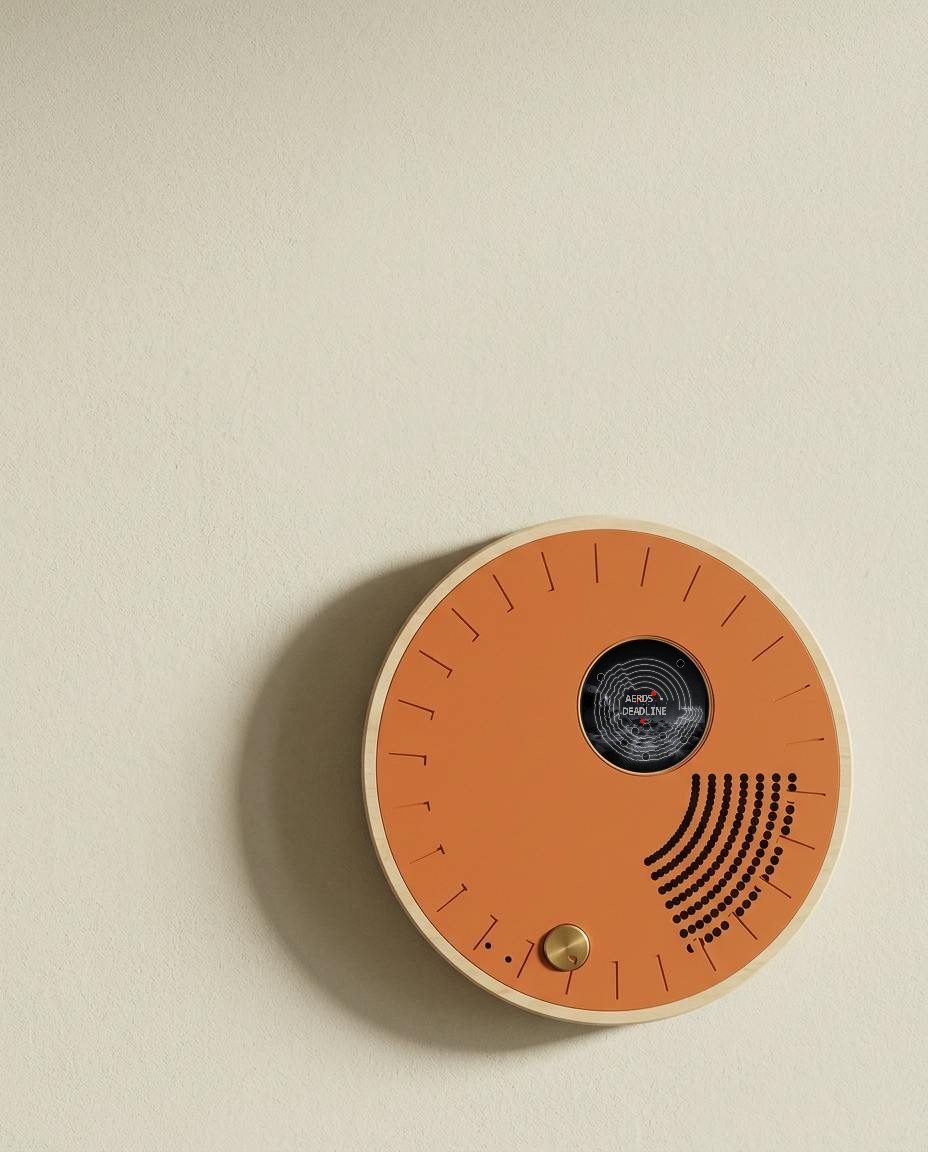
At home, the wall mount. The phone slides in UPRIGHT, behind the perforated face: it’s no longer lying down, it’s a steering wheel. You turn, the window sweeps around the room and the waves go with it. You don’t search a list, you AIM: the apartment across the street, the café downstairs, the courtyard. If there’s something in common over there, it plays it softly; if not, it stays quiet, and you keep turning.
Turn,
and aim
Slid upright into the wall mount, the phone becomes a steering wheel. You turn it, the waves sweep the room, and you only hear what you have in common with whatever is over there.
Four ideas
set aside
Each idea would have worked. None of them fixed the gesture. Click to go through them.
The map
Drop
a beacon
Pick a place, a duration, an area. Your track plays there, quietly, for whoever walks by.
What’s missing isn’t music: catalogs have never been so open. What’s missing is a gesture, and the gesture disappeared with the headphone jack.
Stories out of twelve
mention a shared earbud
Always in the past tense. The last music that filled the room, nobody can place it anymore.
Kitchens where the volume
drops when someone enters
Out of four observed, without anyone commenting. Taking over the shared sound feels like a power grab.
One Tuesday,
at 7:42 p.m.
A scenario projected from the interviews, not observed yet: the wall mount wakes up without a sound, and the upstairs neighbor turns theirs up two notches.
Three ways
to stop sharing
Twelve interviews, including these three contrasting profiles. At home, in front of their own gear, between 6 and 10 p.m.
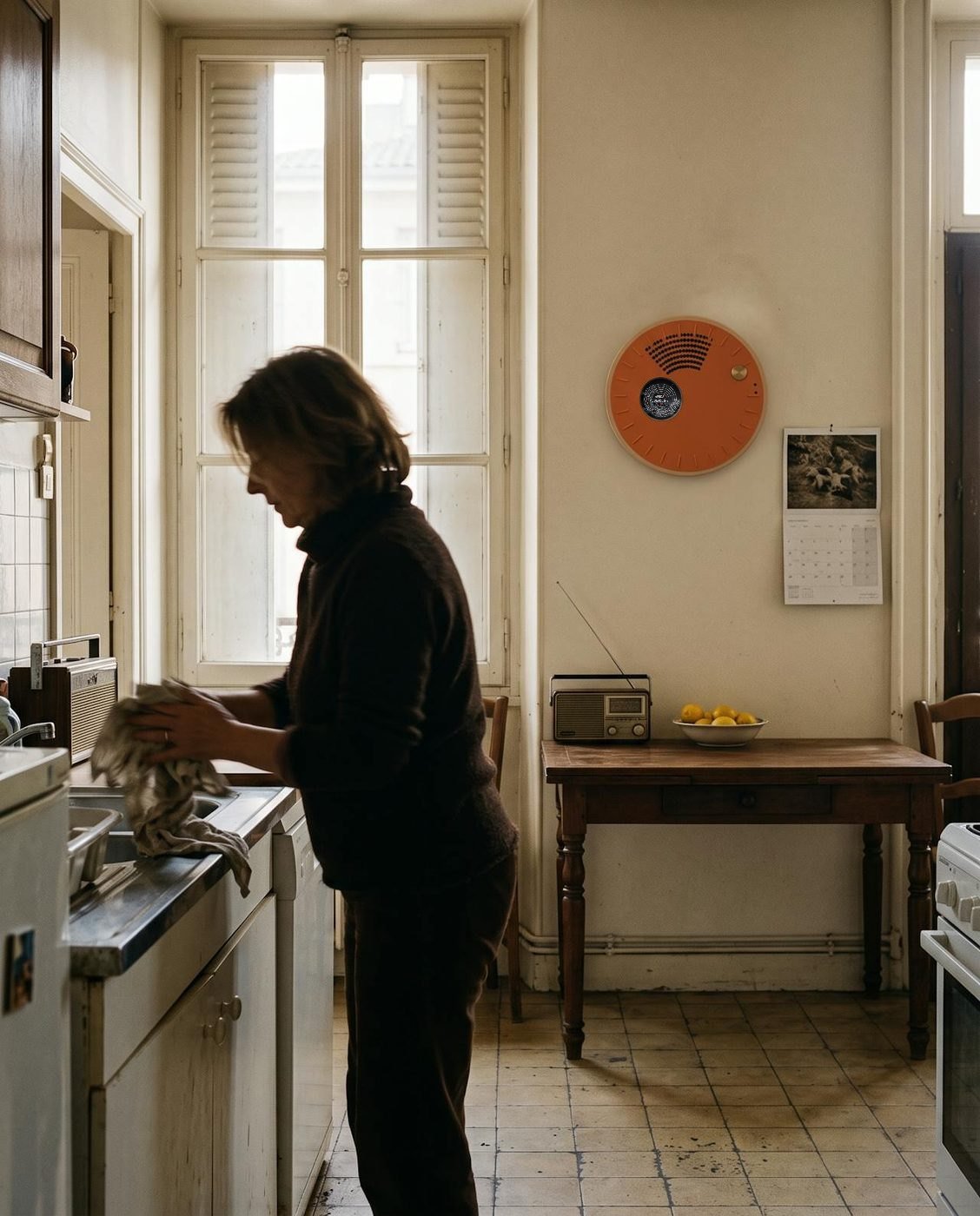

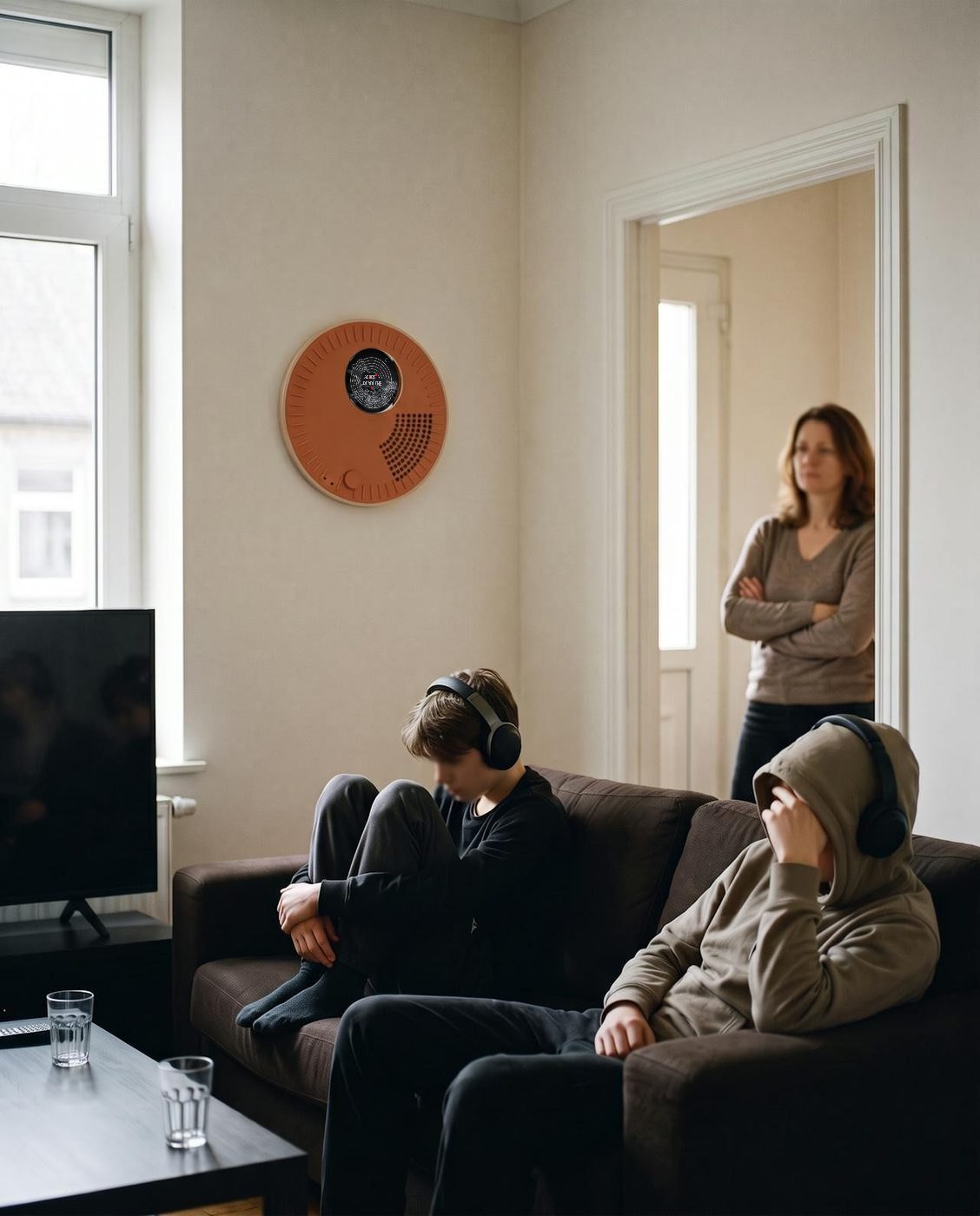
Two phones down,
or silence


Put down,
match,
let it come

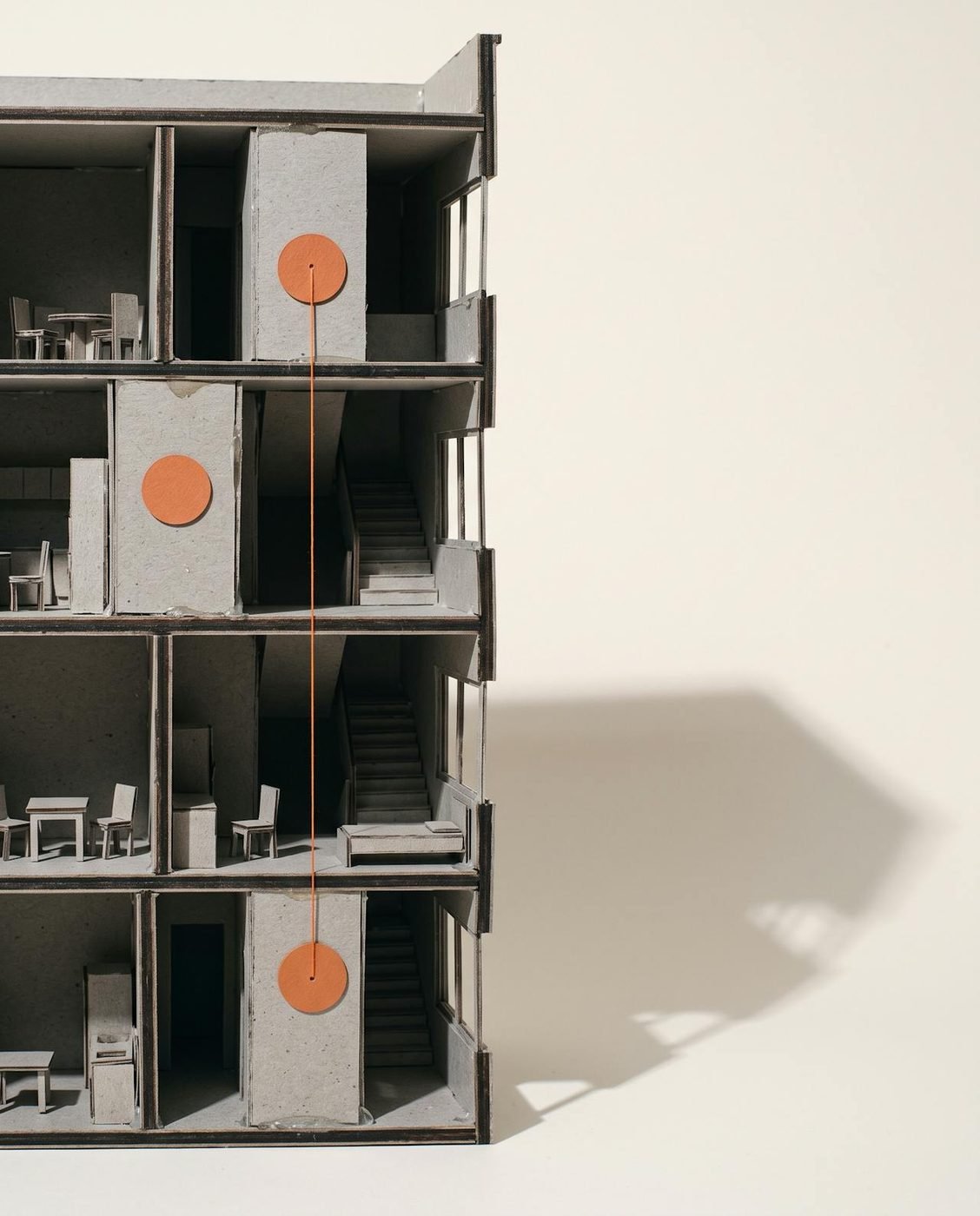
Two floors,
one song

A kitchen
object

Silence is
a valid answer
What the
mount does
Put down
With the phone slid in upright, Halo reads what’s playing, locally. No account, no app to open, no settings: putting it down is the only gesture, and it’s one we were already making.
- ✓No account
- ✓No app to open
- ✓No history kept
12 listens
Shared, started without a second thought. Below that, the object changed nothing.
0 requests
The music starts without anyone asking for anything.
1 explanation
If the object has to be explained on every new visit, it has failed.
Abstract
Success isn’t measured in hours of listening. Chosen threshold: twelve shared listens, started without a second thought. Strong signal: the music starts without anyone asking for anything. Weak signal: the wall mount is just a phone stand. Failure: the object has to be explained on every new visit. The test hasn’t been run yet.
Acknowledgments
This page was put together locally by Thibauld, without bothering a single remote server.
Peer review
“We used to fight over the kitchen playlist. Now everyone puts their earbuds in.”
Blandine, 24, interviewed on February 6, 2026
BibTeX
@misc{halo2026,
  title        = {Halo: a wall dial you turn to give music back to the room},
  author       = {Burin, Thibauld},
  year         = {2026},
  howpublished = {Field study, 12 interviews, Lyon}
}What people
ask me
The five questions that come up whenever I show the wall mount. The answers are short, like the questions.
Nothing. Halo doesn’t wake up. That’s the rule, and it’s on purpose: an object that played for a single person would turn back into a speaker, with someone taking over the sound.
Nobody. The wall mount keeps only what the phones put down have in common. If there’s nothing in common, it stays quiet. Silence is a valid answer.
It stays within the two hundred meters. No account, no history, no screen: what the wall mount reads on your phone is used to find matches, then it’s erased.
Because one more object on a countertop always ends up put away. A wall mount is fixed to the wall, blends into the room, and its slot tells you on its own what’s expected of you.
Four cardboard models, a field study, a test protocol. No working prototype yet: the range and the radio still need testing.
We showed you a perforated wooden disc on a wall. It’s a gesture we found again.
Good design takes a gesture away, it doesn’t add one.
Write to Thibauldwith love ♥
if you like it
drop your film into
media/video-01.mp4