Ligne rouge
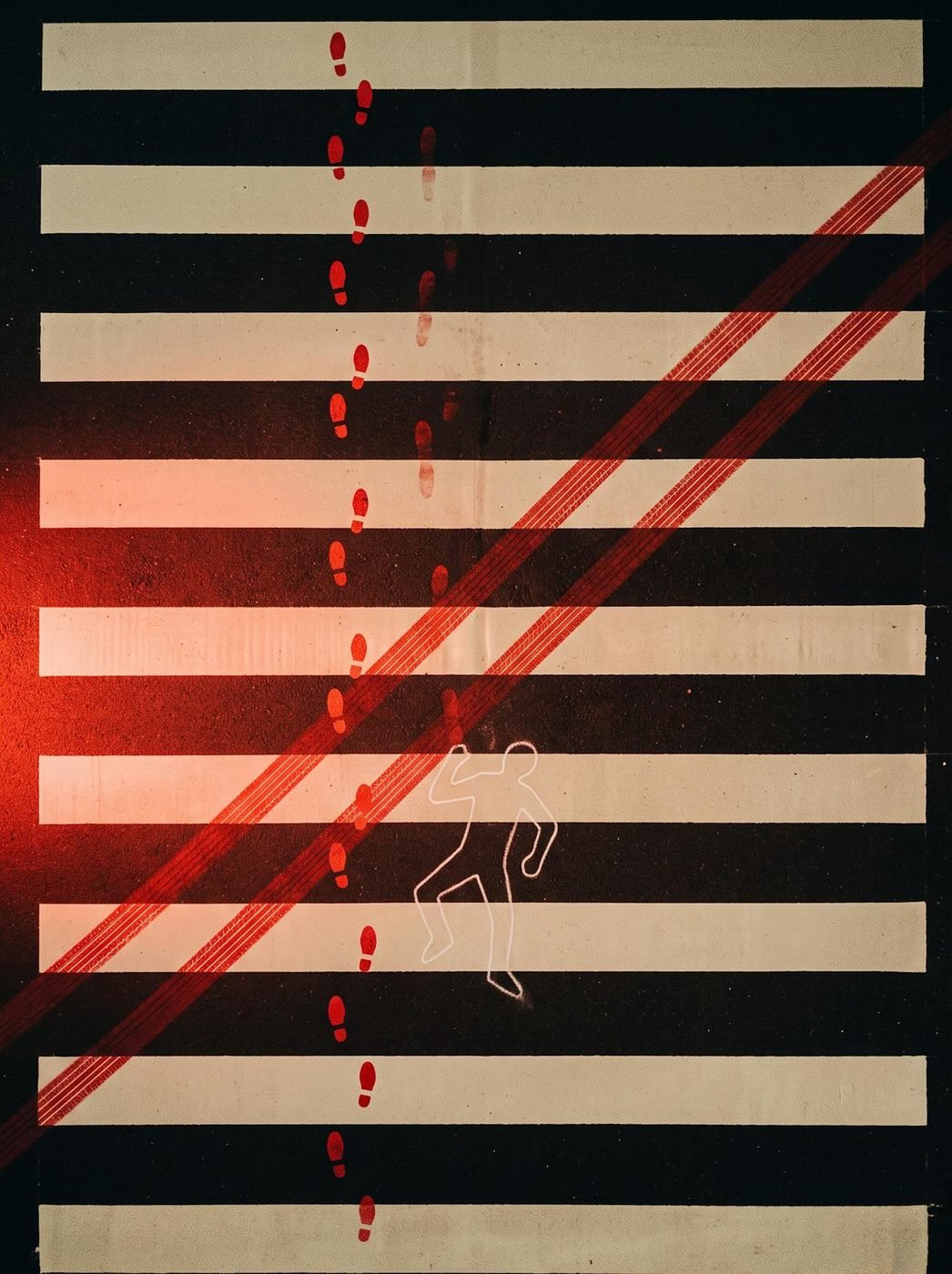
The pedestrian light is the most ignored signal in the city. This project doesn’t make it redder, bigger or louder: it projects onto the ground, at night, the scene nobody ever sees. Footsteps crossing, a screech, tire marks that stop them dead.
Lose
twelve seconds,
or lose
everything else.
Two bollards,
one beam,
and a scene
that lasts four seconds.
A signal
nobody believes
anymore
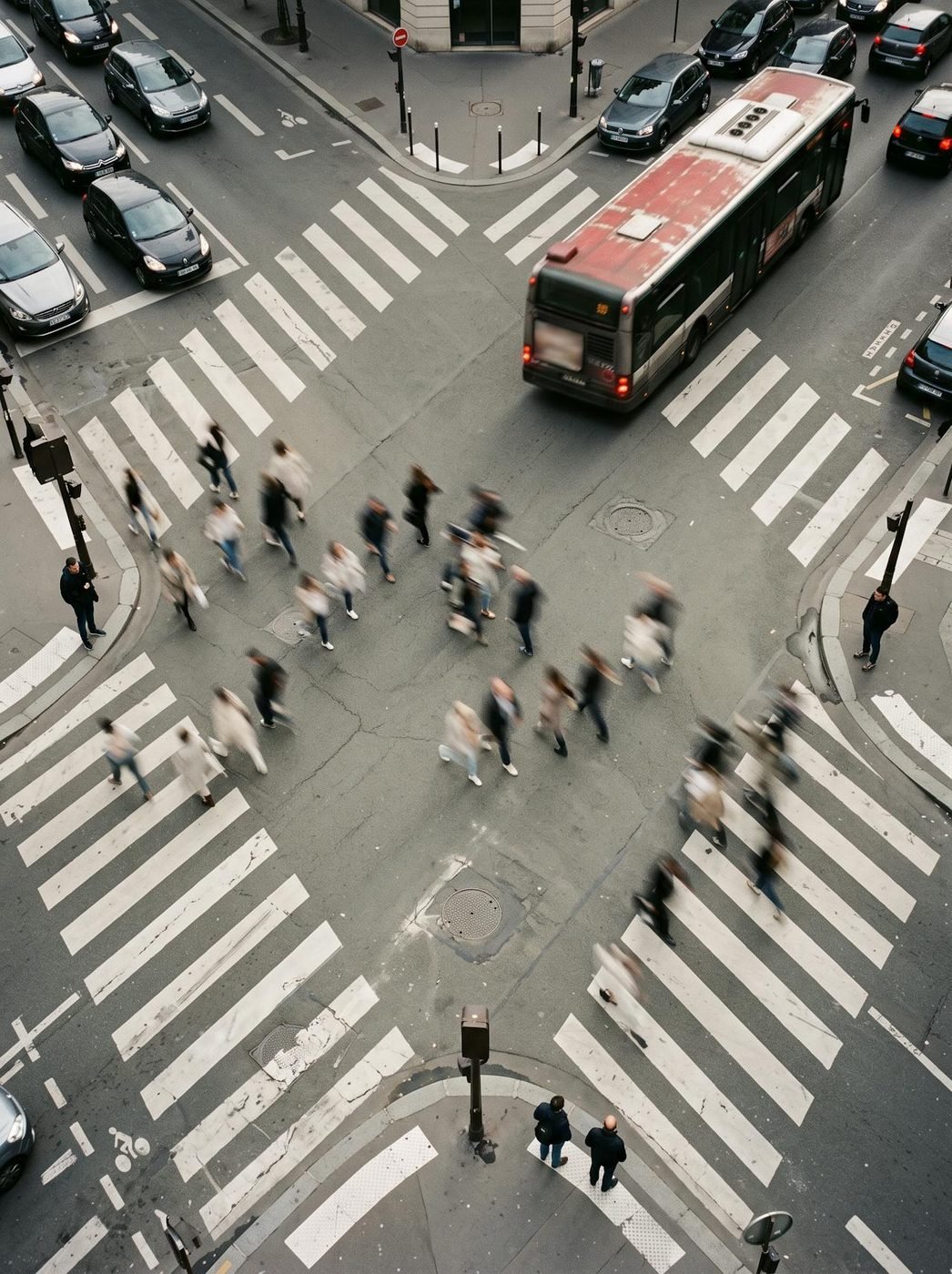
Red grabs attention, then it turns ordinary and loses its authority. Pedestrians respect it far less than drivers do: over 30% cross on red* in big cities. Not out of bravado: because they trust their own judgment of the danger.
during the research
(INSEE, 2021)
What’s playing
over there
The dial stays put and turns. Whatever passes under the marker starts to play.
·
Say it,
it lays it out
One need, one sentence. Kuubo breaks it into steps, lays them on the canvas and links them up. You adjust, then you say “go”.
You talk,
it’s typed
Hold both keys, talk, let go. The text lands where your cursor was.
Your apartment
is the playlist
Each cube holds a track. Put them wherever you like, move them around, they’re yours. Then you point: whatever is in line plays, the rest stays quiet.
The ball
follows you
The cursor is you. The orange dot is your appointment. The object never tells you which way to go: the ball points at the goal, and its distance from the center tells you how far is left. You have time to spare. Spend it.
Weave
a fabric of thought
The AI never gives the answer. It asks the next question. Each answer becomes a mass on the canvas, and the fabric takes shape.
Turn,
and aim
Slid upright into the wall mount, the phone becomes a steering wheel. You turn it, the waves sweep the room, and you only hear what you have in common with whatever is over there.
The pocket
lab
The viewfinder is you. Frame whatever intrigues you: the camera asks you a question, you answer, and your answer prints as a sticker.
Two phones down,
or silence
One phone on the base isn’t enough. Without a second one, Halo doesn’t wake up, and silence is a valid answer.
The client cancels.
The afternoon falls through
He’s on the road, a hundred kilometers from headquarters. Thought of as a list, the route breaks. Thought of as a territory, it pulls itself back together.
Powered by waiting*
You look at the ground.
You wait.
the project asks for,
and it costs nothing
Twelve
seconds
The cursor is you. Step onto the road and you leave your footprints on it. The light is red, a few seconds to go. You can cross right now. You can also wait, and see what it costs.
played out on the ground, for one person only
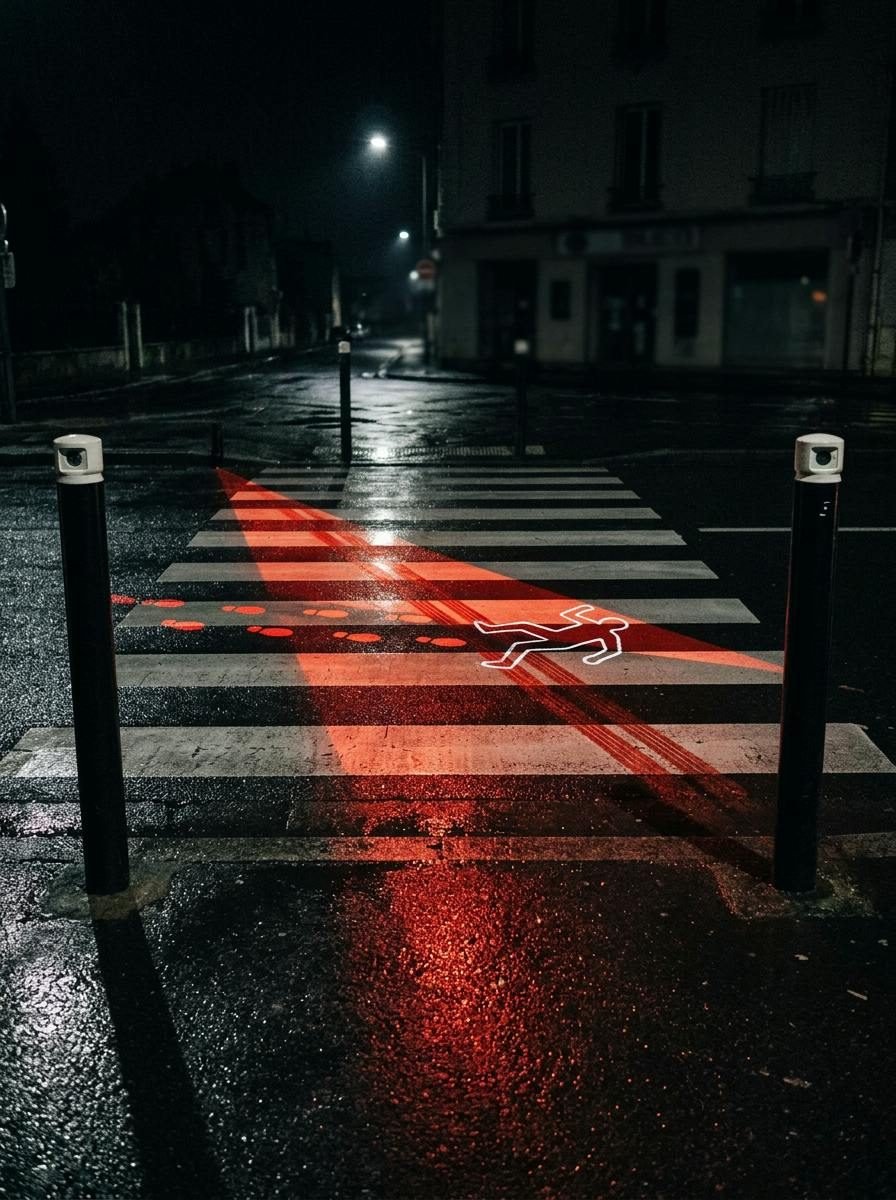
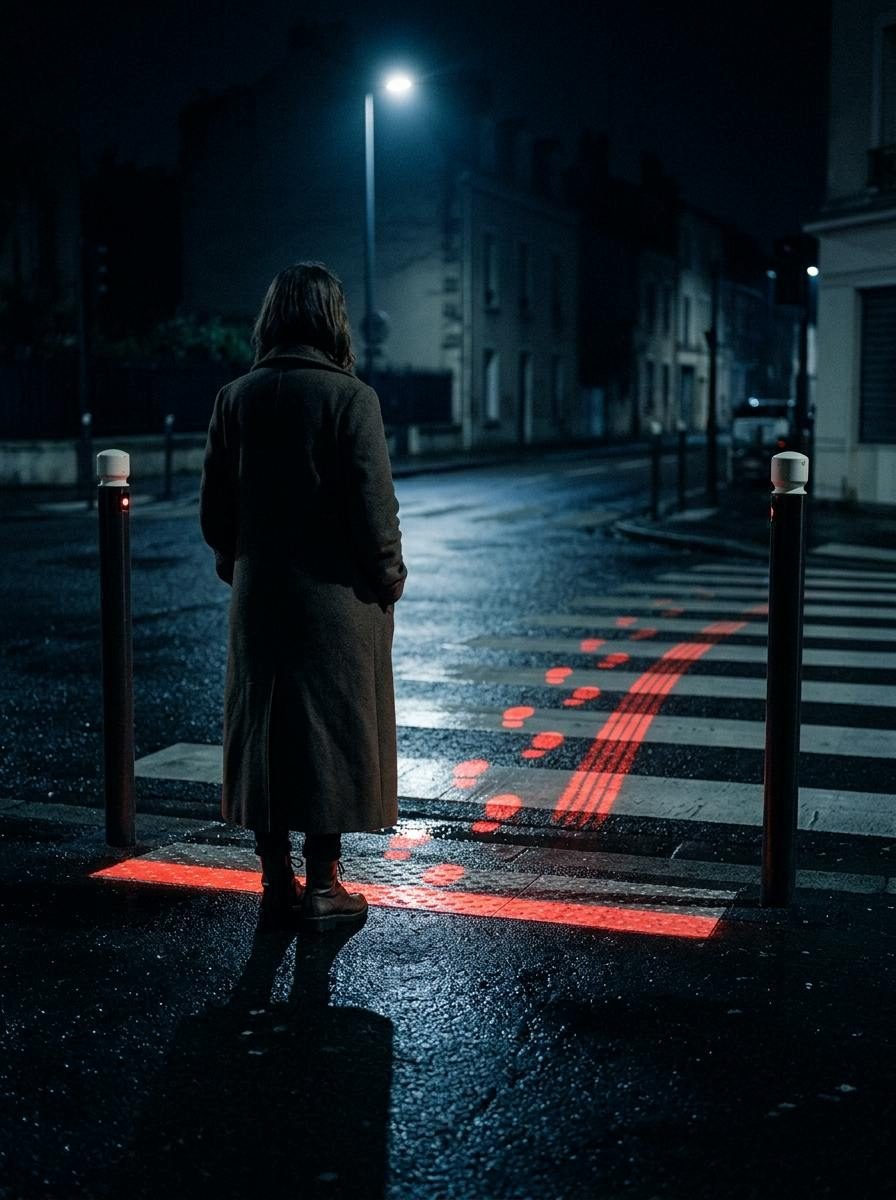
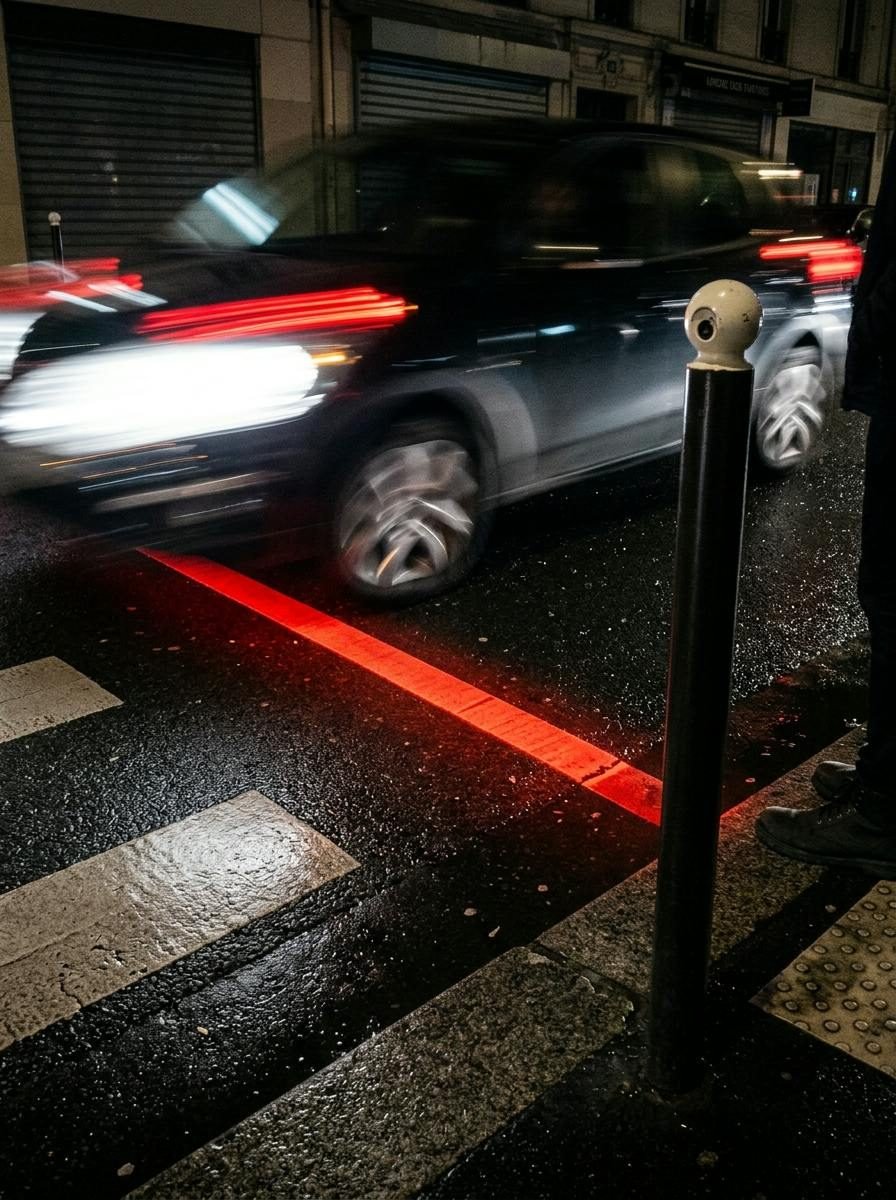
The bollard
A street bollard, a lens under its head.
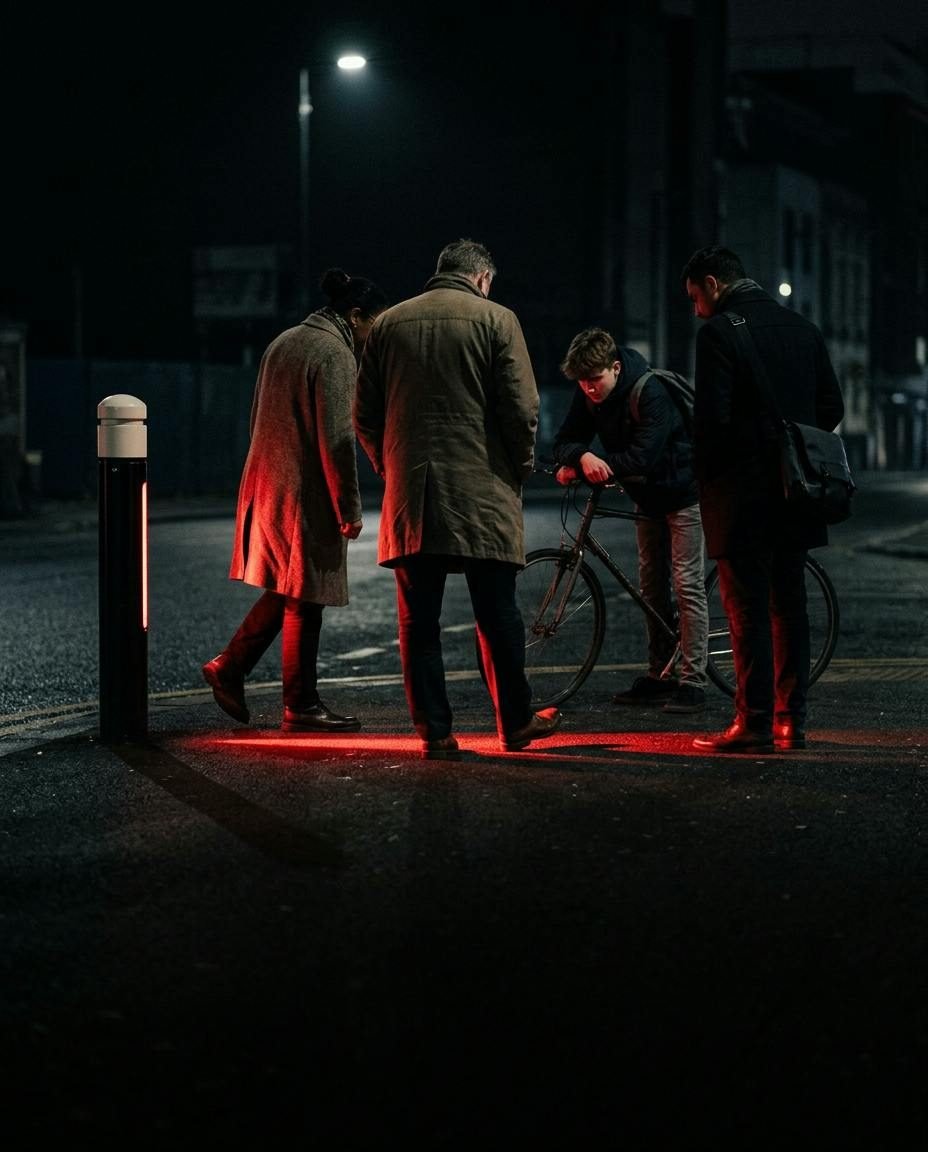
It only lights up at night, and only in front of someone.
No screen, no voice.
A light on the ground, and silence around it.
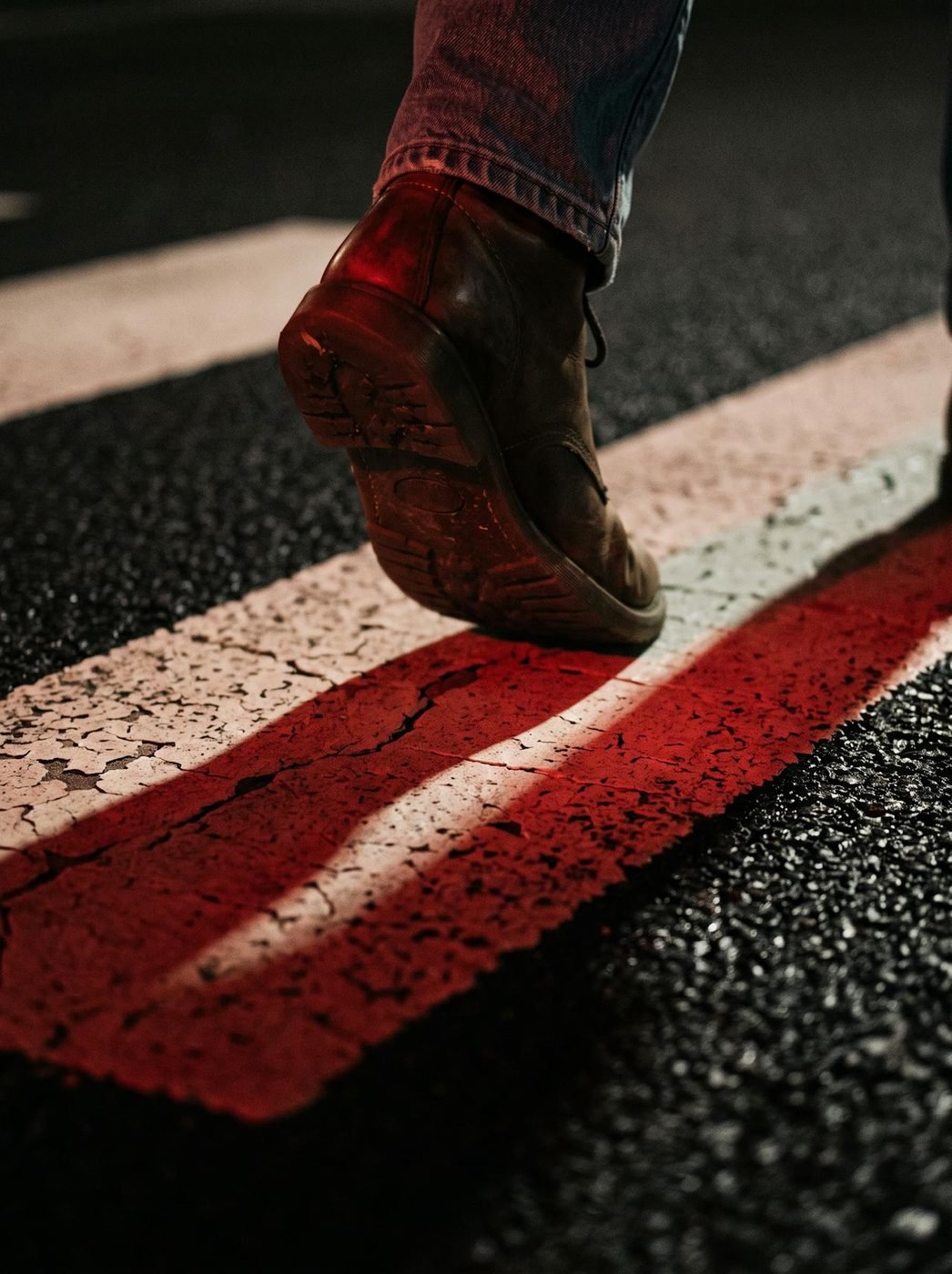
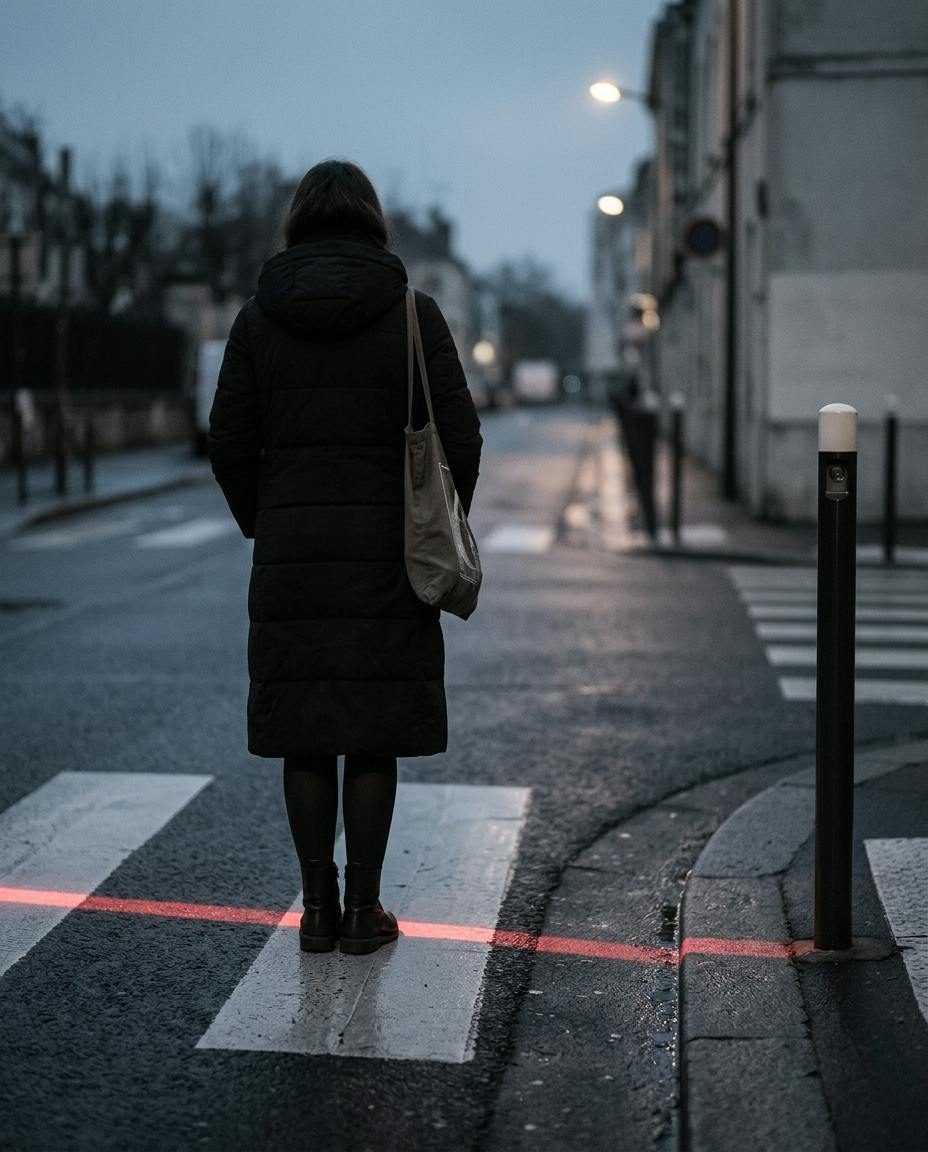
A red circle lights up on the ground, under the feet of the person waiting. It writes nothing, it doesn’t blink, it makes no sound: it just draws a boundary around them, like a silent alert. It’s the only moment the device settles for simply existing, and that’s what makes people look up from their phone.
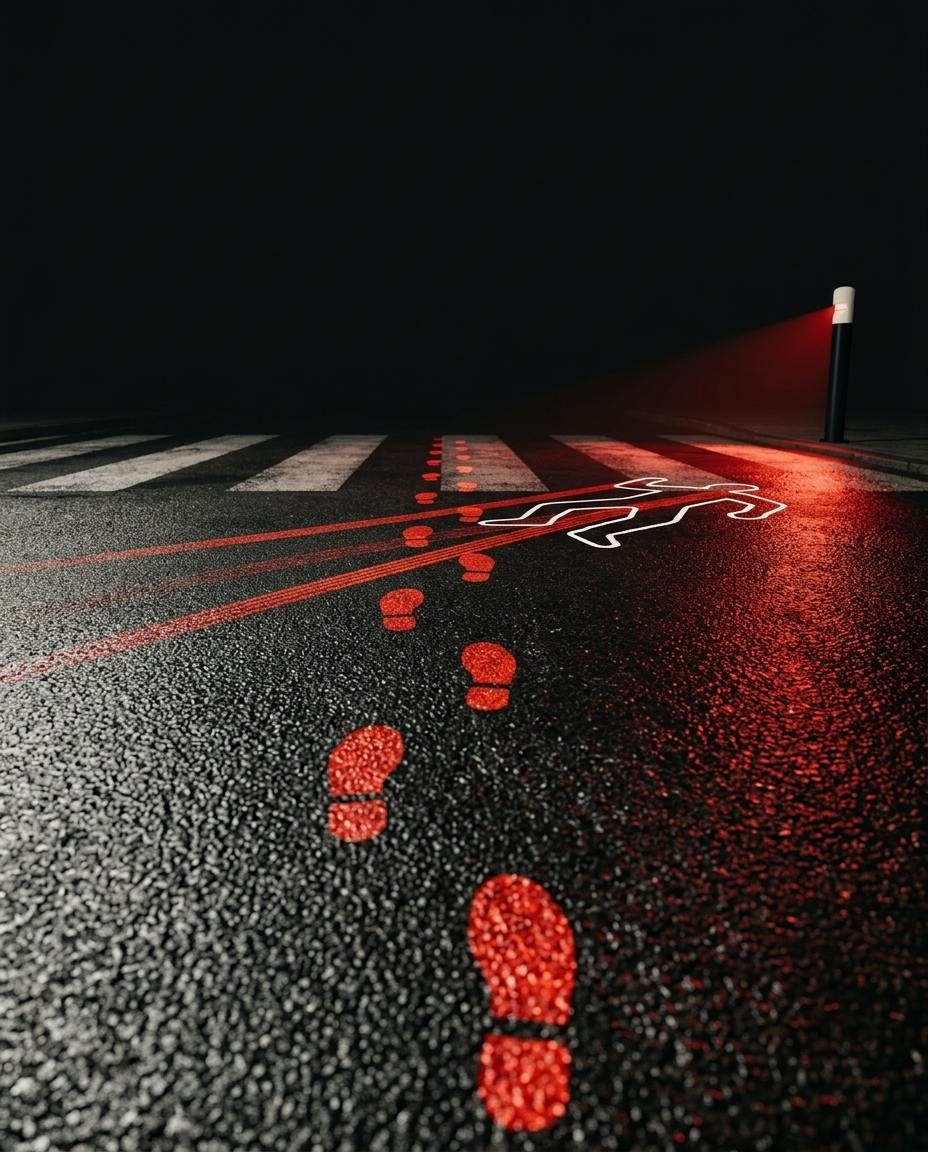
Footprints appear on the road, as if someone were walking. An engine revs, a screech cracks, and tire marks print across them. A silhouette falls. Four seconds in all: enough to understand, too short to be a movie.
The ground slowly writes, at the edge of the halo: “There were twelve seconds left before green. He could have made it home.” Then everything goes dark. The pedestrian steps back, and this time he waits. It’s the only thing he was asked to do.
The game,
the mirror,
or the scene
Three ways to fill the same wait. Two were set aside, and not for reasons of taste. Click to go through them.
The map
Drop
a beacon
Pick a place, a duration, an area. Your track plays there, quietly, for whoever walks by.
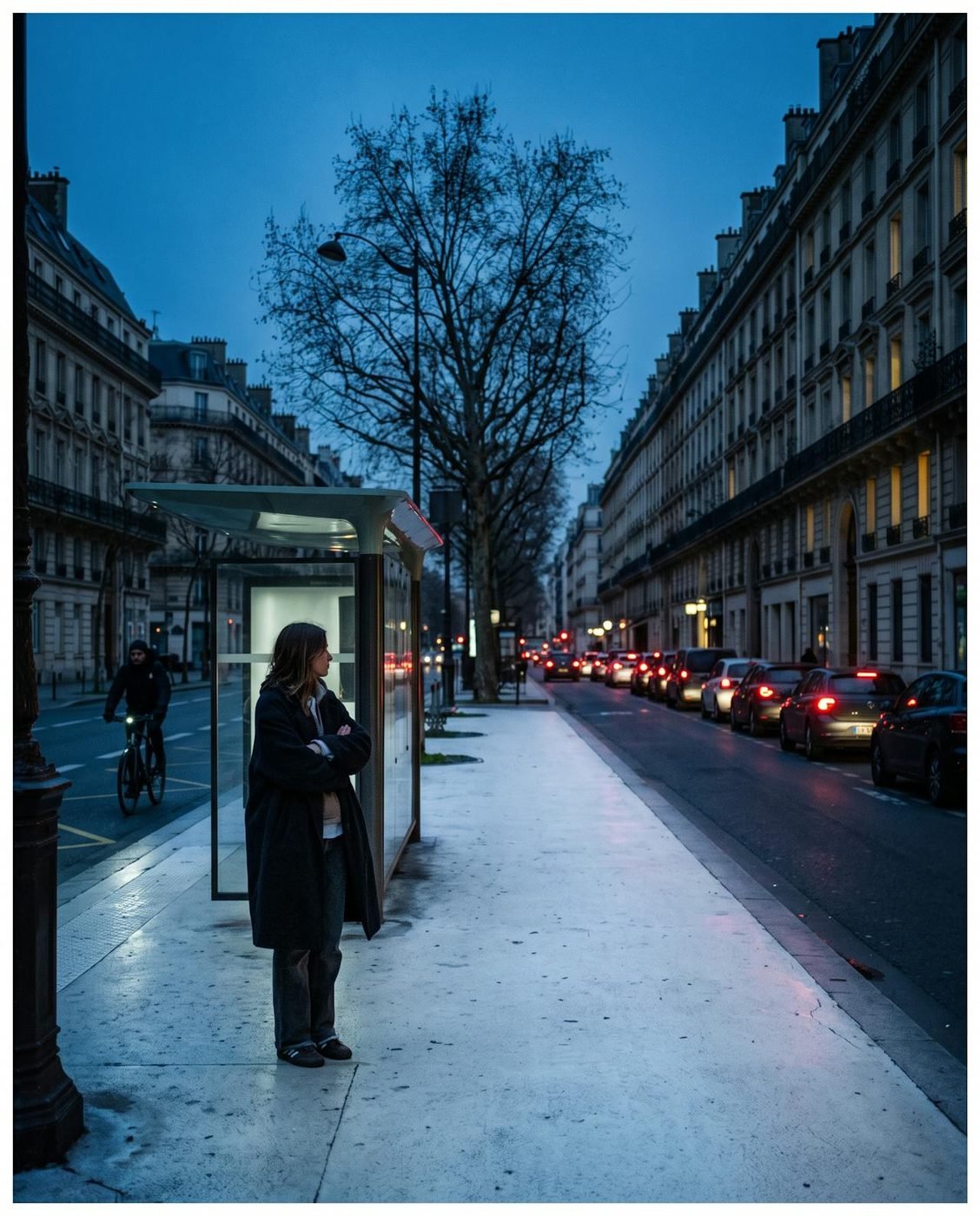
By day, nothing happens. The bollards are off, the road is just a road, and the crossing tells nobody anything. It’s not about saving energy: it’s the point. People cross badly when they’re alone, tired, in a hurry, and it’s at night that all three happen together.
Average
wait, in seconds
That’s how long a pedestrian red lasts at a typical city intersection. The project isn’t fighting an hour of waiting: it’s fighting twelve seconds.
Percent
of pedestrians
Cross on red in big cities. The figure comes from the project’s research phase, and it decided everything: you don’t design for a fringe, you design for a silent majority.
What plays out
in four seconds
Nothing is left to interpretation, and nothing is shown in full. You recognize an accident scene by its traces, the way you would on a real road the next morning.
The case
against me
The project hasn’t been tested in the field: so these aren’t reviews, they’re the objections raised during design, and what I do with them.


Red,
so what


Twelve
seconds,
that’s all

We don’t talk.
We show.

Four
seconds
on the ground
The mirror
of a future avoided
Four seconds,
on the ground
The halo
A red circle lights up on the ground, under the feet of the person waiting. It writes nothing and makes no sound: it draws a boundary around them, and that’s enough to make them look up.
- ✓At night only
- ✓One person alone
- ✓No sound
Night
The device only lights up after dark, in front of a person alone, waiting at the red.
4 s
The full scene. Any longer, it would be a movie, and you’d watch it instead of taking it in.
2 bollards
Two street bollards, a lens under the head, a presence sensor. Nothing on the ground.
Abstract
Two street bollards, an adjustable lens under the head, a presence sensor and sync with the light: that’s all the hardware. There’s no camera, so no image of anyone, and nothing is recorded. The projection reads on dark asphalt under weak street lighting, which limits the crossings where the device makes sense. The sound stays below the nighttime limit: it should startle, not wake up the street.
Acknowledgments
This page was put together locally by Thibauld, without bothering a single remote server.
Peer review
“There were twelve seconds left before green. He could have made it home.”
The message projected on the ground, use scenario
BibTeX
@misc{lignerouge2026,
  title        = {Ligne rouge: projecting the invisible consequences of crossing on red},
  author       = {Burin, Thibauld},
  year         = {2026},
  howpublished = {Design project, mockups and scenario}
}What people
ask me
The five questions that come up as soon as I show the scenario. The answers are short, and two of them are limits.
It’s the most debated point, and the honest answer is: it depends on who oversees it. There’s no contact, no image of the person, and the scene is explicitly fiction, in traces and silhouette. But staging an accident in the street is only legitimate if it’s owned as a prevention campaign, with a sponsor and a message visible on site.
Because that’s when judgment goes bad: alone, tired, in a hurry, and a street that looks empty. By day, a ground projection is invisible anyway, and the pedestrian is rarely alone. The device isn’t trying to be seen all the time, it’s trying to show up at the right moment.
That’s exactly what happened to the red light, and it’s the project’s weakness. A scene replayed identically becomes scenery, so one more signal to ignore. The leads are to vary it, to trigger it only once per person per night, and to accept that it grows rarer. None of this is validated.
No. A presence sensor says someone is there, not who. There’s no camera, no image, nothing recorded and nothing leaving the bollard. It’s a design constraint, not a setting: in a device that talks about fear, surveillance would be the worst possible message.
Not yet. There’s a complete use scenario, mockups photographed on a real crossing, and the technical choice of bollards. What’s missing: a test crossing, a permit, and before-and-after counts. Without those numbers, the project remains an intention.

You’ve just seen a scene that never happened. That’s the whole point.
Lose twelve seconds, or lose everything else.
Write to Thibauldwith love ♥
if you like it
Ligne rouge is a school project by Thibauld Burin (D4 Interaction make-up project, 2026): research on the red pedestrian light, three ideas explored, one kept, a use scenario and photographed mockups. The device hasn’t been installed or field-tested, and the figures quoted come from the research phase. The messages projected on this page are the scenario’s.
drop your film into
media/video-01.mp4