MindSilk
Learning with AI without handing it the keyboard. It doesn’t give the answer: it asks the next question. And what you answer becomes a fabric of thought, visible, that you can defend in class.
We no longer learn
to search,
we learn
to get.
What I saw
in class, with
kids aged 12-18.
Why
not ban it?
Because 99% of students already use AI, 51% say they struggle to do without it, and fewer than 10% of schools have a rule. Banning it just means it happens somewhere else. MindSilk does the opposite: relearning to think with it*.
OECD 2022,
UNESCO 2023
What’s playing
over there
The dial stays put and turns. Whatever passes under the marker starts to play.
·
Say it,
it lays it out
One need, one sentence. Kuubo breaks it into steps, lays them on the canvas and links them up. You adjust, then you say “go”.
You talk,
it’s typed
Hold both keys, talk, let go. The text lands where your cursor was.
Your apartment
is the playlist
Each cube holds a track. Put them wherever you like, move them around, they’re yours. Then you point: whatever is in line plays, the rest stays quiet.
The ball
follows you
The cursor is you. The orange dot is your appointment. The object never tells you which way to go: the ball points at the goal, and its distance from the center tells you how far is left. You have time to spare. Spend it.
The pocket
lab
The viewfinder is you. Frame whatever intrigues you: the camera asks you a question, you answer, and your answer prints as a sticker.
Twelve
seconds
The cursor is you. Step onto the road and you leave your footprints on it. The light is red, a few seconds to go. You can cross right now. You can also wait, and see what it costs.
Two phones down,
or silence
One phone on the base isn’t enough. Without a second one, Halo doesn’t wake up, and silence is a valid answer.
The client cancels.
The afternoon falls through
He’s on the road, a hundred kilometers from headquarters. Thought of as a list, the route breaks. Thought of as a territory, it pulls itself back together.
Powered by doubt*
It asks again.
You hold firm.
where you search
instead of getting
on mindsilk.fr


The fabric
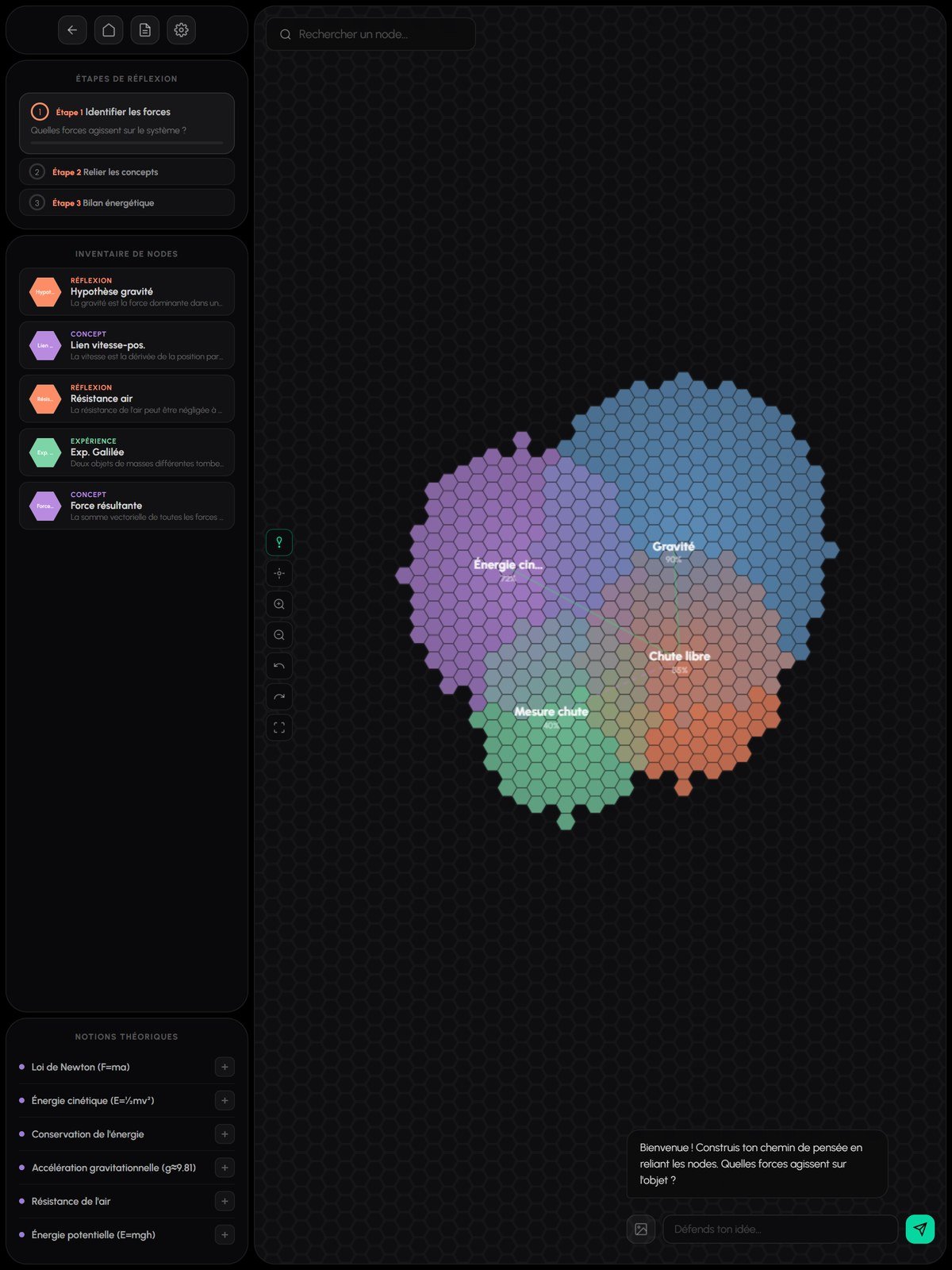
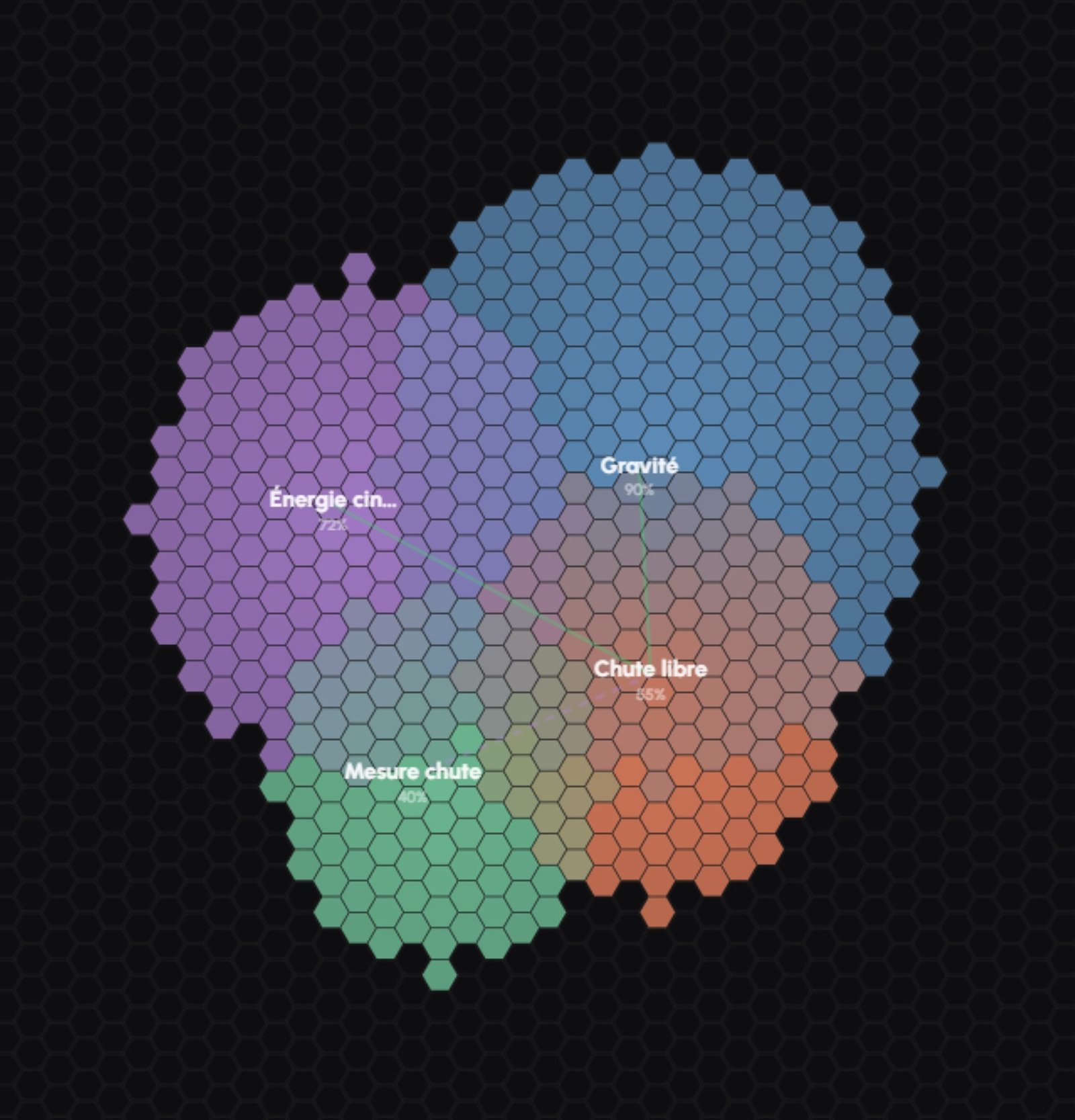
Reflection, concept, experience, evidence: four colors, one per type of mass.
They overlap, and the idea’s credibility goes up.

The Socratic AI keeps asking.
The fabric keeps what you held onto.

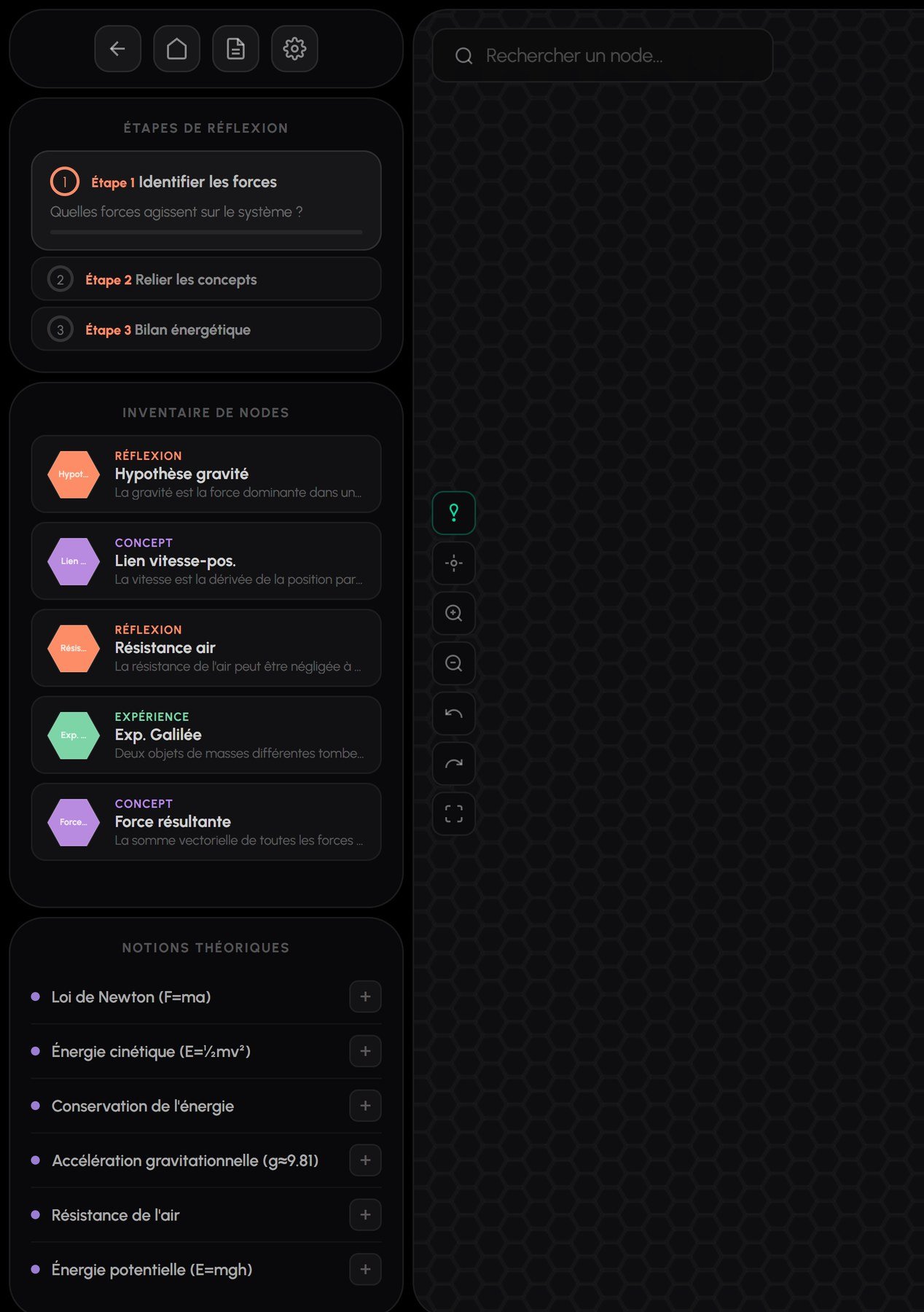
It has one thing it may never do: give the answer. Instead, a question, then another, until you hold a position. That’s what was missing in the field: students asked, got, gave up. Here, getting isn’t an option, so you search.
Every answer becomes a mass of hexagons: a reflection, a concept, an experience, a piece of evidence. They overlap, and the mix makes the idea’s credibility: 10% for a hunch, 45% when you defend it, 70% with evidence, 100% when it’s certain. You watch your thinking take shape, and you can present it.
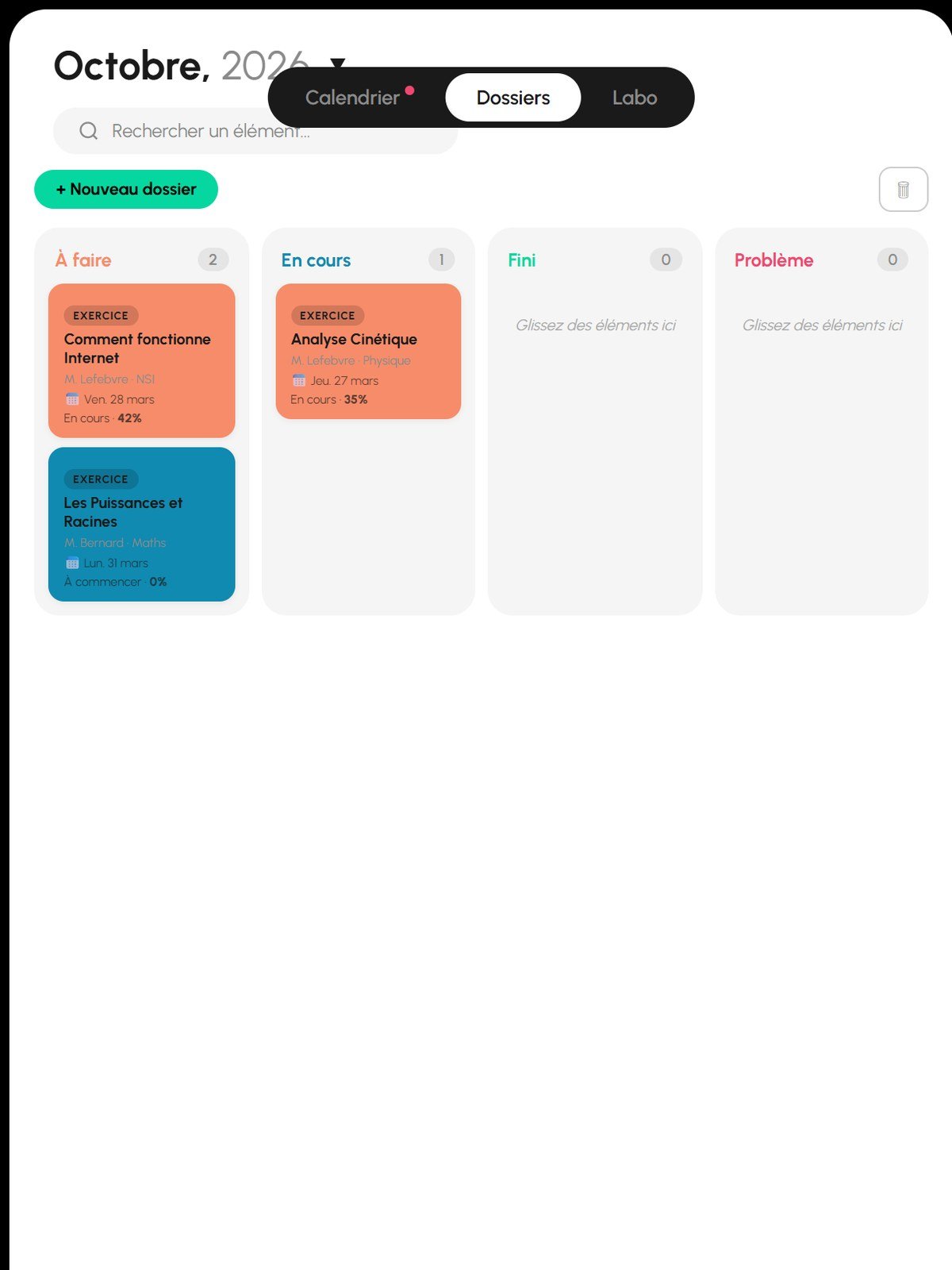
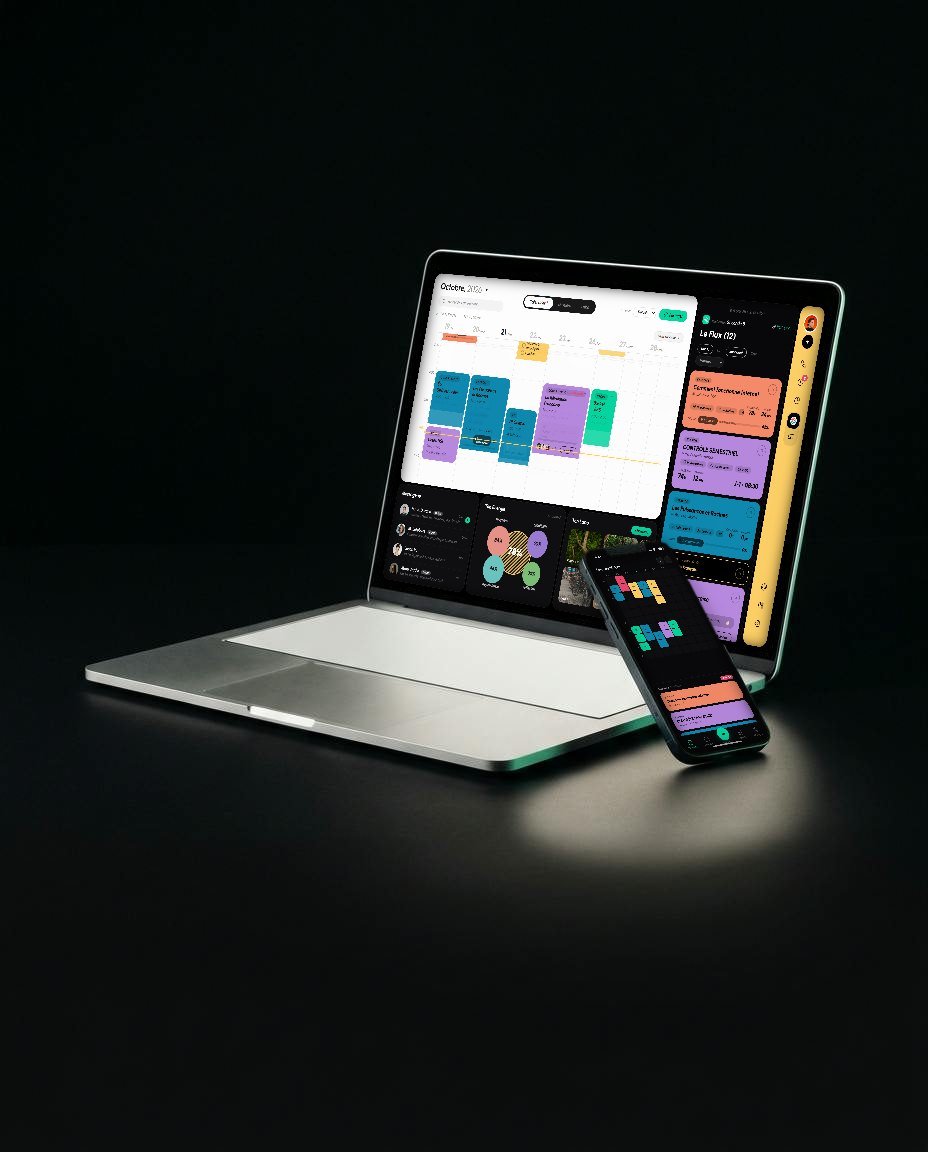
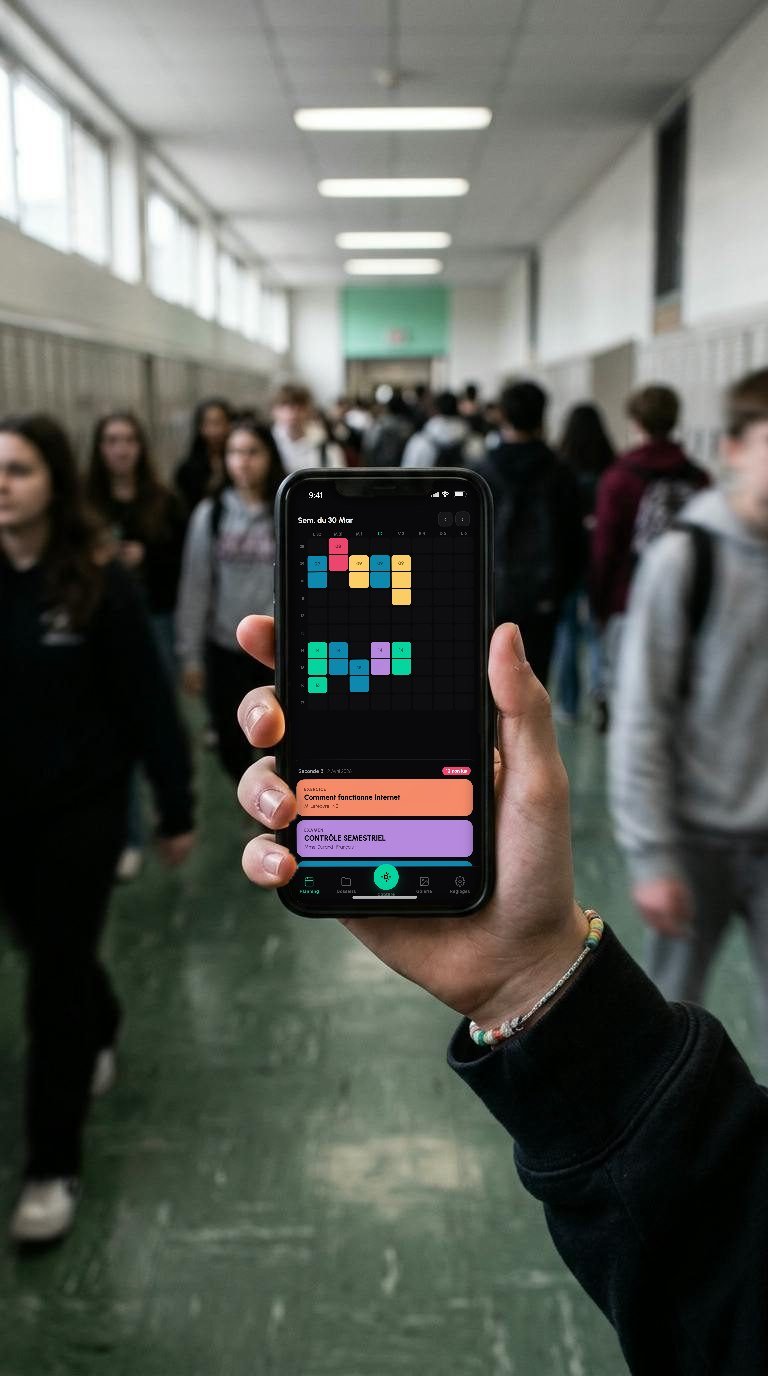
A calendar, an exercise feed, folders, a capture lab, the teacher’s messages, and the same thing in your pocket. It’s not the heart of the project, it’s what makes you open it every day: thinking shows up in the tool you already have in hand.
Weave
a fabric of thought
The AI never gives the answer. It asks the next question. Each answer becomes a mass on the canvas, and the fabric takes shape.
Turn,
and aim
Slid upright into the wall mount, the phone becomes a steering wheel. You turn it, the waves sweep the room, and you only hear what you have in common with whatever is over there.
Three versions
for one
single idea
V1 tested chaos, V2 went to class, V3 is online. Click to go through them.
The map
Drop
a beacon
Pick a place, a duration, an area. Your track plays there, quietly, for whoever walks by.
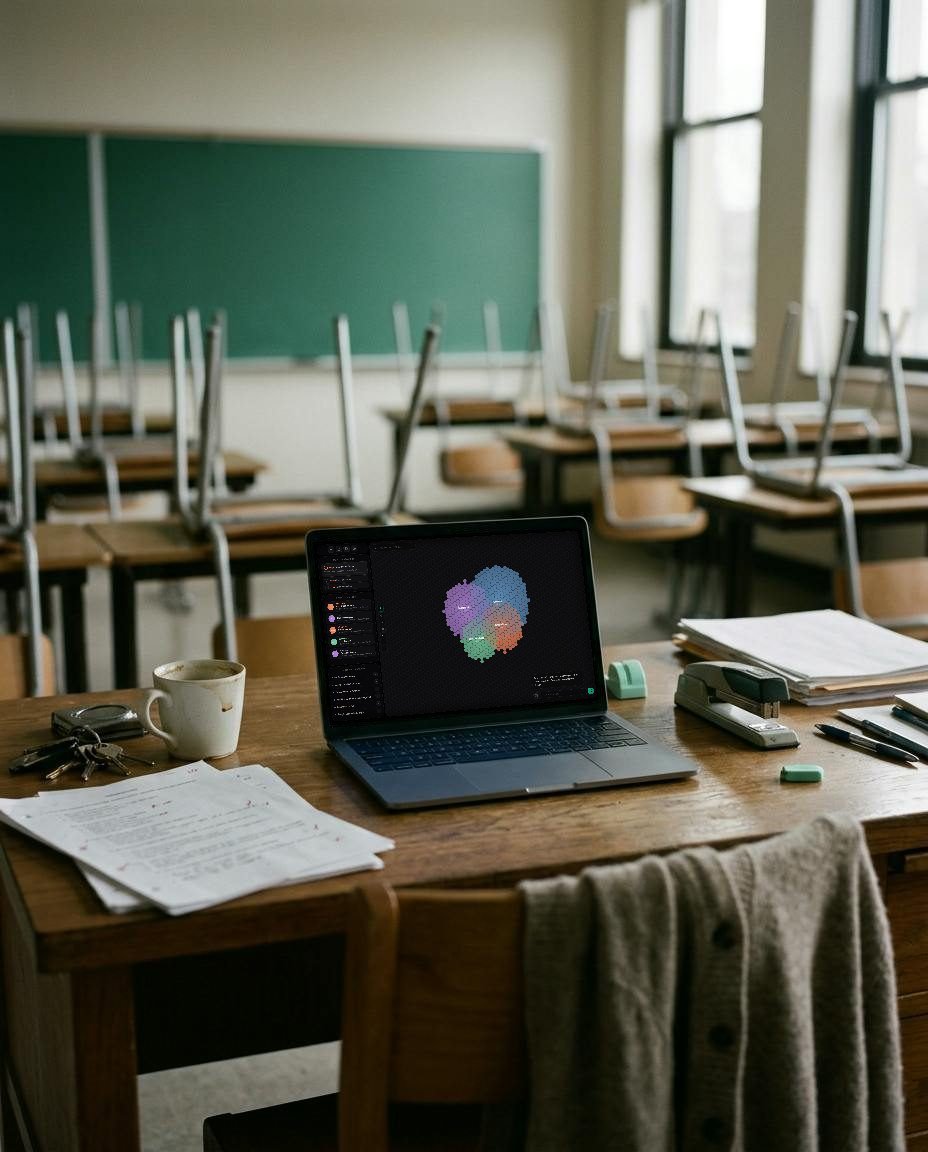
Two groups, the same topic. With the fabric, 58 arguments held; without it, 32. It’s not a study, it’s one class session with six students, but it’s the number that tipped the project: when the answer isn’t handed over, students come up with more.
Mass
types
Reflection, concept, experience, evidence. Four colors you learn to read in one session.
Students
in the field
Théo, Simon, Léanne, Justine, Justine and Hugo, 17 and 18 years old. They used V2, then V3, and their feedback shaped the online version.
What the AI
isn’t allowed to do
It’s a list of refusals, and that list is what makes the tool. Every rule lifted would pull the app back toward what students already have in their pocket.
What the session
showed
Six high schoolers aged 17 and 18, two sessions, V2 then V3. No survey, no quotes: what happened once the computer was open.
A question.
Never
the answer
58
versus
32
I don’t know
is an
answer

Three
variants
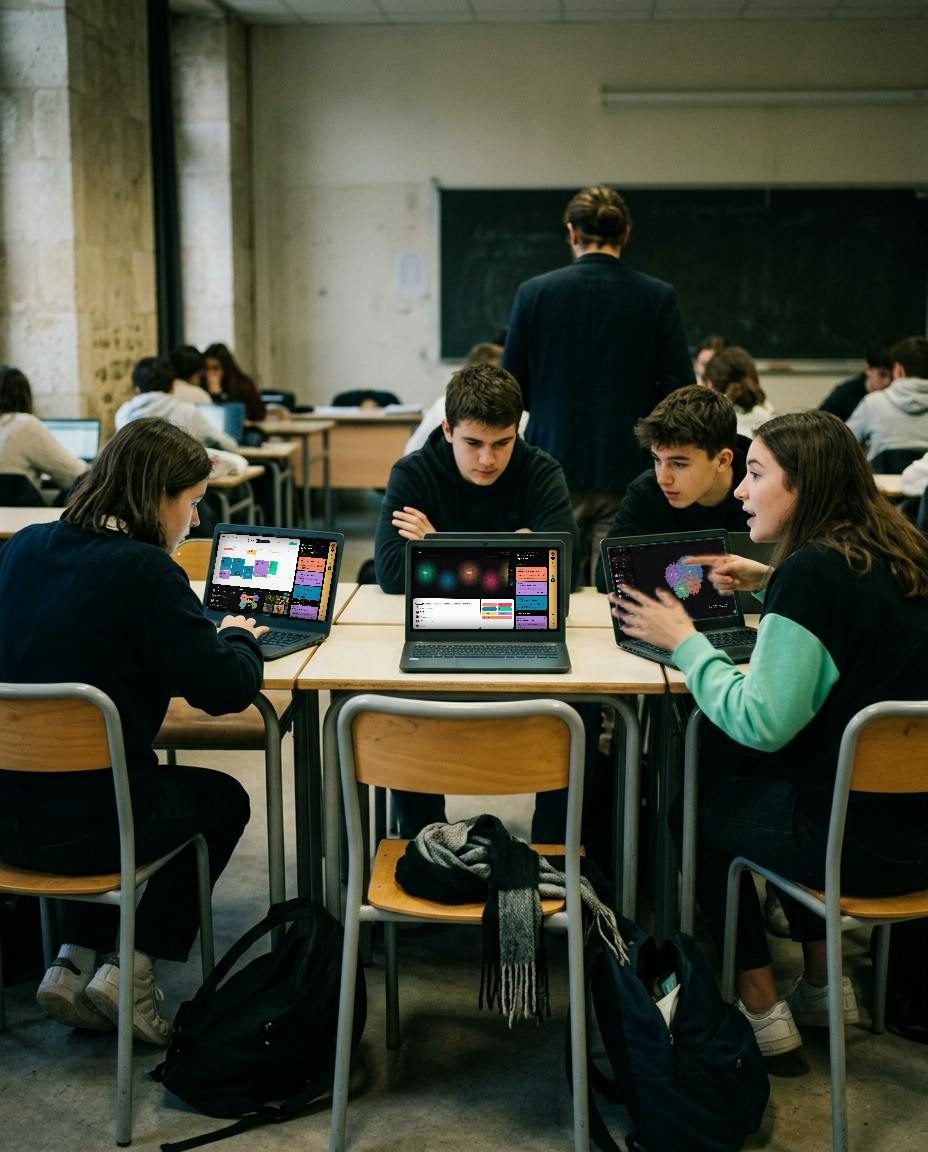
Six students,
two sessions,
one topic
Three ways
to get in
School license
Between €20 and €40 per student per year, when school supplies cost €170 to €250 and textbooks €30 to €50. The school rolls it out in three phases: discovery, ritualization, integration.
- ✓€20 to €40 per student per year
- ✓Three phases: discovery, ritualization, integration
- ✓The teacher sees the fabrics, not the papers
4 masses
Reflection, concept, experience, evidence. They overlap, credibility goes up.
0 answers
The AI asks the next question. It isn’t allowed to answer for you.
6 students
Two high school sessions, V2 then V3. 58 arguments versus 32.
Abstract
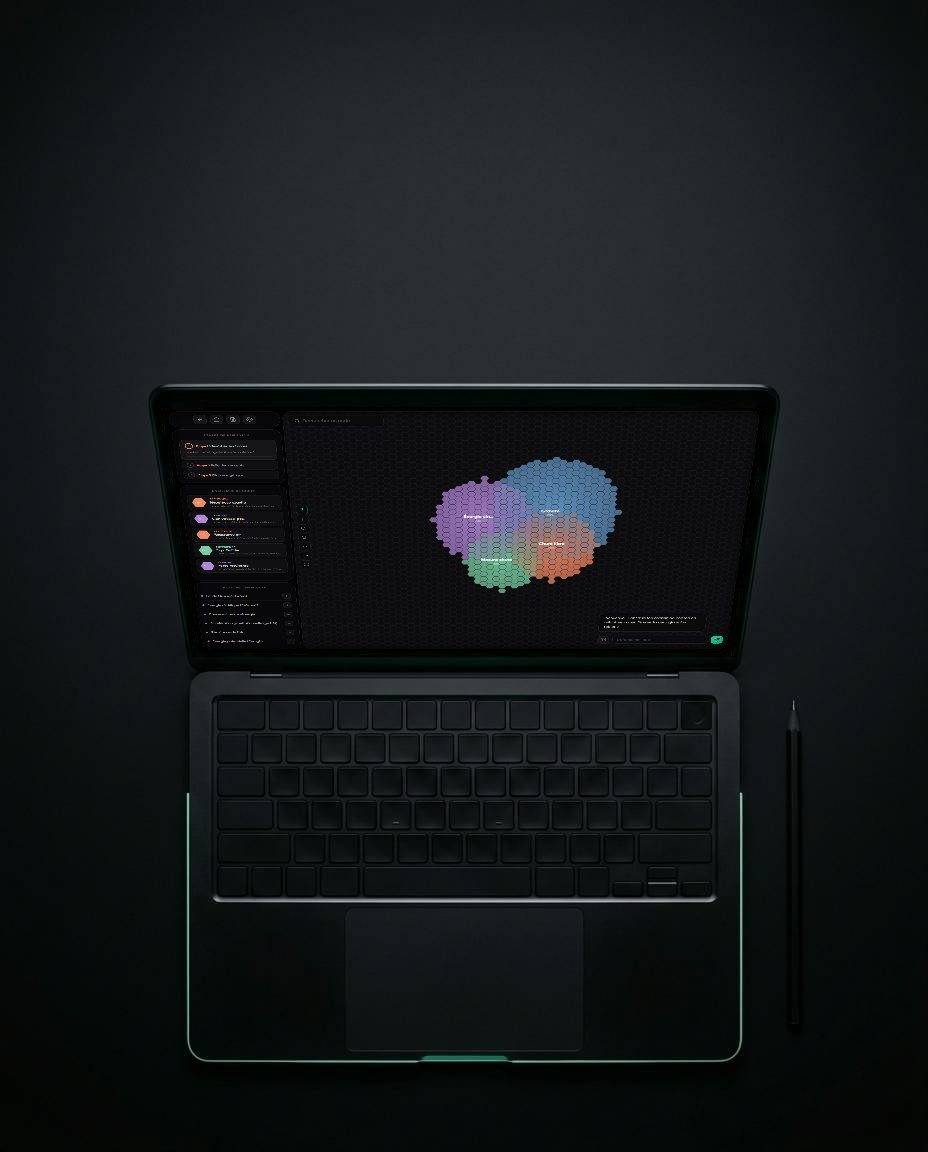
One page, one file. The app is a single HTML document, with its exercise space, its folders, its calendar and its lab; the phone has its own. The Socratic AI runs on a key that the student or the school enters in the settings, and the instruction that frames it fits in one sentence: ask the next question, never give the answer. The fabric is drawn on a canvas, hexagon by hexagon, and an idea’s credibility is computed from the types of masses placed. Everything shown on this page is captured from the app as it runs.
Acknowledgments
This page was put together locally by Thibauld, without bothering a single remote server.
Peer review
“We no longer learn to search, we learn to get.”
The starting observation, in class
BibTeX
@misc{mindsilk2026,
  title        = {MindSilk: a Socratic AI and a fabric of thought for learners},
  author       = {Burin, Thibauld},
  year         = {2026},
  howpublished = {Diploma project, Strate School of Design}
}What people
ask me
The five questions that come up whenever I show the app. Two of the answers are limits.
They can, and they will. But what they paste doesn’t become a mass: to place a piece of evidence, you have to link it to an idea, and the AI asks where it comes from. The workaround exists; it costs more than thinking, and that’s all we ask.
Because they touch without leaving gaps. A fabric is made of overlapping masses, and hexagonal tiling is the only one that makes that overlap readable without a grid of squares. It’s also what lets the four colors blend at the border, where one idea meets another.
No, and the tool is built to make that impossible: it doesn’t correct, it doesn’t grade, it doesn’t summarize the lesson. It prepares the class debate, where the teacher takes over with fabrics already formed. The blank sheet of the test stays a blank sheet.
It’s the subject of the thesis: we get attached to whatever answers us, until we can’t do without it. Curiosity, affection, symbiosis; the factors are isolation, context, validation and age. Friction is the answer: lucidity, relays, confrontation. MindSilk’s AI doesn’t try to be loved, it tries to be left behind.
Yes. V3 is live on mindsilk.fr, with its spaces and its phone version. What remains to be proven is scale: six students and two sessions don’t make a study, and the numbers on this page come from that field work, nothing more.
An AI that doesn’t answer. A fabric you hold. It’s what it refuses that makes you learn.
Relearning to think with it.
Write to Thibauldwith love ♥
if you like it
MindSilk is Thibauld Burin’s diploma project (Strate, class of 2026), born from a thesis on AI dependence, “The Geppetto Syndrome”. The app is live on mindsilk.fr. The screenshots on this page come from the app as it runs; the 58 versus 32 figure comes from one session with six high schoolers, not from a study.
drop your film into
media/video-01.mp4