Place your phone. Hear the room. A fixed totem, not a wearable. A presence, not an interruption. Halo turns the corner of your kitchen into an antenna for the music already playing around you.
Headphones turned music into a personal bubble. The boombox became a stream only you can hear. We sit shoulder to shoulder in metros, cafes, kitchens, and never know what plays in the head of the person next to us. The paradox is acoustic, but the pain is social.
For one month I sat in train carriages, kitchens, open offices and shared flats with a notebook. Not asking, just watching what happens to a song when it can no longer leave the head it lives in.
What I found wasn't loneliness on a screen. It was a quieter form, the kind that hides in a familiar gesture. Two flatmates cooking back to back, four students in a metro car, a hundred commuters in a single carriage, all listening to something good and none of it allowed to touch the air.
Interviews give answers. Observation gives the truth. Most people couldn't describe what they had stopped doing. The silence wasn't a problem to them. It was a habit so old it had become weather.
Nine of twelve cite offering one earbud as their most intimate music memory. Yet none of them have done it in over a year.
Every participant lowers their volume the moment another body enters the room. Automatic. Even mid-sentence. Even when alone with a researcher.
Communal speakers in shared kitchens stay unplugged for weeks. Three of four flatmates would rather cook in silence than risk a song nobody chose.
Seven Shazams a week, on average. Almost all of them aimed at music leaking from someone else's earbuds. The reach is there. The handshake is missing.
From twelve interviews and four field signals, three recurring profiles emerged. Each lives the same silence from a different angle. Each colour the system would learn to recognise.
"We used to fight over the kitchen playlist. Now everyone just uses their own earphones. The kitchen feels emptier somehow."
When the music stops, the room feels empty.
"I always notice people who seem to be listening to something good. I can tell by how they move. But there's no way to cross that invisible wall."
Some songs feel close, but never reach me.
"When I host, the playlist is as important as the food. But lately everyone disconnects into their own stream. My atmosphere collapses."
I cook a whole evening and nobody hears it.
Click anywhere on the field. White dots are the people you already share music with. Coloured dots are strangers around you, each colour a genre, each pulse a track playing within two hundred metres. Halo is the bridge between the two.
Streaming made every song reachable. Headphones made every listening private. Between the two, the gesture that started it all, sharing what you hear with the body next to yours, was quietly removed. Halo gives it a frequency.
What if the room could listen back?
What if the phone you set down
could become a bridge
to the music playing two hundred metres away?
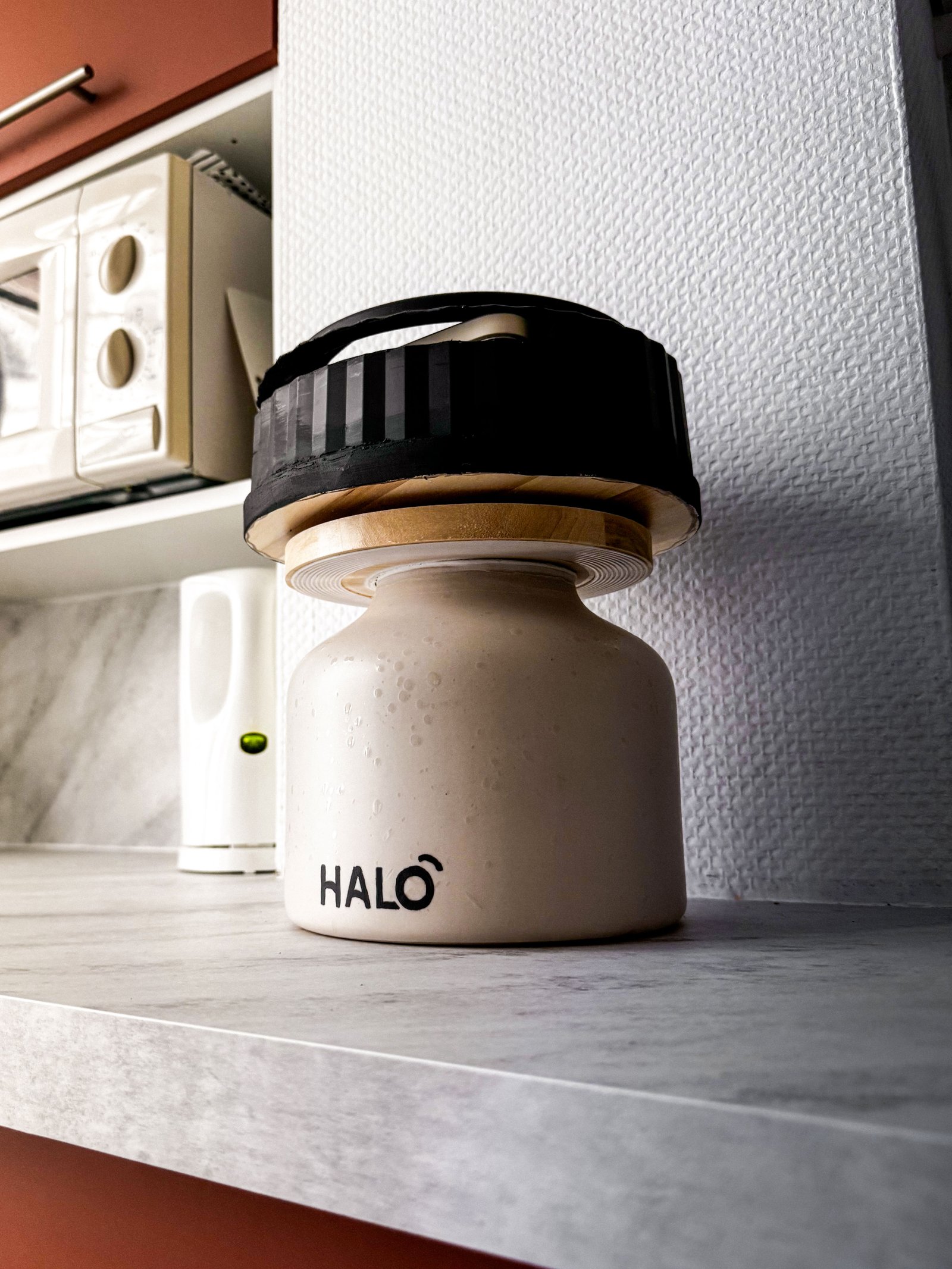
Halo is a small ceramic dock you set on a counter, a shelf, a kitchen island. You drop your phone into it. No screen of its own. One LED ring that breathes when something nearby is worth hearing. The room becomes the antenna. The handshake stays in the air.
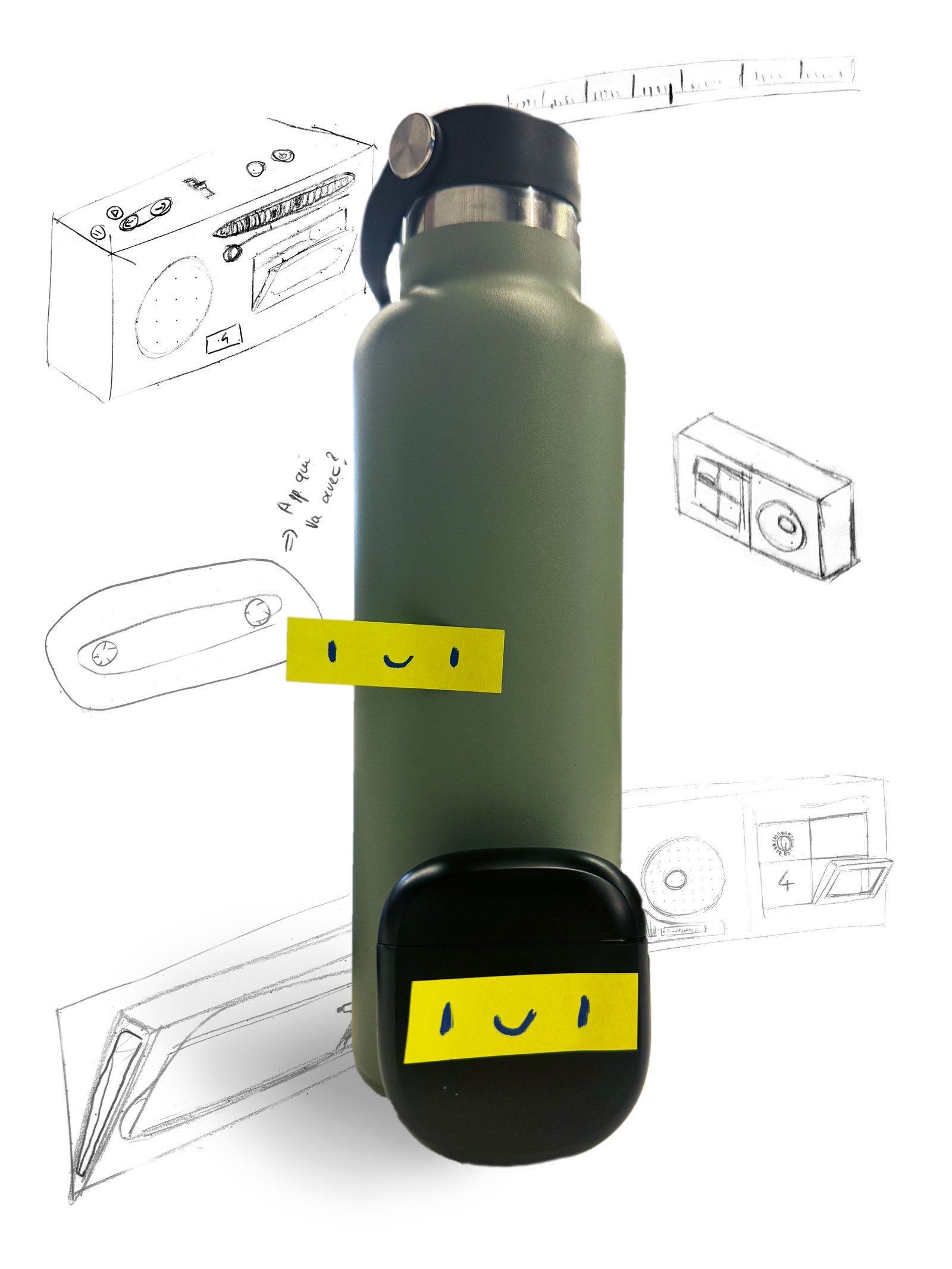
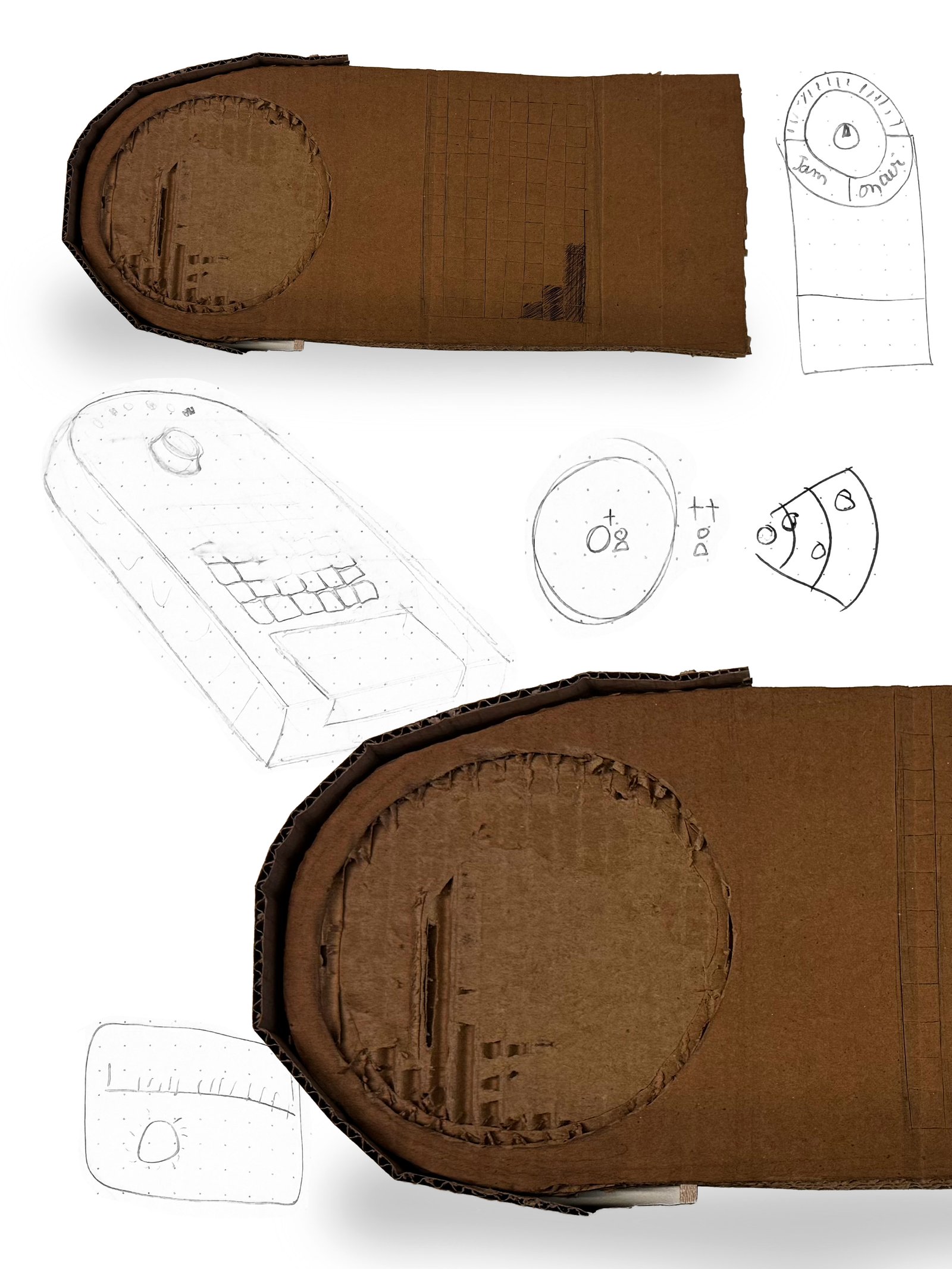
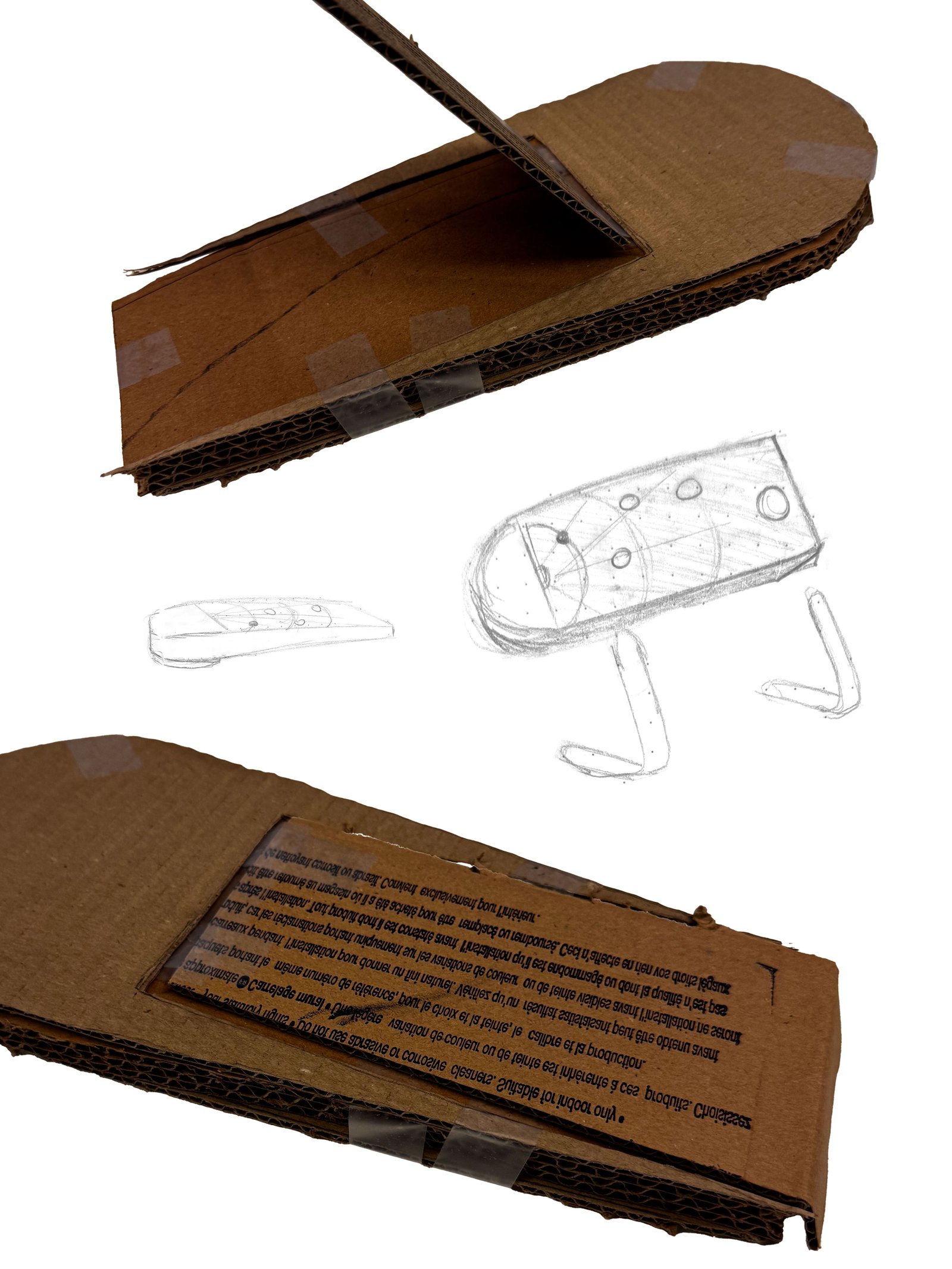
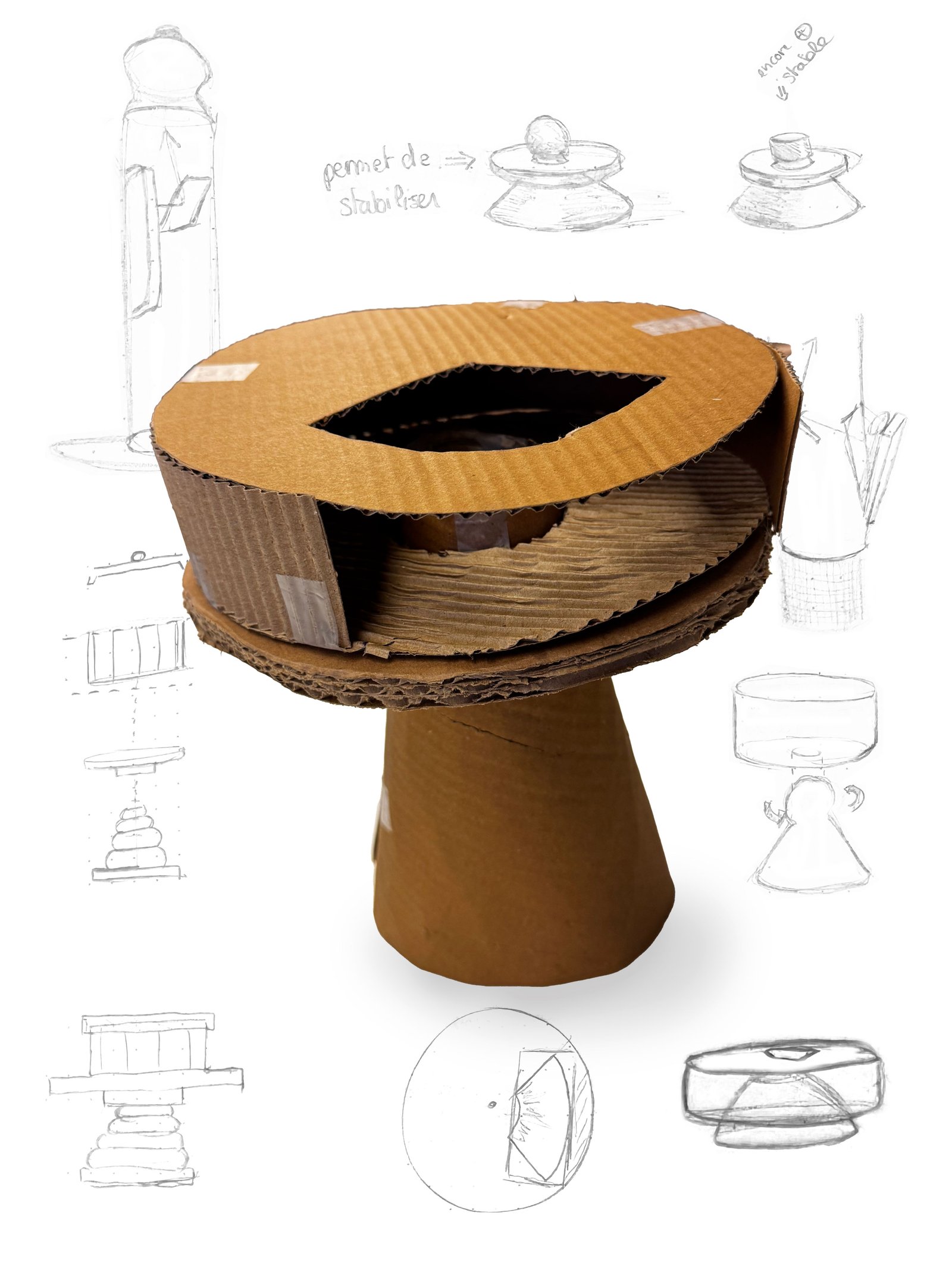
Before settling on the ceramic dock, the object lived as four hand-built studies. Each one tested a different gesture: how the phone slides in, where the hand rests, how the room reads the silhouette across a counter.


A working prototype on iOS. The phone, set in the totem, becomes a tuning dial. Orient the dock toward the room you want to hear. If two listeners consent, a single track travels the air. No feed. No follow. Just the song, the angle, and the option to walk away.
Requires iOS device with compass
A friend comes home, drops his phone into the totem on the kitchen island. The dinner has not started yet. Without Halo, the room is silent and four neighbours upstairs are alone too. With Halo, in six minutes, the building shares a song.
Kitchen island. The phone slides into the dock. The ring breathes once, soft white. The room becomes an antenna pointed outward.
Inside two hundred metres, the totem detects four other listeners across the block. Two floors up, one across the street, one in the courtyard. The ring shifts to a soft violet.
One node, two floors above, has seven titles in common with the friend's last fortnight. The ring tightens. A single name surfaces in the kitchen. Discreet. Optional. Never imposed.
The friend taps the ring. Two floors up, the neighbour taps too. The dock orientations align. A track from upstairs blooms quietly through the kitchen speaker. Both rooms hold the same song.
Three more songs cross over the next twenty minutes. No words exchanged. No screen tapped after the first. A micro-conversation between two kitchens, written in tracks, signed by the building.
Halo never tries to add another stream. It listens to the streams that are already there, between thirty bodies in a metro, four flatmates in a kitchen, twelve colleagues in an open office, and gives them permission, intimacy, and reach.
The hardest part wasn't designing the object. It was earning the right to not redesign the silence. The half-earbud already exists. The fix is to give it a frequency that doesn't need a wire.
What stayed with me is that music has always been social by nature. The headphones didn't kill that, they only put it on hold. Halo is a small bet that proximity, given a colour, can become the most under-used radio in the modern city.
Music was a body before it was a file. Halo treats the room as the speaker.
We don't remove the earbuds. We give them an antenna pointed outward.
White is the friend you already trust. Colour is the stranger you might. Never both.
Every handshake needs a tap, an angle, a body. No automatic exposure. No silent broadcast.
Genre is a vocabulary. Halo just makes the dictionary visible for the length of a song.