Redefining the urban soundscape through modular rhythmic intervention. A kinetic response to the friction of modern commute.
We found the friction point where the commute of a 30yo cyclist endangers the journey of a 6yo child. A city built for passage, not for presence.
Current infrastructure prioritizes transit velocity over neighborhood coexistence. Our observation revealed a critical lack of haptic feedback between user groups.
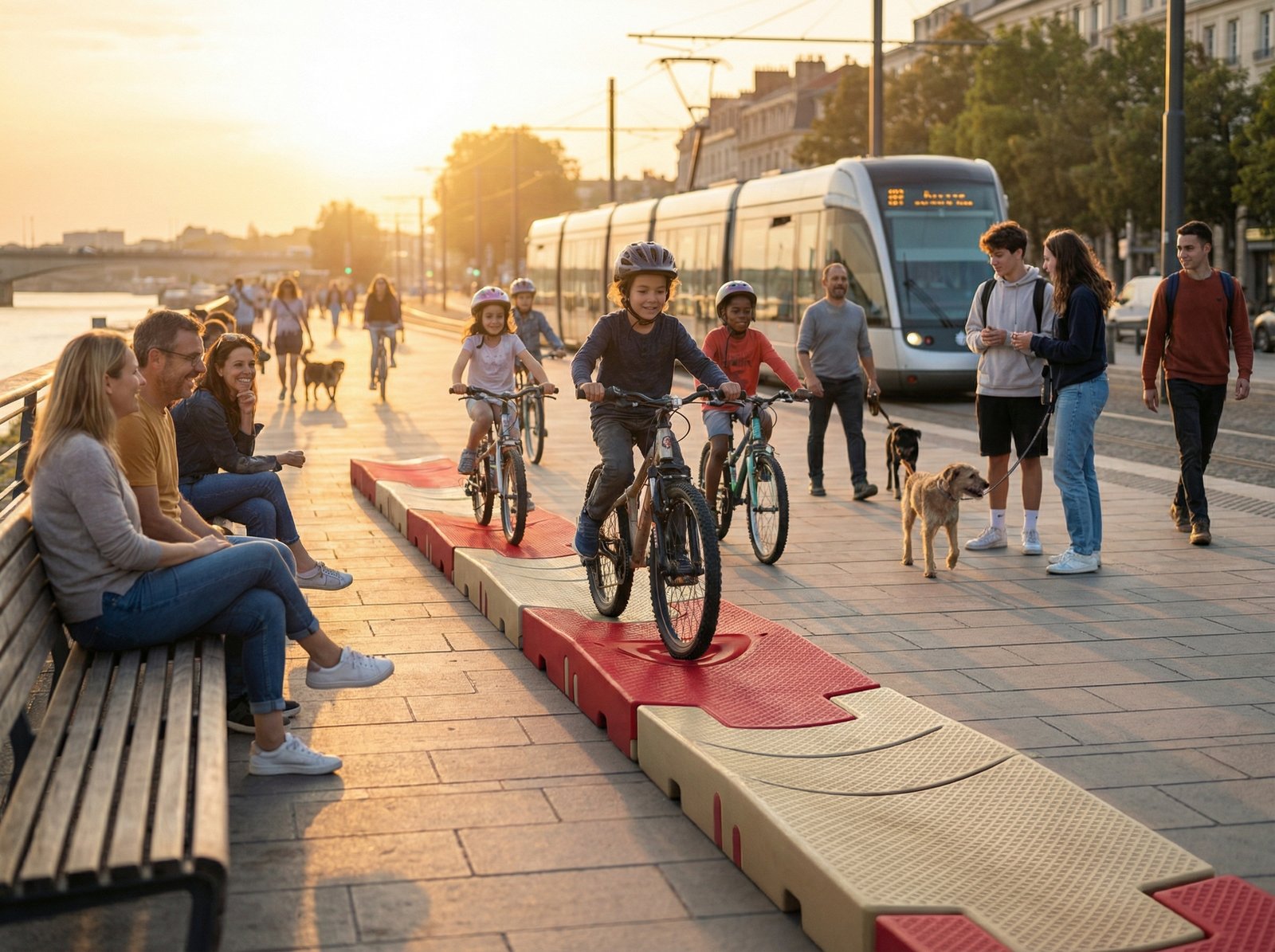
The width of our module is the width of a shared compromise. It's not a barrier; it's a conversation in concrete and sound.
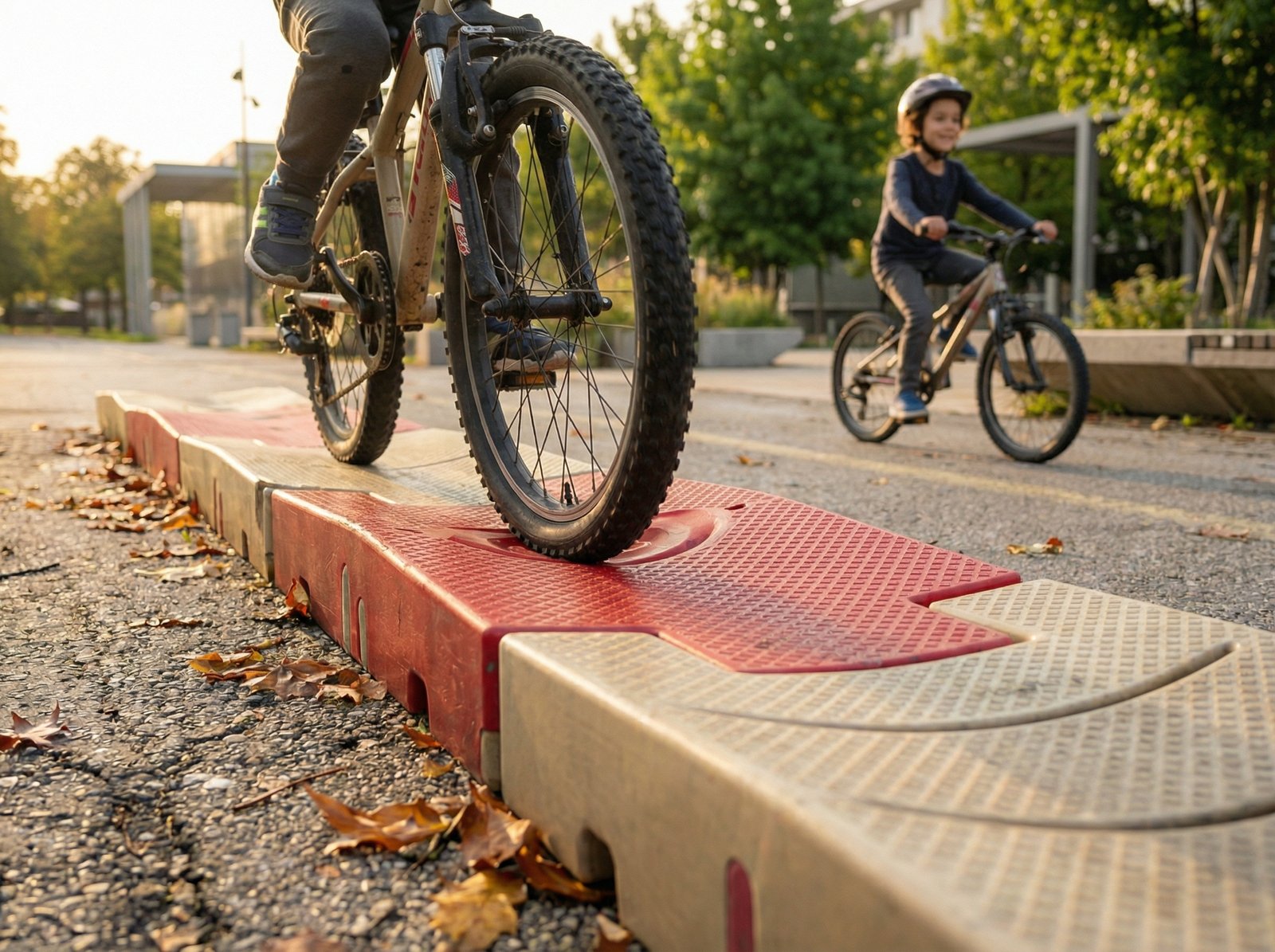
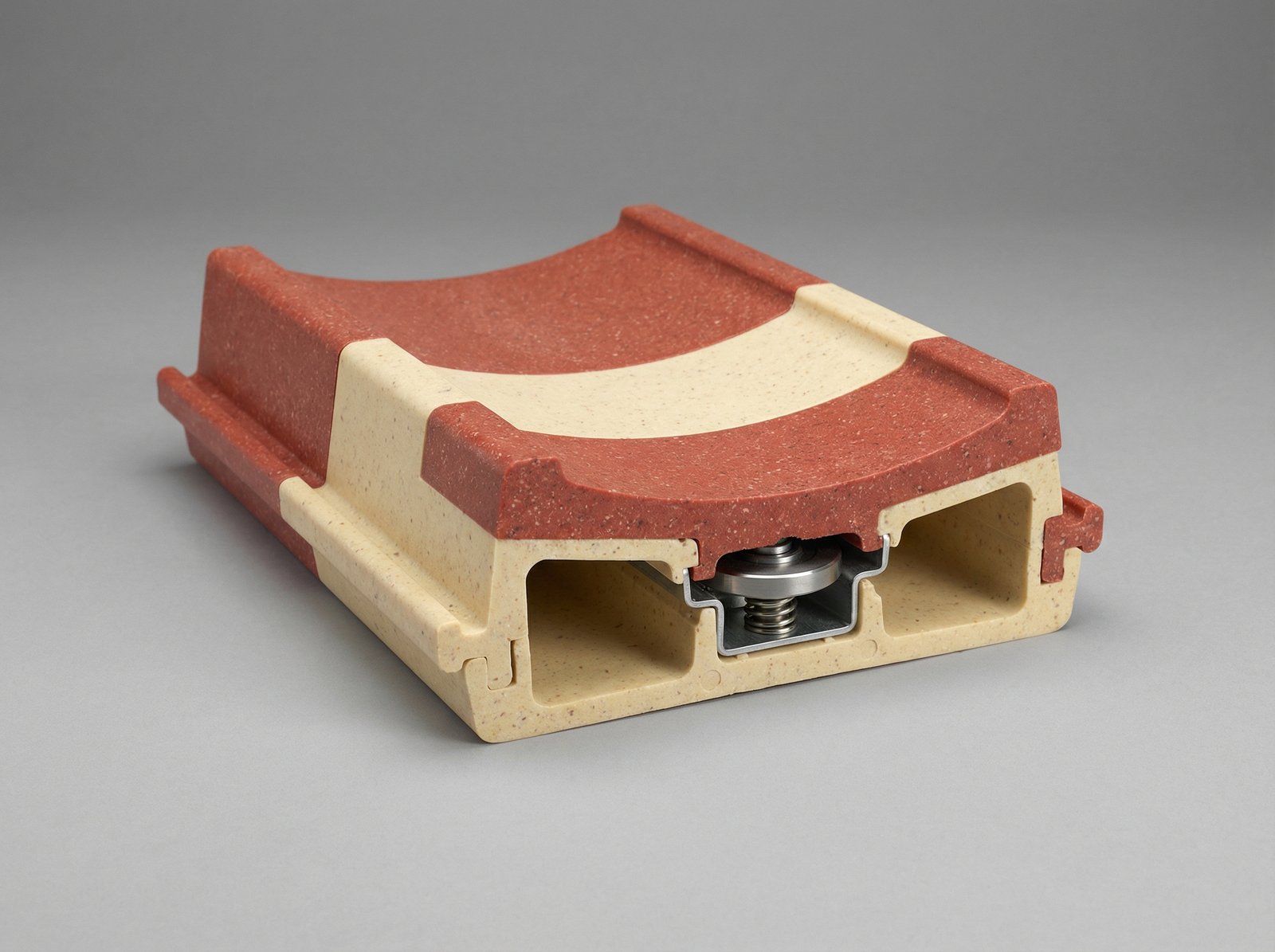
The central module features a progressive curvature. It forces lateral alignment while maintaining momentum.
Constructed from high-density recycled plastics and resonance-tuned metal plates. Each module is an instrument.
As tires cross the metal plate, a percussive 'click' resonates. Speed dictates the rhythm; the city hears the approach.
Acoustic resonance test at 15km/h using spring steel plates.
Measuring lateral displacement on children cyclists.
Long-term fatigue analysis on recycled HDPE modules.
Subjective perception of sound warning at crossings.
Reduction in silent collisions
Laboratory results indicate that the auditory footprint of the commute increases safety by 40dB without polluting the background noise.
High-density alert zones for primary schools. Rhythmic patterns designed to calm approaching traffic.
Subtle integration for recreational pathways. Focus on preserving silence while ensuring visibility.
Inter-modal transition points. High resonance feedback for complex crossing situations.
Standardized safety modules for all urban greenway intersections in the Lyon metropolis.