Umbra
With Umbra, you’ll wait for rain to go sightseeing. In a downpour, everyone looks at their feet. The city, meanwhile, tells its story above your head.
Twenty-one days
outside, sixteen
in the rain.
Look up:
it’s raining
stories.
105 days
a year.
It rains 105 days a year in Lyon. Almost one day in three, walking tours lose their footing: the streets empty and the afternoon disappears*. With Umbra, that’s 105 more days to explore.
1991-2020 normals,
Lyon-Bron station
What’s playing
over there
The dial stays put and turns. Whatever passes under the marker starts to play.
·
What’s playing
over there
The app itself. Circle around the phone: what’s in line appears, what leaves it fades.
Say it,
it lays it out
One need, one sentence. Kuubo breaks it into steps, lays them on the canvas and links them up. You adjust, then you say “go”.
You talk,
it’s typed
Hold both keys, talk, let go. The text lands where your cursor was.
Your apartment
is the playlist
Each cube holds a track. Put them wherever you like, move them around, they’re yours. Then you point: whatever is in line plays, the rest stays quiet.
The ball
follows you
The cursor is you. The orange dot is your appointment. The object never tells you which way to go: the ball points at the goal, and its distance from the center tells you how far is left. You have time to spare. Spend it.
Weave
a fabric of thought
The AI never gives the answer. It asks the next question. Each answer becomes a mass on the canvas, and the fabric takes shape.
Turn,
and aim
Slid upright into the wall mount, the phone becomes a steering wheel. You turn it, the waves sweep the room, and you only hear what you have in common with whatever is over there.
The pocket
lab
The viewfinder is you. Frame whatever intrigues you: the camera asks you a question, you answer, and your answer prints as a sticker.
Twelve
seconds
The cursor is you. Step onto the road and you leave your footprints on it. The light is red, a few seconds to go. You can cross right now. You can also wait, and see what it costs.
Two phones down,
or silence
One phone on the base isn’t enough. Without a second one, Halo doesn’t wake up, and silence is a valid answer.
The client cancels.
The afternoon falls through
He’s on the road, a hundred kilometers from headquarters. Thought of as a list, the route breaks. Thought of as a territory, it pulls itself back together.
Three voices
in the rain
Three profiles drawn from the forty-seven interviews, chosen to cover the three uses observed: passing through, coming back, showing others around.

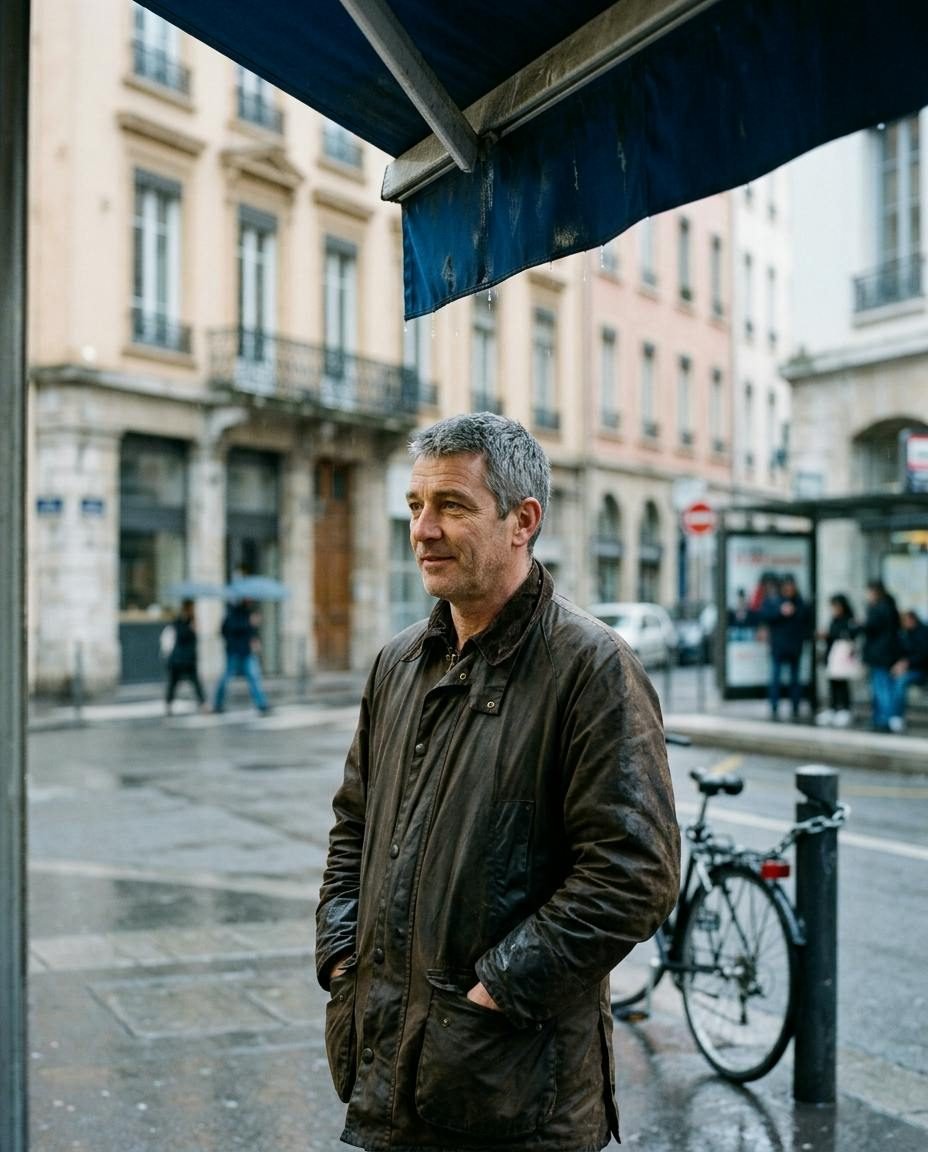

Rain sets the scene*
drop to the cobblestones.
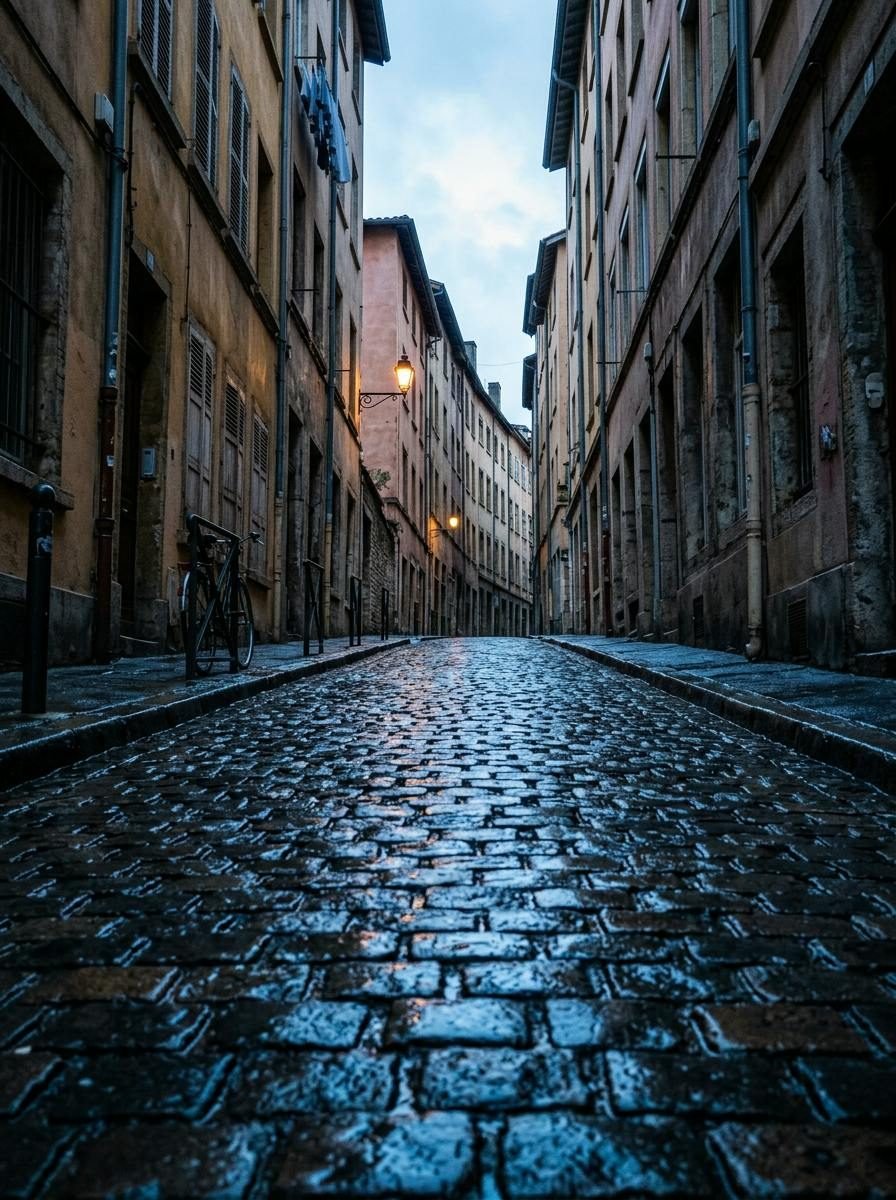
The city’s heritage is up high.
still dry is
above your head
the same downpour


Offline
The content lives in the handle.
No app, no account, no network.

Twenty-four visitors out of thirty-two gave up
a planned visit on the day of the downpour.

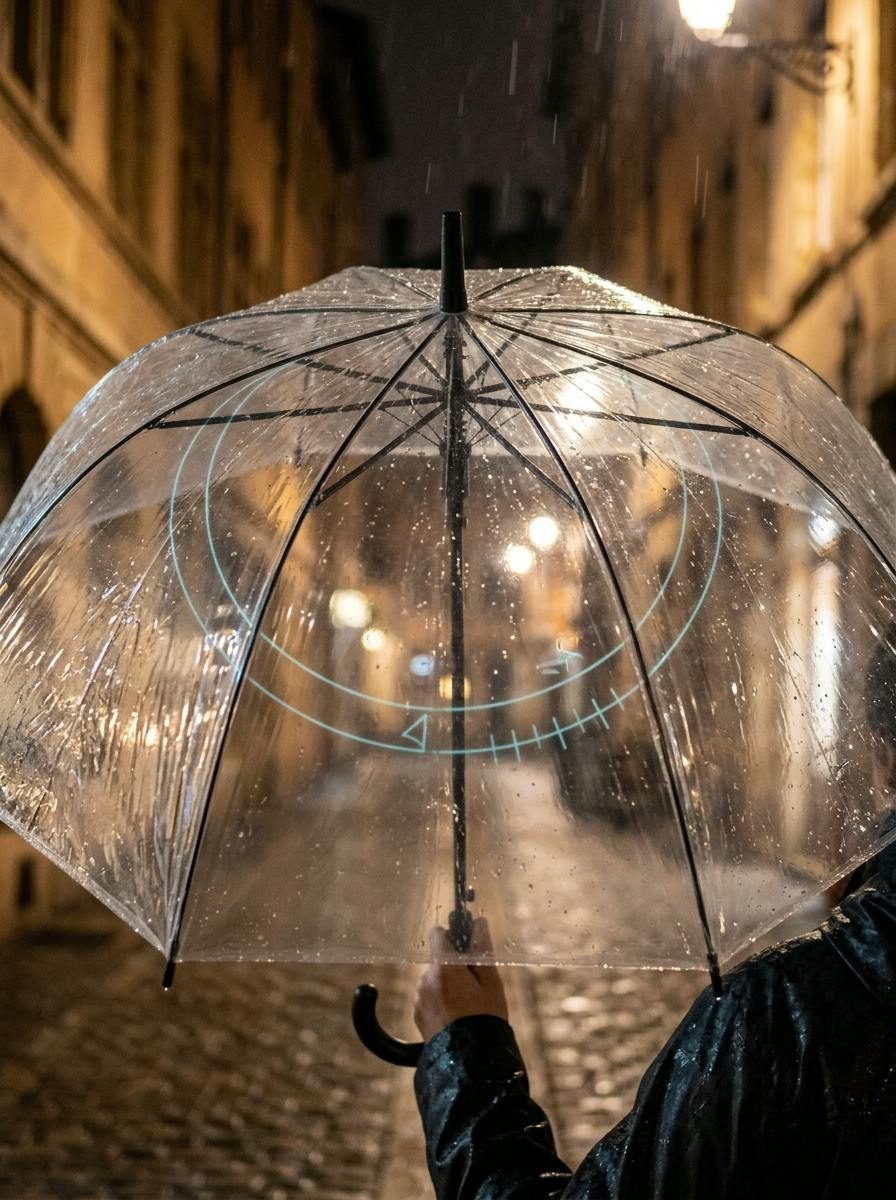
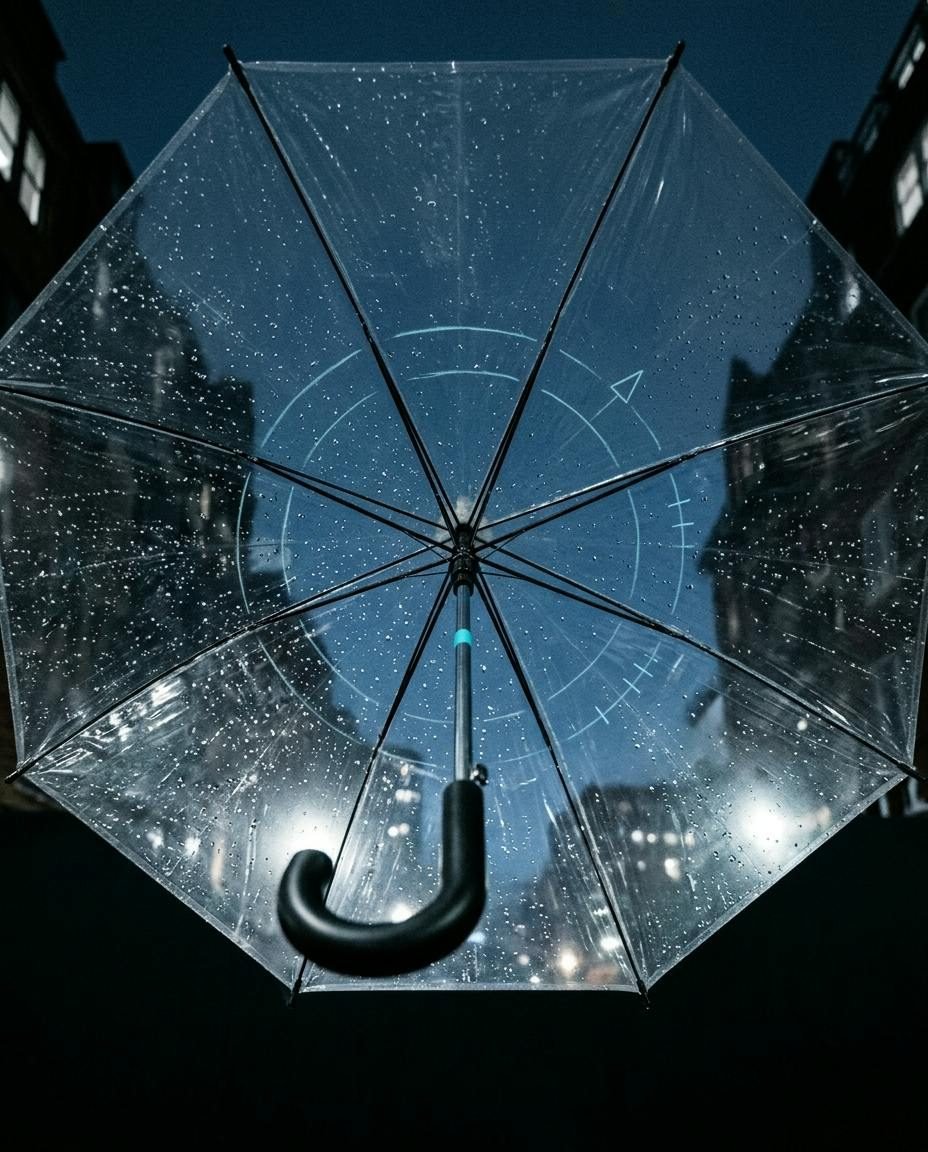
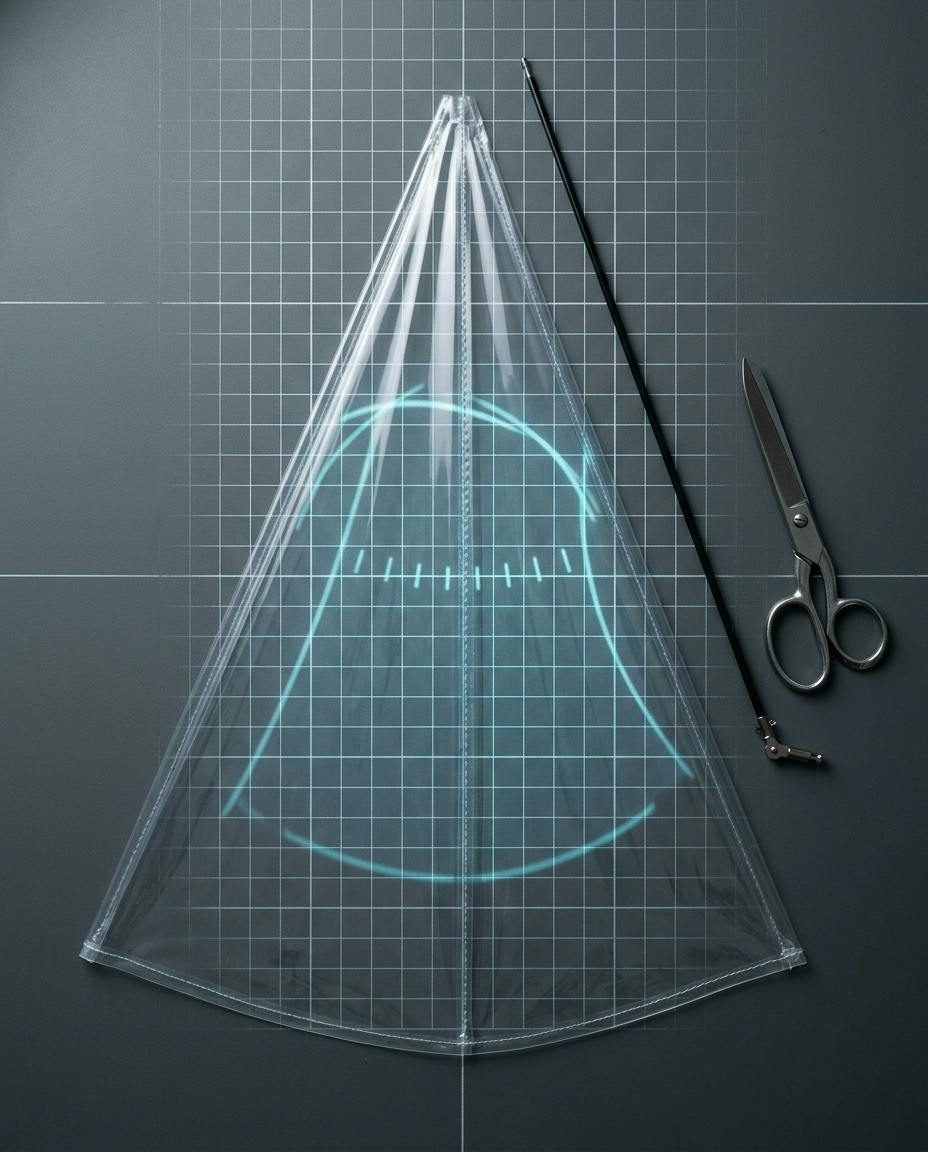
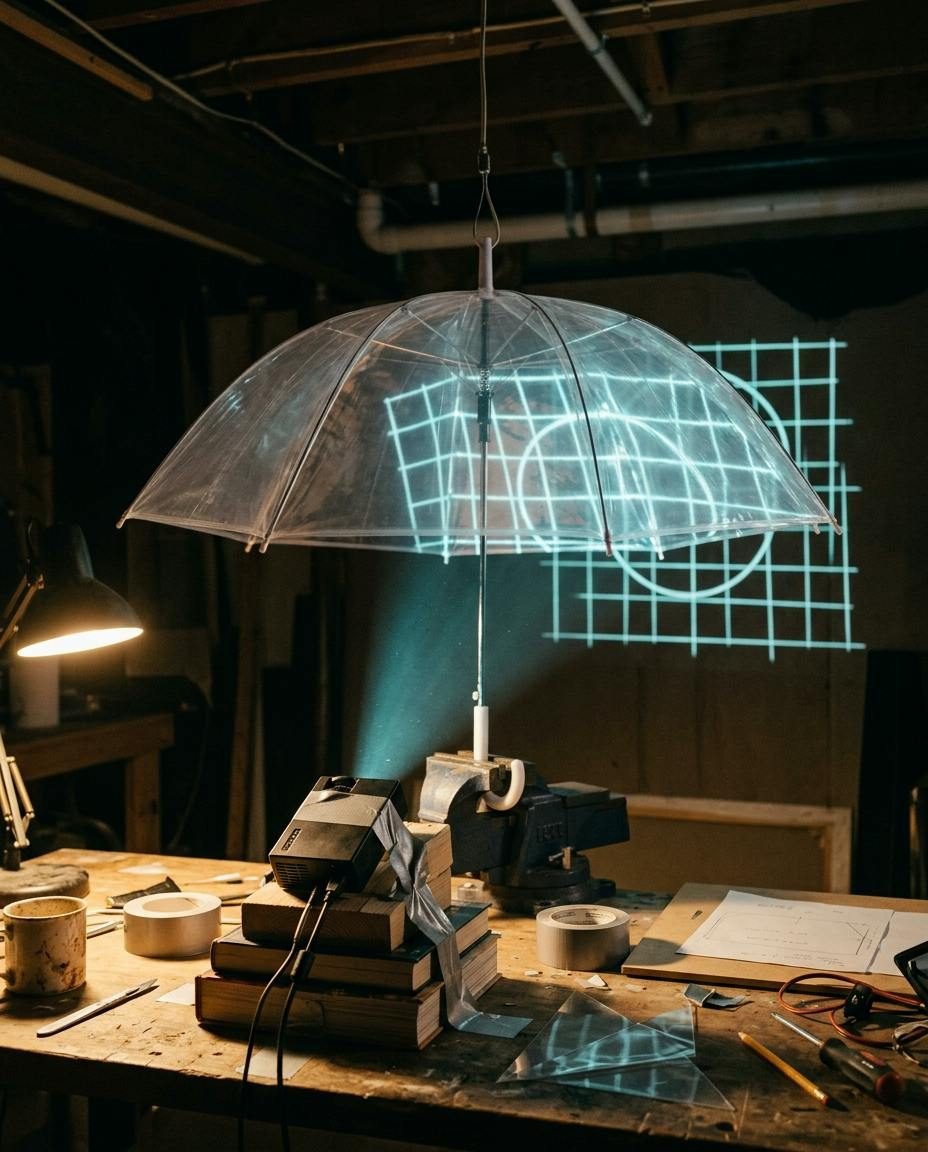
85% clear PET, lined with rear-projection film. From outside, an ordinary umbrella. From underneath, a dry, dark surface, the only one still usable in a downpour.
The canopy,
not a screen
A short-throw laser, aimed at the inside of the dome, corrected for its curve. An inertial unit knows where the umbrella is pointing: the arrow shows the street, not north.
The projection,
pointing up
Placed near the monuments, they send nothing but an ID. Within fifteen meters, the card unfolds overhead. Nothing to search for, nothing to take out of your pocket.
The city sends
its beacons
What I set aside,
and why
Five ideas held up on paper. Each one ran into a friction I had noted in the street. Setting them aside is the project; keeping them would have made a catalog.
Fifteen meters,
and the city talks
The beacon lights up as you walk past, and its card unfolds on the canopy. The city speaks without being asked, and goes quiet as soon as you walk away.
The map
Drop
a beacon
Pick a place, a duration, an area. Your track plays there, quietly, for whoever walks by.
No online survey: the same street observed in dry weather, then in a downpour. Notebook, time-stamped photos, short interviews recorded with consent.
Street
interviews
Forty-seven people stopped between October and December, including thirty-two passing visitors and eleven professionals: guides, hoteliers, front desk staff.
Abandoned
visits
Twenty-four visitors out of thirty-two had given up a planned visit on the day of the downpour. They don’t say “it’s raining”: they say “we’ll see tomorrow.”
What they
say as they leave
Nobody complains about the rain. Everyone puts it off, and later never comes.
No app
No account


105 days
a year
It all
exists already

They walk by,
they don’t
visit

The heritage
isn’t going
anywhere
Under the canopy
The canopy
85% clear PET, lined with rear-projection film. The card of the beacon you pass unfolds there at eye level, and from outside, it reads backwards.
- ✓One beacon, one card
- ✓Fifteen-meter range
- ✓Eyes stay up
95 %
Of umbrellas returned the same day. The service only works if the object comes back.
45 min
Of walking in the rain, on average. The story only counts if it keeps people outside.
3 beacons
Reached per rental. Any fewer, and the tour doesn’t connect.
Abstract
Umbra-1 is a concept for a lending umbrella with a rear-projection canopy. Rear-projection films, laser pico projectors, inertial units, Bluetooth Low Energy beacons: every component already exists and can be ordered. The bill of materials counts twenty-five parts, twenty-one of them sourced from commercial suppliers in December 2025. Still to develop: the canopy optics, corrected for the curve, and the waterproofing of the handle, which houses the electronics. The stated figures, six hours of battery life and six hundred twenty grams, are targets taken from data sheets: nothing has been measured on a prototype yet, and it says so here rather than in a footnote.
Acknowledgments
Twenty-one days in the field, sixteen of them in the rain, forty-seven street interviews, a notebook, a camera and a lot of coffee.
Peer review
“Rain makes Lyon intimate. But I don’t have the words to show it to people.”
Ondine Prévost, student, interview of December 3, 2025
BibTeX
@misc{umbra2026,
  title        = {Umbra: a rear-projection umbrella for rainy-day city tours},
  author       = {Burin, Thibauld},
  year         = {2026},
  school       = {Strate School of Design},
  note         = {Field study, Lyon. 21 days, 47 street interviews, 105 rainy days a year.}
}What people
ask me
The five questions that come up as soon as I show the concept. The answers come from the field, not from the concept.
It’s the most favorable condition there is: the canopy is dark, close to the eyes, and a rainy sky lowers the ambient light. Rear-projection film is sold commercially, and so is the laser pico projector. What’s left to develop is the optics corrected for the curve of the dome, and the spec sheet says exactly that.
Because it needs a free hand and a dry screen, and in a downpour you have neither. It’s the first of the five ideas I set aside: the other four ran into the same thing, one more object or gesture to manage while it’s raining.
The service only works if the object comes back: that’s why the pilot’s first target is the same-day return rate, ninety-five percent. Self-service docks at train stations and tourist offices, a deposit as with bike share, and an object that’s only worth anything in the city, in the rain, within range of a beacon.
The beacons go on existing street furniture, no construction work: it’s an agreement with the city, not a building site. The content already exists with the people whose job it is, licensed guides and the tourist office: Umbra gives them a medium, it doesn’t rewrite their work.
Then the city does just fine without me. Umbra isn’t trying to replace a nice day: it covers the hundred and five days when the offering exists and nobody can take it in. The rest of the year, the umbrellas sleep in their docks, and that’s just fine.
Bad weather is a moment,
not a problem.
105 days a year, the city gains a backdrop nobody was using.
Write to Thibauldwith love ♥
if you like it
Umbra is a concept that grew out of a field study I ran in Lyon from October to December 2025: twenty-one days of observation, forty-seven street interviews. The technical figures are targets taken from component data sheets; none has been measured on a prototype. The pilot thresholds are goals, not results. 3D model of the umbrella: “Elegant umbrella” by Araon (Sketchfab), CC-BY-4.0 license, canopy and materials reworked for this page.