Halo Home
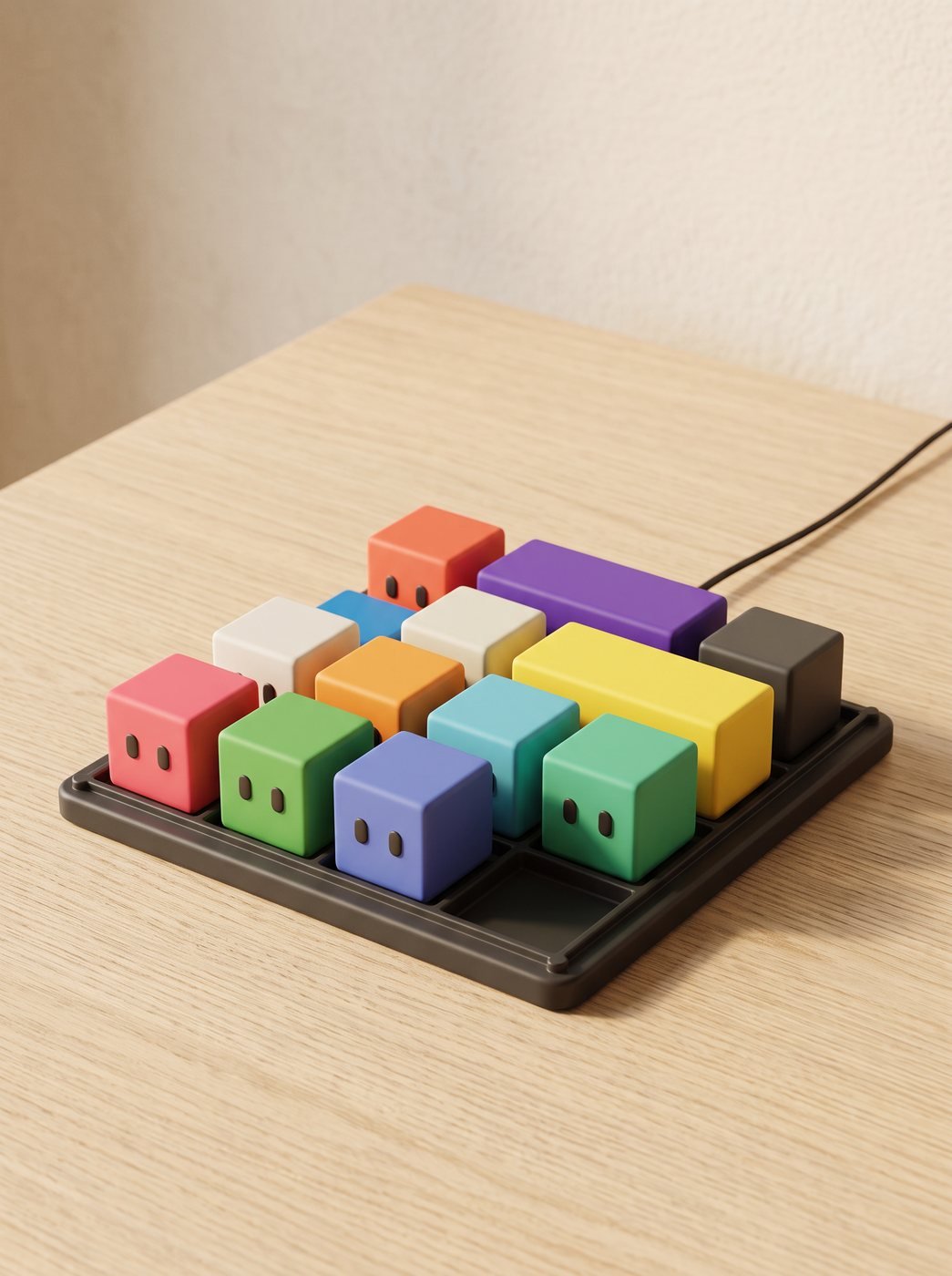
Colored cubes, one per track. You assign them on a base, set them anywhere at home, and point at them to listen. Your music stops being a list: it becomes decor.
A playlist,
you scroll.
A room,
you walk through.
Twelve cubes,
a slotted base,
and your apartment.
And when
nobody’s listening?
Halo plays what the neighbors have in common. That’s its strength, and its limit: on a Tuesday at 3 p.m., there’s nothing to match*. The music you discovered leaves the way it came.
that’s often silent
ends up in a drawer
What’s playing
over there
The dial stays put and turns. Whatever passes under the marker starts to play.
·
Say it,
it lays it out
One need, one sentence. Kuubo breaks it into steps, lays them on the canvas and links them up. You adjust, then you say “go”.
You talk,
it’s typed
Hold both keys, talk, let go. The text lands where your cursor was.
Two phones down,
or silence
One phone on the base isn’t enough. Without a second one, Halo doesn’t wake up, and silence is a valid answer.
The client cancels.
The afternoon falls through
He’s on the road, a hundred kilometers from headquarters. Thought of as a list, the route breaks. Thought of as a territory, it pulls itself back together.
Powered by a gesture*
You place.
You point.
as in Halo:
turning toward it
you arrange in a room


The cube
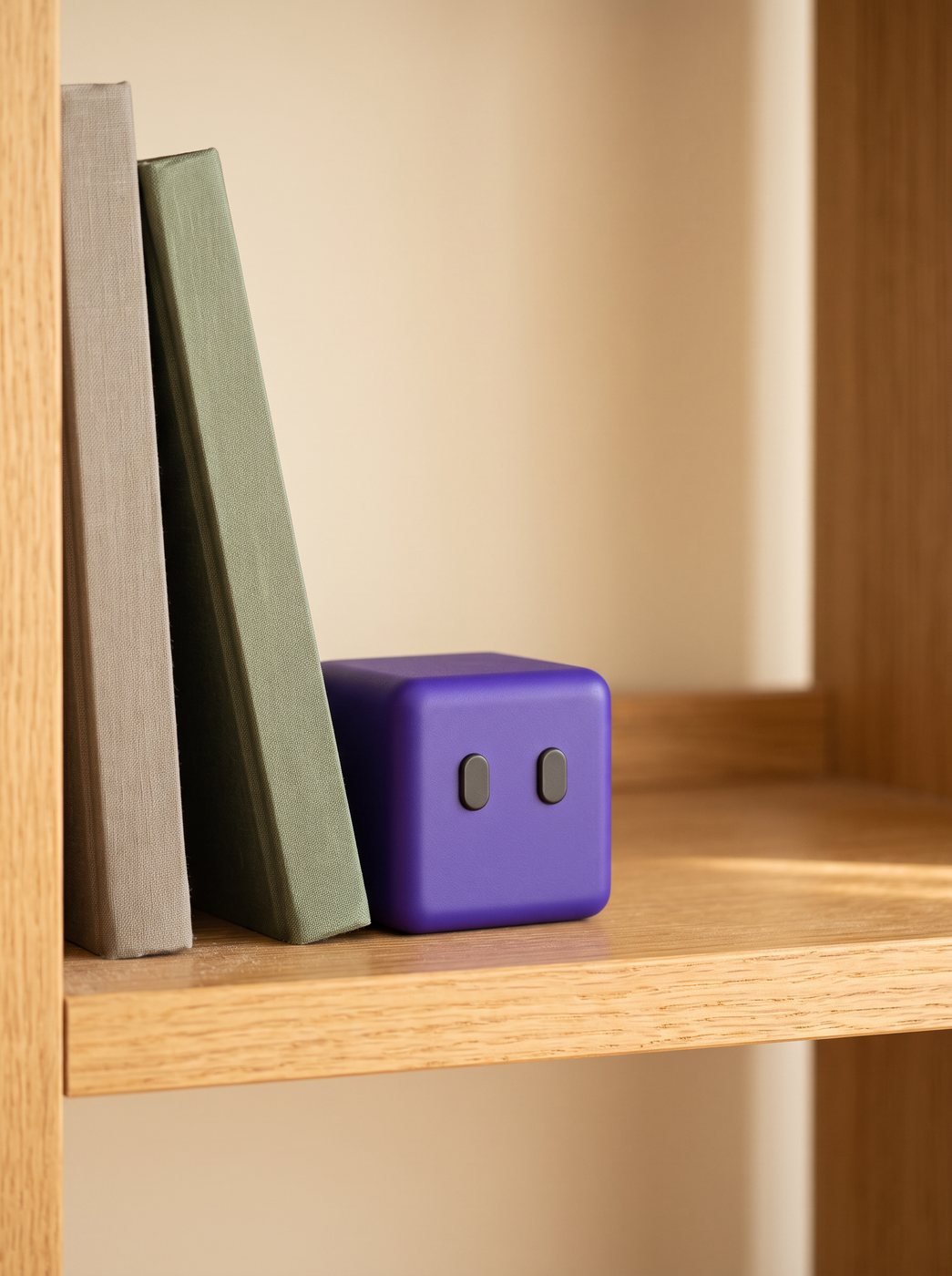
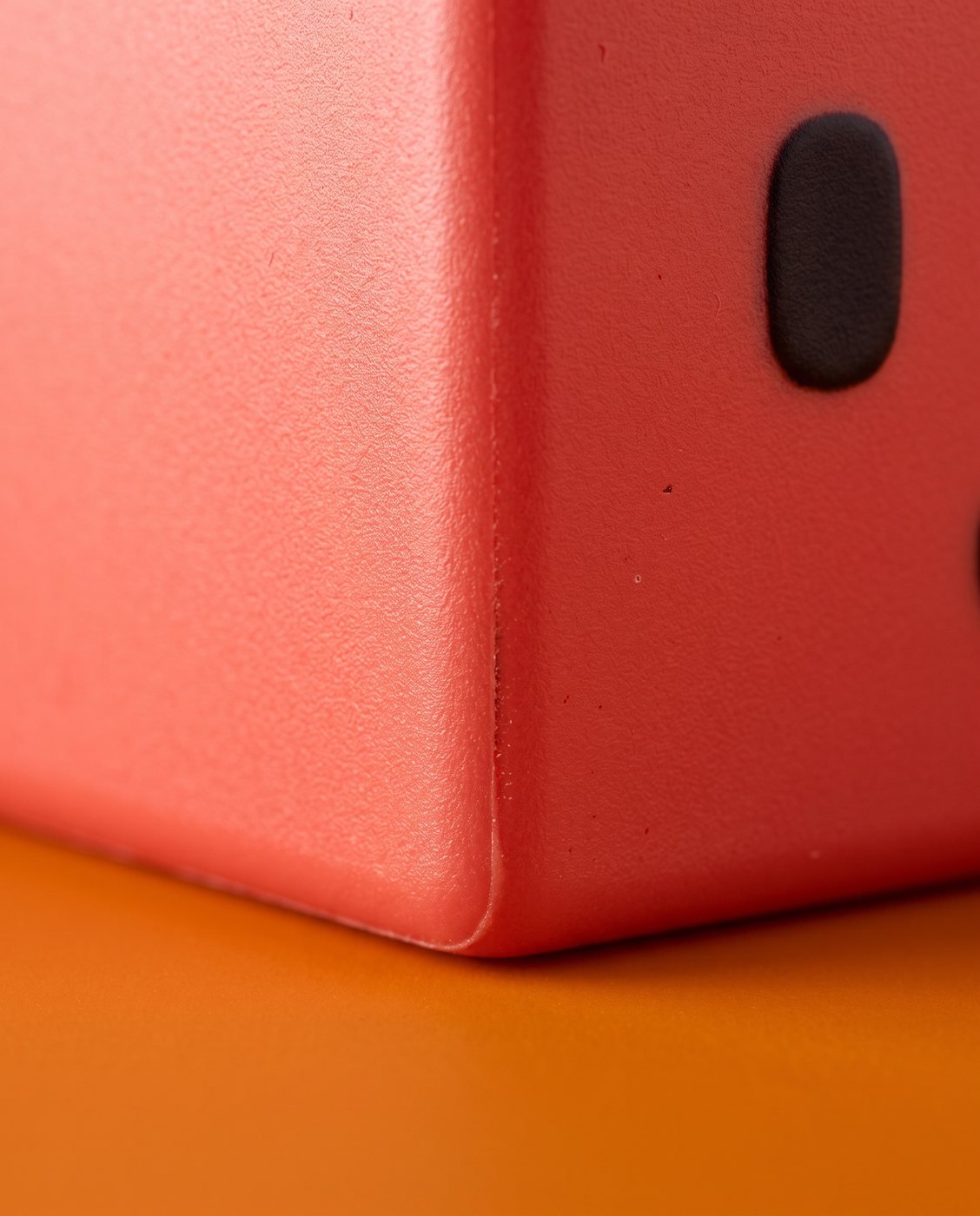
Five centimeters, one track, one color.
Two eyes, and the little tail that makes it a speech bubble.
Nothing shows up.
You have to turn toward the music.

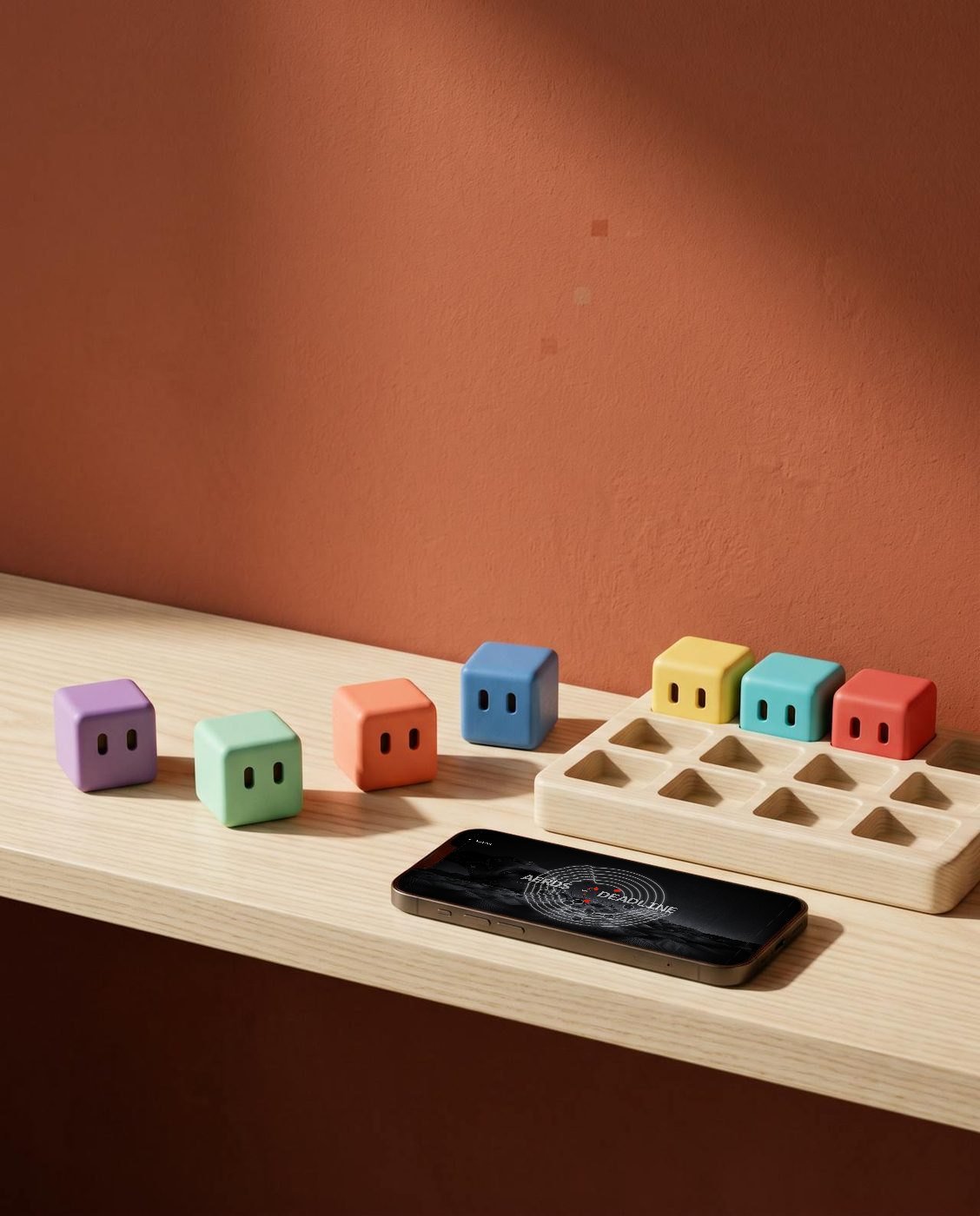
The cube sits in its slot, on the base. Whatever is playing at that moment is given to it: a track heard at a neighbor’s, a song kept from a party, a record you want close at hand. The base is the only place where you set anything, and you only come back to it to change your mind.
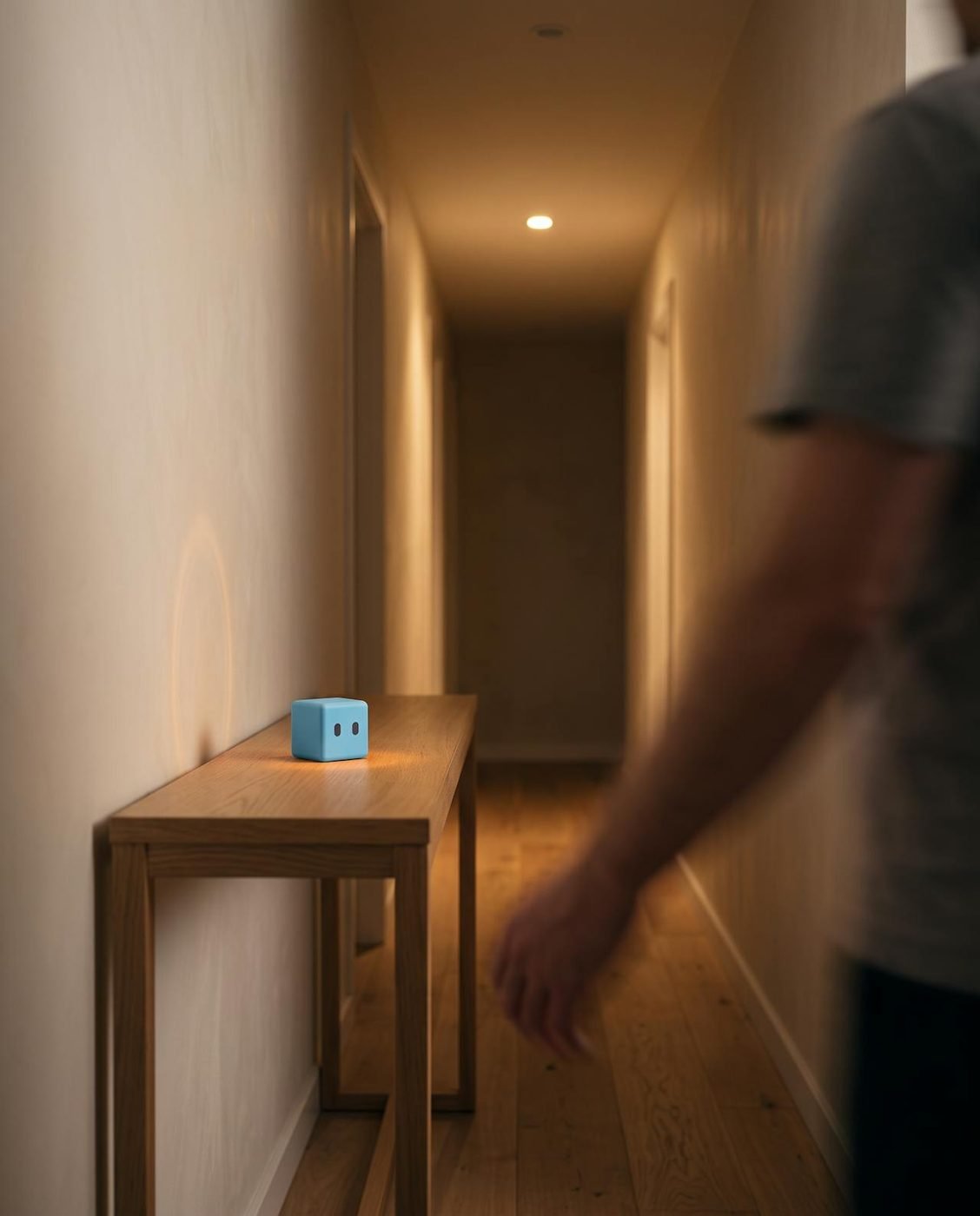
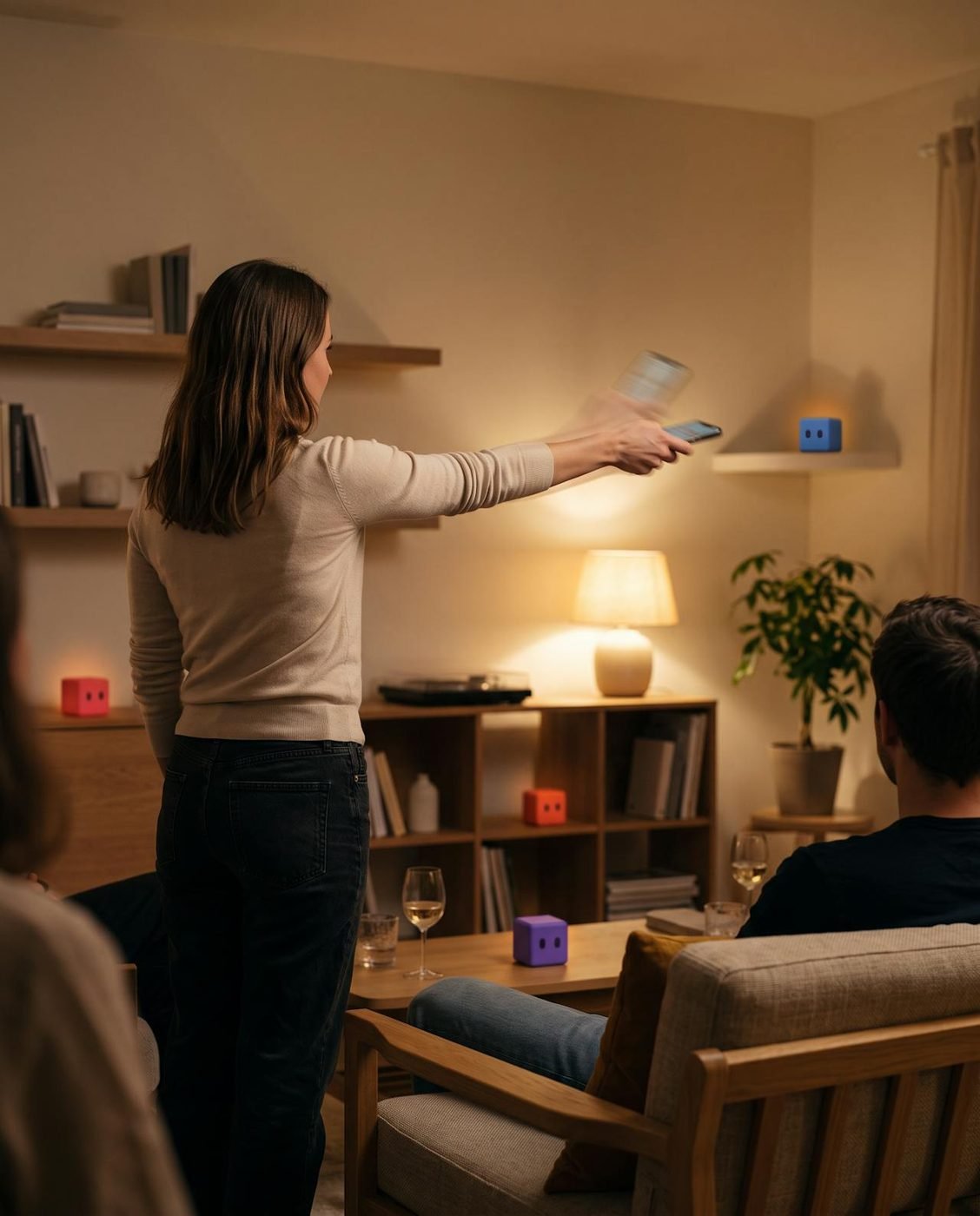
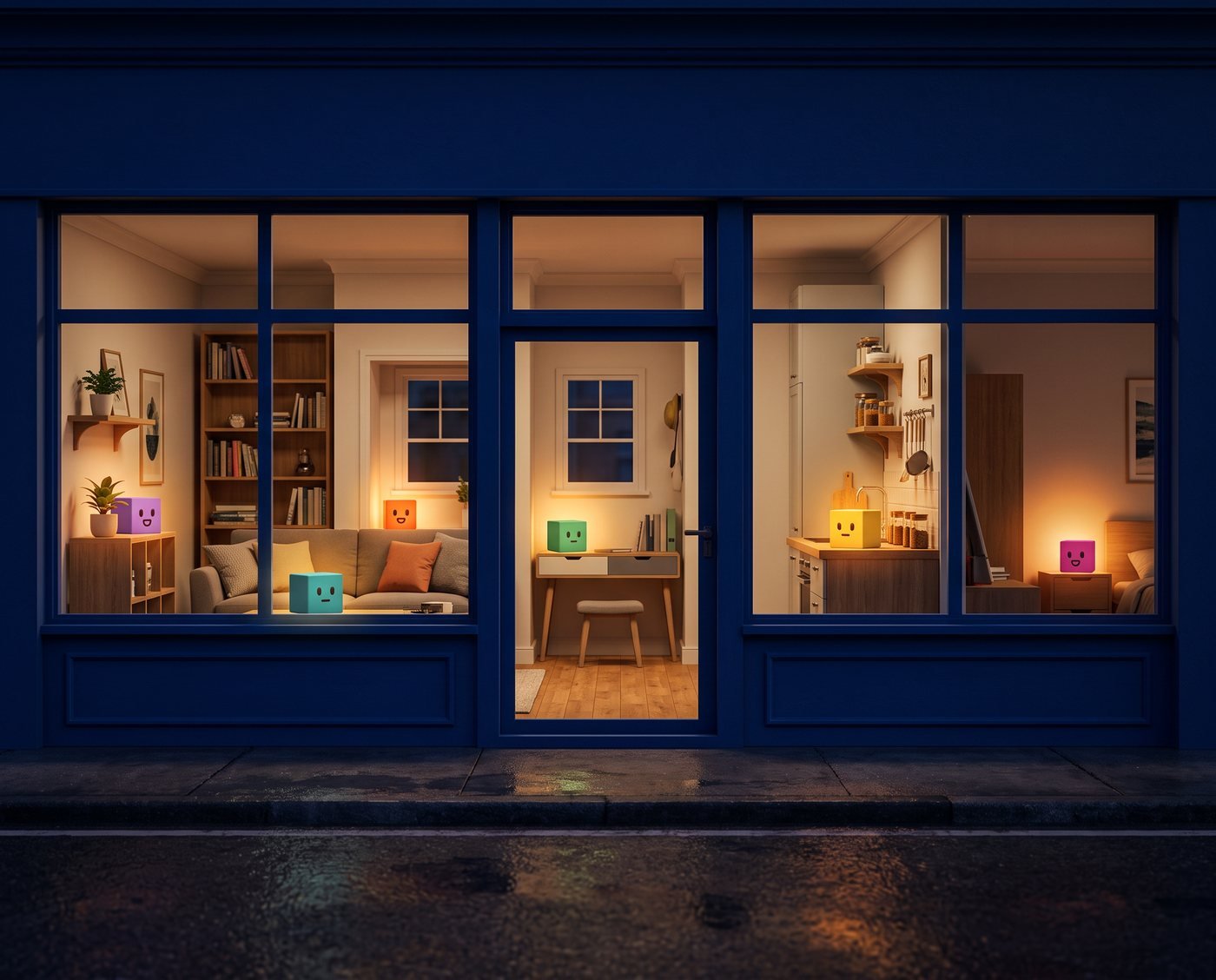
Then the cube leaves the base and goes wherever you like: on a shelf, above the sink, on the nightstand. There’s no right place. It’s a decorative object that happens to carry music, and you arrange the room the way you arrange any room.
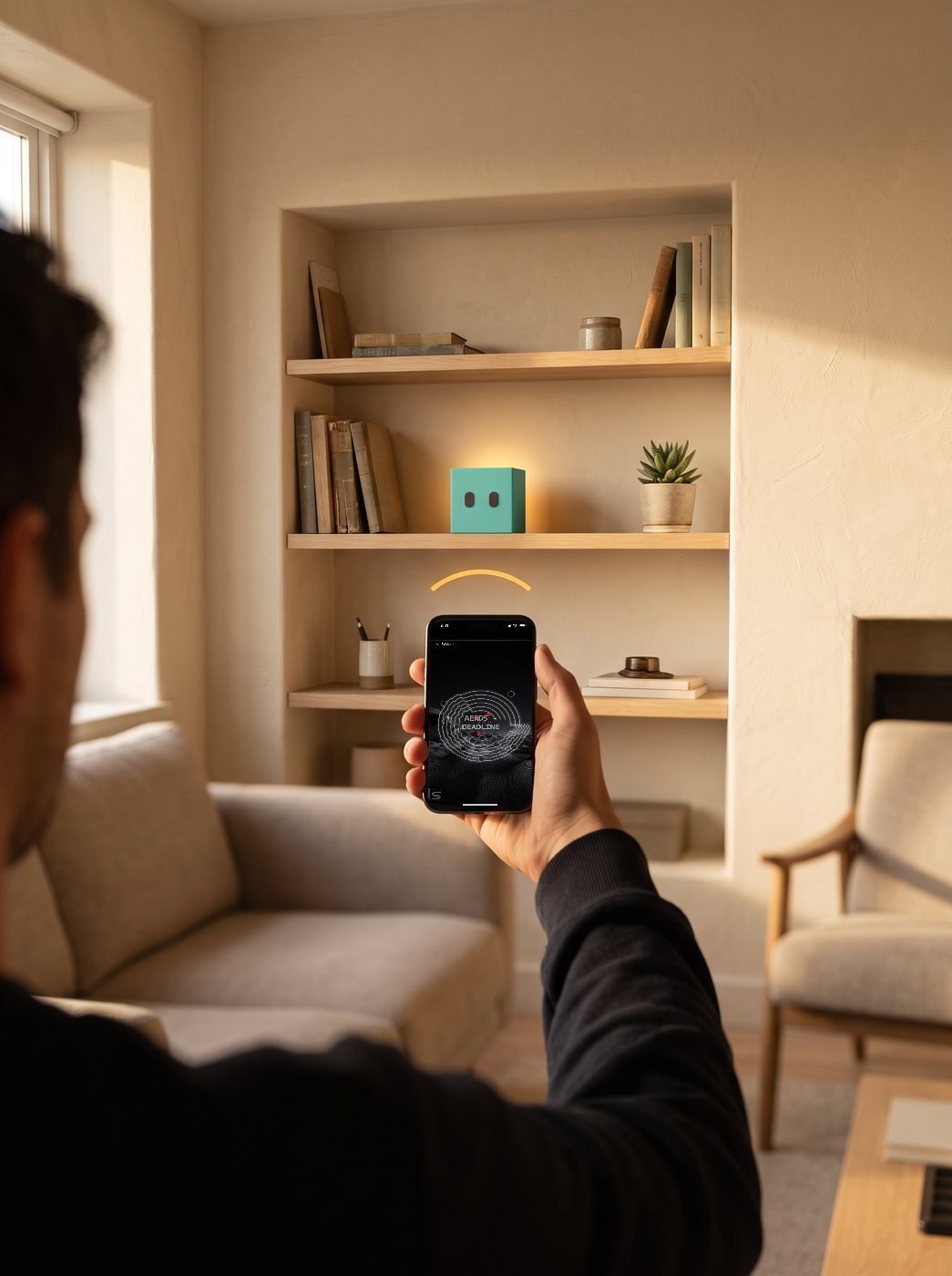
You turn your phone toward a cube, and its track comes in. It’s Halo’s gesture, brought home: nothing shows up, nothing to search for, you have to turn toward the music. Whatever isn’t in line stays silent, and that silence is what gives the gesture its value.
Your apartment
is the playlist
Each cube holds a track. Put them wherever you like, move them around, they’re yours. Then you point: whatever is in line plays, the rest stays quiet.
The ball
follows you
The cursor is you. The orange dot is your appointment. The object never tells you which way to go: the ball points at the goal, and its distance from the center tells you how far is left. You have time to spare. Spend it.
Weave
a fabric of thought
The AI never gives the answer. It asks the next question. Each answer becomes a mass on the canvas, and the fabric takes shape.
Turn,
and aim
Slid upright into the wall mount, the phone becomes a steering wheel. You turn it, the waves sweep the room, and you only hear what you have in common with whatever is over there.
The pocket
lab
The viewfinder is you. Frame whatever intrigues you: the camera asks you a question, you answer, and your answer prints as a sticker.
Twelve
seconds
The cursor is you. Step onto the road and you leave your footprints on it. The light is red, a few seconds to go. You can cross right now. You can also wait, and see what it costs.
Five objects,
one kept
Each idea made music visible at home. Only one left the gesture intact. Click to go through them.
The map
Drop
a beacon
Pick a place, a duration, an area. Your track plays there, quietly, for whoever walks by.
Nobody looks at a music library: it’s in a phone, behind a password. Set out in a room, it can be seen, moved around, shown to whoever comes in. It’s the same collection, it has just stopped being invisible.
Cubes in
the starter box
Twelve colors, twelve tracks. Enough to fill a living room, a kitchen and a hallway. You buy more the way you buy more shelves.
Degrees
of field
Twenty degrees either side of the axis. Wide enough to aim without tensing up, narrow enough that two neighboring cubes don’t step on each other.
What you hear
walking through
You walk through your apartment and the music changes from room to room, like the light. Between two cubes, silence: that’s what makes the next one interesting.
What they
said about it
The mockups made the rounds of four apartments for a week. Here’s what came back.


One cube,
one track


Your place
is the
playlist

Turn around,
listen
The music
changes
rooms
No screen,
no button
One base,
twelve cubes
Dock
It all starts on the base: the twelve cubes in their slots, like an egg carton. You pick one up, give it whatever’s playing, put it back. It’s the only moment you set anything.
- ✓Twelve slots
- ✓One track per cube
- ✓Come back to change your mind
12 cubes
Twelve colors, one base. Enough to fill a living room, a kitchen and a hallway.
20°
Of field either side of the axis. Twelve degrees was too demanding.
4 apartments
One week, printed cubes and sound simulated from the phone.
Abstract
Each cube carries a short-range radio and nothing else: no screen, no button, no battery to charge, since the base provides the power, and the cube is only there to be seen and aimed at. The phone gives the heading with its gyroscope, as in Halo, and compares it with the azimuth of the cubes it has located in the room. Everything stays within the walls.
Acknowledgments
This page was put together locally by Thibauld, without bothering a single remote server.
Peer review
“A friend came over and pointed all around the living room. He took a tour of my taste without asking a thing.”
A resident, fifth day of the trial
BibTeX
@misc{halohome2026,
  title        = {Halo Home: a music collection you decorate with},
  author       = {Burin, Thibauld},
  year         = {2026},
  howpublished = {Concept and mockups, Lyon}
}What people
ask me
The five questions that come up when I set the cubes on a table. The answers are short, like the questions.
No. The cube makes no sound: it’s a marker, not a speaker. The sound comes out of what you already have: your phone, your headphones, the speaker in the room. The cube only says what to play, and where you need to turn to ask for it.
Because an app gets filed away in a folder and forgotten. An object on a shelf gets seen every day, moved around, and shown to whoever walks in. It’s the difference between owning a collection and living with it.
Then it stops working. Color is enough to find your way among a dozen, not beyond: that’s the honest limit of the concept today, and the next question to tackle. One idea: the base shows what each cube holds when you put it back.
The same gesture, and the opposite problem. Halo lets you hear what the neighbors are listening to, so it depends on them: if nobody’s around, it goes quiet. Halo Home keeps what you came across and sets it down at home, where it stays available. One helps you discover, the other makes it last.
Printed cubes, a cardboard base, and sound simulated from a phone. Four apartments lived with them for a week. The radio locating still has to be validated: that’s the next prototype.

We showed you twelve colored cubes. It’s a collection we took out of the phone.
A playlist, you scroll. A room, you walk through.
Write to Thibauldwith love ♥
if you like it
Halo Home is the sequel to Halo, led by Thibauld Burin: a tangible interface concept and four trial apartments with printed mockups, the sound simulated from a phone. Radio locating and labeling beyond a dozen cubes are still to be worked out. The tracks shown on this page are demo data.
drop your film into
media/video-01.mp4